Shades of Brown Hair: A Clear Guide to Light, Medium, and Dark Browns (and How to Pick Yours)
Shades of brown hair are a lot like paint colors: walk down a paint aisle and “brown” quickly becomes forty different names, from mocha to tan to umber to clay. The names are just as slippery in hair color. One brand’s “chestnut” is another’s “medium brown,” and a salon’s “chocolate” might sit closer to the espresso end of the range.
This guide cuts through the naming. You’ll get a simple way to sort every brown shade by depth (how light or dark) and tone (warm, cool, or neutral), a shade-by-shade reference, and a practical method for choosing the one that suits you.
The Short Answer
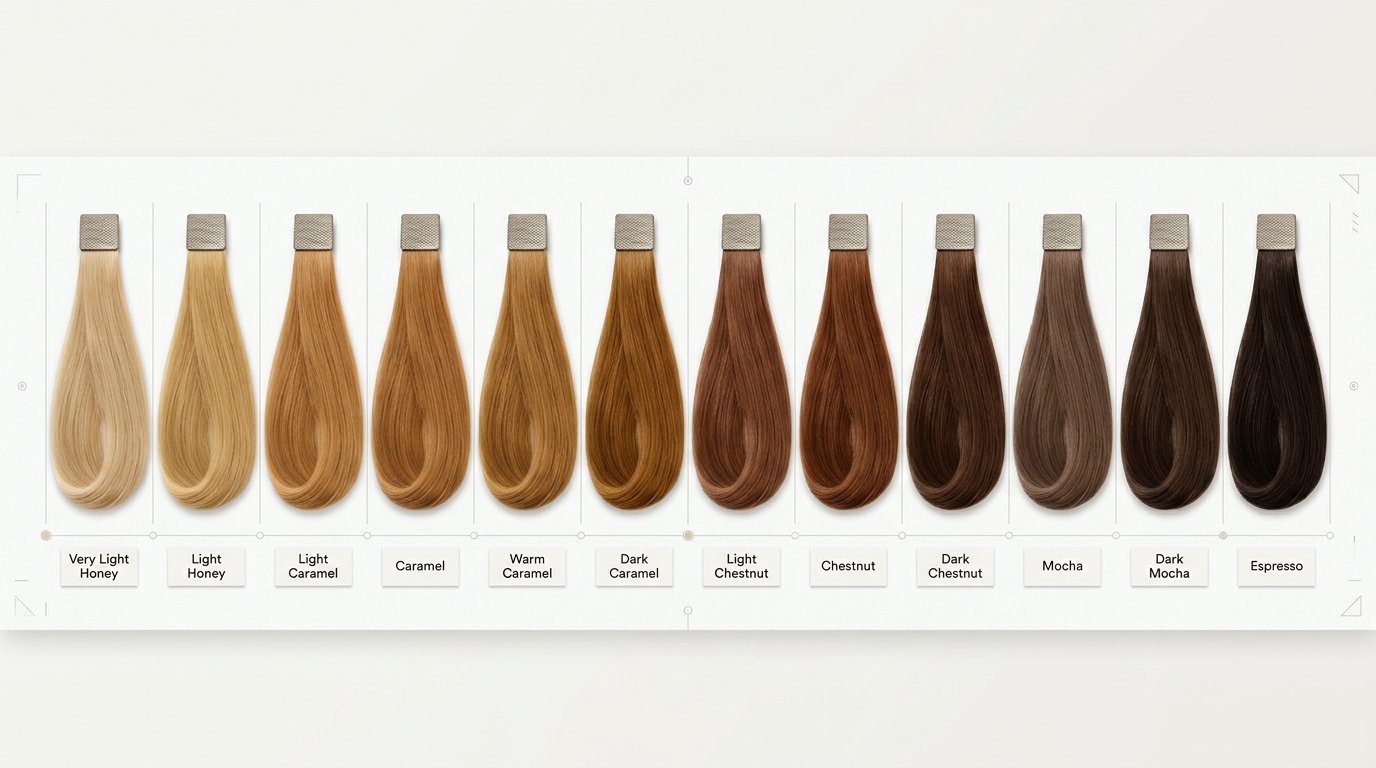
Brown hair shades fall into three depth groups:
- Light brown: caramel, honey, toffee
- Medium brown: chestnut, tawny
- Dark brown: chocolate, espresso
Each can lean warm (golden or reddish), cool (ash), or neutral. That grouping comes from the Iba Cosmetics guide to brown hair shades, which also notes that the same shade can look quite different depending on its undertone.
There Is No Official List of Brown Shades
This is the most useful thing to know before you walk into a salon. Shade names are marketing and salon shorthand, not a standard. “Mocha,” “mushroom,” and “espresso” aren’t defined by any governing body, so two products with the same name can look different.
What is reasonably standardized is the level and tone system colorists use behind the scenes.
Understanding Levels
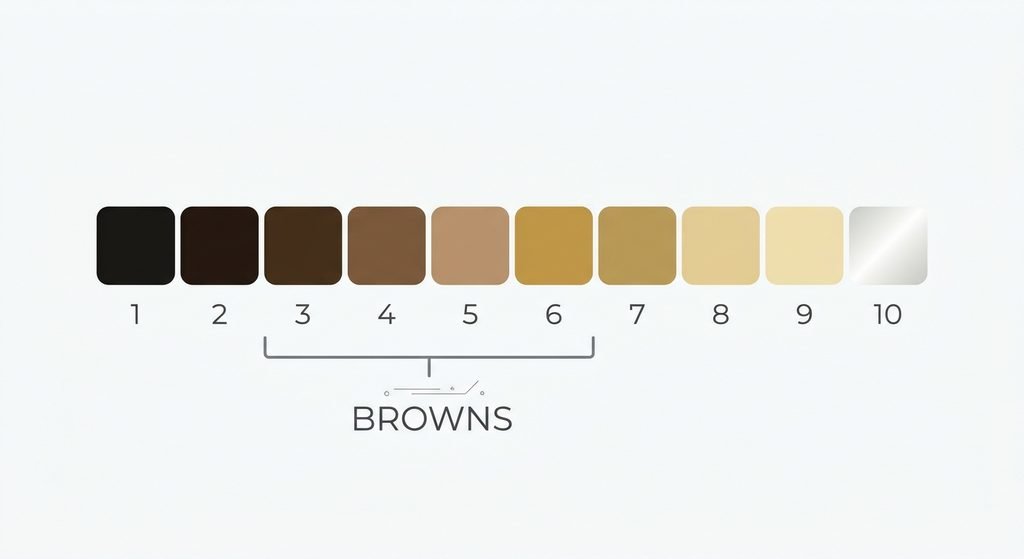
Levels run from 1 (darkest) to 10 (lightest). According to Garnier’s hair color number guide:
- Levels 1 to 3: blackest black through deep browns
- Levels 4 to 6: dark browns and brunettes
- Levels 7 to 10: lighter blondes through platinum
The guide gives level 5 as an example of medium brown. Brown shades therefore live mainly in the lower-middle of the scale.
Understanding Tones
The number after the level (or after a decimal point) signals the tone. In the same Garnier guide:
- Ash is a cool, blue- or green-based tone that neutralizes orange and red, and it’s the main fix for brassiness.
- Golden is a warm tone that adds brightness and warmth.
- Copper sits with gold and auburn among the warm tones, adding radiance.
- Neutral balances warm and cool tones for a natural result and is the usual choice for covering gray.
So a color labeled something like 5N is a medium brown with a neutral tone, and 4N is a dark brown with a neutral tone. Numbering varies slightly by brand, so check each brand’s own chart.
Shades of Brown Hair, From Light to Dark
Descriptions below are general, since names vary by brand and salon.
Light Browns
- Caramel: golden, warm, and bright, often described as a sun-kissed brown.
- Honey brown: a glowing golden brown that sits between brunette and blonde.
- Toffee: a warm light brown with a slightly deeper, buttery feel.
- Light ash brown: a cool, muted light brown that cancels warmth.
These suit people who want brightness without full blonde and who don’t mind some upkeep, since lighter browns tend to show fading and brassiness more.
Medium Browns
- Chestnut: a classic warm brown with a hint of red.
- Tawny: a balanced brown with warm gold-brown notes.
- Natural medium brown (5N): a neutral, true brown with no strong warm or cool lean.
- Mocha: a smooth, medium-dark brown with a chocolatey warmth.
Medium browns are the “safe” middle of the range. They tend to be the most forgiving to maintain and flatter the widest range of looks.
Dark Browns
- Chocolate brown: deep and rich, usually warm or neutral.
- Dark natural brown (4N): a dark brown with a neutral tone.
- Espresso: very dark brown with a cool or neutral lean, close to black in low light.
- Dark cool espresso: a darker, cooler version with a smoky finish.
Dark browns create contrast and a polished look, though they can look flat if the color is applied in one solid shade without dimension.
Red-Toned and Specialty Browns
- Auburn: a reddish brown with warm copper notes.
- Mahogany: a deeper red-brown with a purple-red cast.
- Cherry brown: a dark brown with a red sheen that shows more in direct light.
- Golden brown: a radiant warm brown with a shimmering effect.
- Ash brown: a cooler brown with grayish hints.
If you want to see which of these are trending right now, our guide to the best brunette and brown hair colors for 2026 covers the current names and looks. This guide focuses on the underlying system, so you can choose any of them with confidence.
How to Choose Your Shade
Start With Your Undertone
Your skin’s undertone (warm, cool, or neutral) is the most common starting point. Guides give broadly similar advice:
- Warm undertones (golden, olive, peachy): warm browns with golden or chocolate notes. Very cool ash tones can look dull.
- Cool undertones (pink, rosy, bluish): ash or neutral browns. Overly warm or copper-leaning shades can clash with pink skin.
- Neutral undertones: the most flexibility. Medium shades such as a natural 5N are a versatile starting point.
A popular home test, mentioned by John Frieda’s brunette guide, says greenish wrist veins suggest warm undertones, while blue or purple veins suggest cool. Treat it as a rough hint, not a rule: lighting, tanning, and skin conditions can all make it hard to read.
Two Schools of Thought: Match or Contrast
Sources don’t fully agree here. Some guides pair warm shades with warm skin and cool shades with cool skin, so the color blends in. John Frieda’s chart, by contrast, pairs several cool-toned browns with warm undertones, and the reverse for others, treating the hair as a contrast. Neither is wrong. Matching tends to look softer and more natural, while contrast tends to look bolder. If you’re unsure, a colorist can test both against your face in natural light.
Consider Your Skin Depth
Iba Cosmetics’ guide suggests different directions by skin depth:
- Fair skin: warm caramel and honey for a sun-kissed look, or light chestnut and golden brown.
- Medium skin: tawny and deep caramel for depth and polish.
- Deep skin: rich chocolate and espresso for strong contrast.
These are starting points, not requirements. Plenty of people look great well outside the suggested range.
Don’t Go Much Darker Than Your Goal
For anyone covering gray, one hair-color guide advises choosing a shade close to your natural base or one level lighter, because going too dark can look harsh and flat. The same logic applies if you’re going lighter: smaller steps are easier to correct than big jumps.
Brown Hair Techniques That Change the Look
Even a single shade can look very different depending on how it’s applied:
- Solid color: one uniform shade, bold and low-dimension.
- Balayage: hand-painted lighter pieces that grow out softly.
- Highlights: brighter strands for contrast.
- Lowlights: darker strands that add depth to light browns.
- Ombre or root melt: a gradual shift from darker roots to lighter ends.
John Frieda’s guide says ombre and balayage make brown especially forgiving, since the grow-out is gradual.
How to Keep Brown Hair Looking Rich
Most brown-hair complaints come down to fading and brassiness (orange or red tones showing through). Common advice across the guides:
- Use blue shampoo or conditioner for brassiness. Blue sits opposite orange on the color wheel, so it neutralizes it.
- Use color-safe products made for brunettes, which can subtly deepen and brighten tone.
- Limit heat styling. Dryness can make brassiness more visible.
- Protect hair from the sun, which fades color.
- Deep condition regularly to keep the surface smooth and shiny.
- Try a gloss or darkening conditioner between salon visits to prolong color.
If you’re using at-home color, patch testing matters. The American Academy of Dermatology recommends a patch test at least 48 hours before any hair dye, as described in its hair dye safety guidance. Our Shihuanuo hair dye shampoo review walks through a color-depositing option and its limits.
Brown Hair and Face Shape
Color and cut work together. If you’re updating both, our guides to hairstyles for an oval face and Korean hairstyles for women show cuts that pair well with a rich brown base.
Frequently Asked Questions
What are the main shades of brown hair? Light brown (caramel, honey, toffee), medium brown (chestnut, tawny) and dark brown (chocolate, espresso), each with warm, cool or neutral versions.
What is the most common brown hair color? John Frieda’s guide describes brown as the most common hair color, though it doesn’t cite a statistic.
What level is medium brown hair? Garnier’s guide gives level 5 as an example of medium brown. Dark browns sit in levels 1 to 3 and the 4 to 6 range includes dark browns and brunettes.
What is the difference between ash brown and golden brown? Ash brown is cool and muted, helping cancel orange and red. Golden brown is warm and radiant.
How do I know if I have warm or cool undertones? A common test is wrist vein color: greenish suggests warm, blue or purple suggests cool. It’s a rough guide, so check in natural light too.
What brown shade suits fair skin? Warm caramel, honey, light chestnut and golden brown are commonly suggested.
What brown shade suits deep skin? Rich chocolate and espresso are commonly suggested for strong contrast.
How do I stop brown hair from turning orange or brassy? Use blue shampoo or conditioner, color-safe products, less heat styling and sun protection.
Can I go from black to light brown at home? Going lighter usually requires lifting dark pigment, which is harder to do evenly at home. A colorist is the safer route for big jumps.
Bottom Line
Brown hair isn’t one color but a spectrum organized by depth (light, medium, dark) and tone (warm, cool, neutral). Names like chestnut, mocha and espresso vary by brand, so use the level and tone numbers when you can, and test a shade against your skin in natural light before committing. Start with your undertone, decide whether you want to blend or contrast, and keep upkeep simple with blue shampoo, color-safe products and less heat.