Wattios Explained: What the Term Means and How to Use It to Cut Your Power Bill
If you’ve searched for wattios and landed on a page that couldn’t quite tell you what it means, you’re not alone — a lot of what’s currently ranking for this term is vague or simply wrong. Here’s the short, accurate answer: wattios is the Spanish word for watts, the standard unit used worldwide to measure electrical power. It’s not a brand, an app, or a smart-home platform.
Once you understand what wattios (watts) actually measures, it becomes one of the most useful numbers on any appliance label — because it’s the key to understanding your electricity bill, comparing products before you buy, and figuring out where your home’s power is really going. This guide covers all of it: the definition, the math, a real appliance wattage chart, and how to turn watts into dollars.
What Does “Wattios” Mean?
Wattios (singular: vatio) is simply the Spanish translation of watts, the SI (International System of Units) unit of electrical power. You’ll see it on the packaging of appliances sold in Spain and across Latin America, in Spanish-language manuals, and on imported or dual-language product labels.
A watt measures the rate at which a device uses or produces energy — specifically, one joule of energy transferred per second. So when a Spanish-language spec sheet lists a microwave as “800 vatios,” that’s the exact same measurement as an English label reading “800 watts.” There’s no conversion factor between the two — it’s a direct one-to-one translation, not a different unit.
The unit itself is named after James Watt, the Scottish engineer whose 18th-century improvements to the steam engine made him one of the most influential figures in the history of power measurement — which is also why “watt” and “wattios” are capitalized as a unit symbol (W) but lowercase when spelled out.
Watts vs. Wattios vs. Vatios — Clearing Up the Confusion
Because these terms show up differently across search results, product listings, and translated manuals, here’s a quick reference:
| Term | Language | Meaning |
|---|---|---|
| Watt / Watts | English | SI unit of electrical power (symbol: W) |
| Vatio / Vatios | Spanish (formal) | Singular / plural of the same unit |
| Wattios | Spanish (common usage) | Informal plural, used interchangeably with “vatios” |
All three refer to the identical measurement. If you’re comparing a US appliance spec sheet to a Spanish or Latin American one, you can treat the watt and wattios numbers as directly equivalent — no math required.
Power vs. Energy: The Distinction That Actually Affects Your Bill
This is the part most appliance buyers skip — and it’s the single most useful concept on this page.
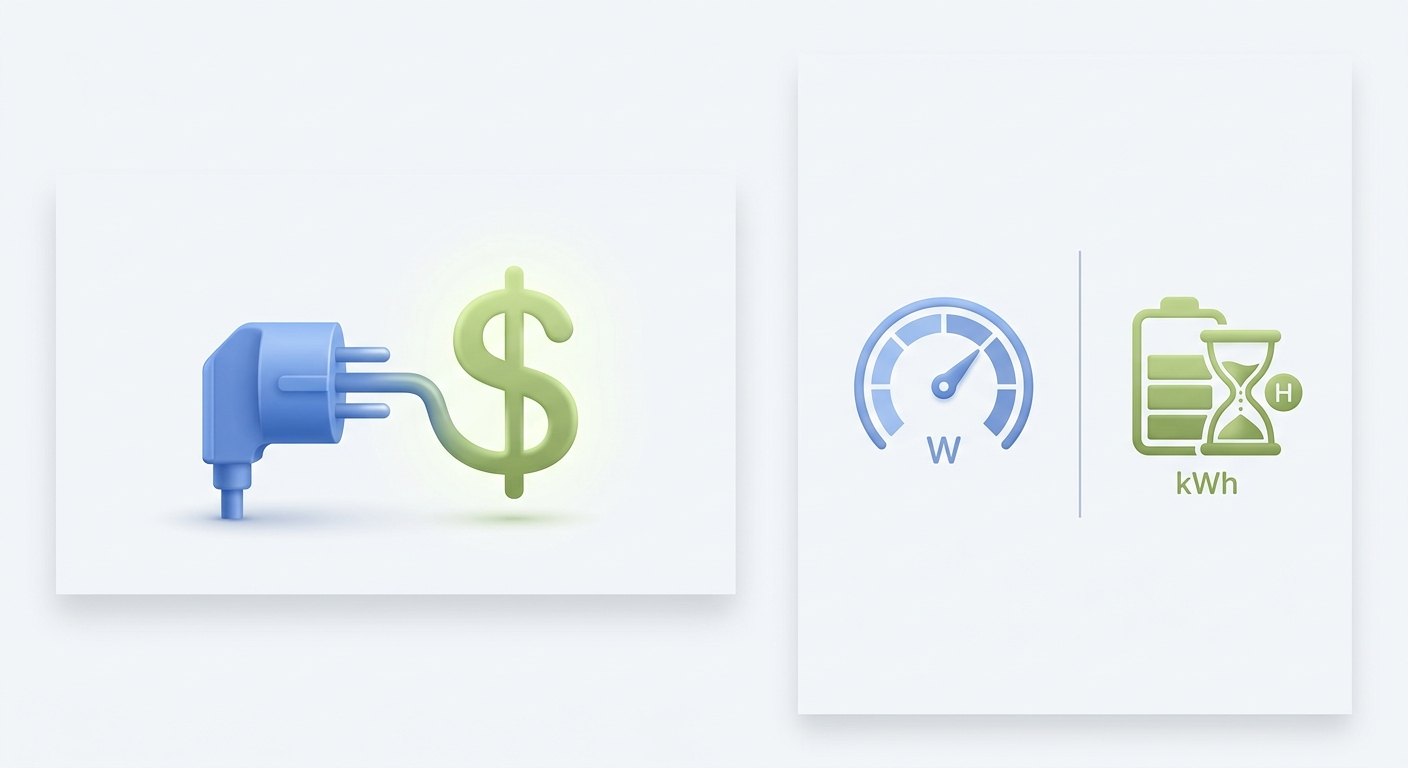
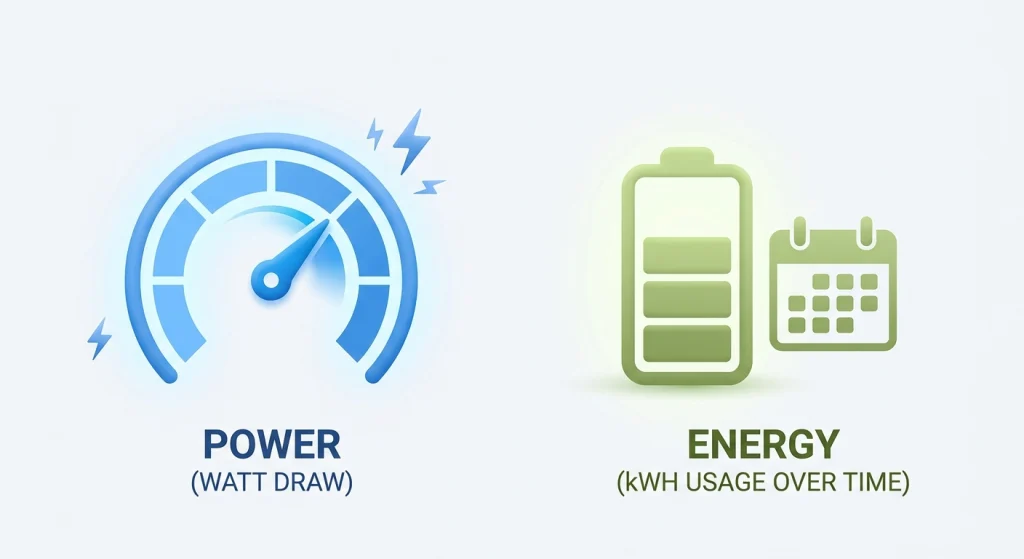
- Power (watts/wattios) measures the rate at which a device uses energy right now — how fast it’s drawing electricity while it’s running.
- Energy (kilowatt-hours, or kWh) measures the total amount of electricity used over time. This is what your utility company actually bills you for.
To convert: kWh = (watts ÷ 1,000) × hours used
A high-wattage appliance used briefly can cost less than a low-wattage appliance left running all day. For example:
- An electric kettle rated at 1,500 watts, used for 10 minutes a day, consumes about 0.25 kWh per day.
- A refrigerator rated at just 150 watts, but running roughly 8 effective hours a day (it cycles on and off), consumes about 1.2 kWh per day — nearly 5x more than the kettle, despite a much lower wattage.
This is why comparing appliances by wattage alone is misleading. Runtime matters just as much as power draw.
How Many Watts Do Common Household Appliances Use?
Here’s a practical reference chart. Figures are typical running wattage — actual draw varies by model, size, and efficiency rating, so always check your specific appliance’s label for the precise number.
| Appliance | Typical Wattage (Wattios) |
|---|---|
| LED light bulb | 8–12 W |
| Laptop | 30–65 W |
| Desktop computer | 200–500 W |
| Refrigerator (running) | 100–400 W |
| 55″ LED TV | 60–120 W |
| Washing machine | 400–1,300 W |
| Electric kettle | 1,000–1,500 W |
| Microwave | 600–1,200 W |
| Hair dryer | 800–1,800 W |
| Toaster | 800–1,500 W |
| Central air conditioner | 2,000–5,000 W |
| Space heater | 1,000–1,500 W |
| Electric water heater | 3,000–4,500 W |
| Electric vehicle home charger (Level 2) | 3,300–11,500 W |
How to Calculate Your Electricity Cost From Watts
As of 2026, the U.S. average residential electricity rate is running about 18¢ per kWh, though this varies significantly by state — from roughly 13¢/kWh in the cheapest states to over 50¢/kWh in Hawaii, according to <a href=”https://www.eia.gov” target=”_blank” rel=”noopener”>U.S. Energy Information Administration</a> data. Here’s the formula:
Cost = (Watts ÷ 1,000) × Hours Used × Price per kWh
Worked example: Running a 1,200-watt window air conditioner for 8 hours a day, at the national average rate of $0.18/kWh:
(1,200 ÷ 1,000) × 8 × $0.18 = $1.73 per day, or roughly $52 per month if run daily.
Run that same math against every major appliance in your home, and you’ll quickly see where your bill is actually going — usually heating/cooling and water heating, not the devices people worry about most (phone chargers, for instance, typically cost under $1/year to run).
How to Read an Appliance’s Power Label
Every appliance sold legally in the US or EU carries a label with a small set of standardized specs. Knowing what each one means makes comparing products — including imported or Spanish-labeled ones — much easier:
- Voltage (V): The electrical supply the appliance is designed for (typically 120V in the US, 220–240V in Spain and most of Latin America).
- Current (A): How much electrical current flows through the device, measured in amps.
- Frequency (Hz): The electrical cycle the appliance supports — 60Hz in the US, 50Hz in most of Europe and Latin America. This matters if you’re importing an appliance.
- Power (W / Wattios): The rate of energy use — the number you’ll use for all the calculations above.
If you’re buying an appliance manufactured for the Spanish or Latin American market, checking the voltage and frequency (not just the wattios rating) is essential — a mismatch can prevent the device from working safely on US power.
Choosing Energy-Efficient Appliances
A lower wattage rating isn’t automatically better — it needs to be weighed against performance, runtime, and total energy use. When comparing appliances:
- Check the Energy Star rating where available — it’s the US government’s certification for verified efficiency, backed by <a href=”https://www.energystar.gov” target=”_blank” rel=”noopener”>ENERGY STAR (a joint EPA/Department of Energy program)</a>.
- Compare estimated annual kWh usage, not just peak wattage — this is usually printed on the yellow EnergyGuide label.
- Weigh purchase price against long-term electricity cost — a slightly pricier, more efficient model often pays for itself within a few years on high-use appliances like refrigerators and water heaters.
Simple Habits That Lower Your Wattios-Driven Electricity Use
- Swap incandescent bulbs for LEDs (roughly 80% less power for the same brightness).
- Unplug or use smart plugs for devices in standby mode — many electronics draw “phantom” power even when off.
- Run washing machines and dishwashers only with full loads.
- Set air conditioning and heating a few degrees closer to outdoor temperature — HVAC is typically the single largest wattage draw in a home.
- Use a plug-in energy monitor to see actual watts drawn by specific devices, rather than estimating from labels alone.
Frequently Asked Questions
What does wattios mean in English? Wattios is the Spanish word for watts — the standard unit of electrical power. It’s a direct translation, not a different measurement or a separate product.
Is wattios the same as vatios? Yes. “Vatios” is the more formal Spanish term; “wattios” is a common informal variant. Both refer to the same unit as the English “watts.”
How do I convert wattios to watts? There’s no conversion needed — 1 wattio equals 1 watt exactly, since it’s a translation of the same SI unit.
Does a higher wattios rating always mean a higher electricity bill? No. Electricity cost depends on both power (watts) and how long the device runs. A high-wattage device used briefly can use less total energy than a low-wattage device that runs for hours.
How many watts does the average US home use? Total household power draw varies by size and appliances, but the average US home consumes roughly 29 kWh per day, or about 886 kWh per month, according to EIA residential usage data.
Bottom Line
Wattios isn’t a mysterious product or platform — it’s simply the Spanish word for watts, the unit that measures how much electrical power a device draws. Once you understand the difference between power (watts) and energy (kWh), you can accurately estimate what any appliance costs to run, compare products before buying, and make targeted changes that actually lower your electricity bill — rather than guessing.