Artificial Zoo Meaning: What It Really Is, 3 Real Projects and 5 Claims to Doubt
Artificial zoo is a phrase that sounds like a place you could buy tickets to, but the pages that describe one name no venue, no operator and no address. Searching for it turns up three kinds of results: blog posts about a “digital or robotic zoo” as a general idea, a flood of near-identical clickbait posts about AI creatures, and a few real projects that use robots, simulated habitats or machine-made creatures in ways that make the phrase fit. This guide separates the idea from the real examples, shows what each source actually says and lists the claims to doubt before you plan a visit or repeat a statement about conservation.
A note on method: I read three pages that define the term (a travel post on a Blooket-branded blog, an article on an escape-games site and a clickbait post on a “Brand Industry” docs subdomain), a BLDGBLOG post on simulated animal habitats, the Minimaforms project page for Petting Zoo, the Science World page for The Robot Zoo and a Tessere article on animatronic animals in zoos. I found no operating attraction named Artificial Zoo in the pages I read. I have not visited any of the places mentioned.
The Short Answer
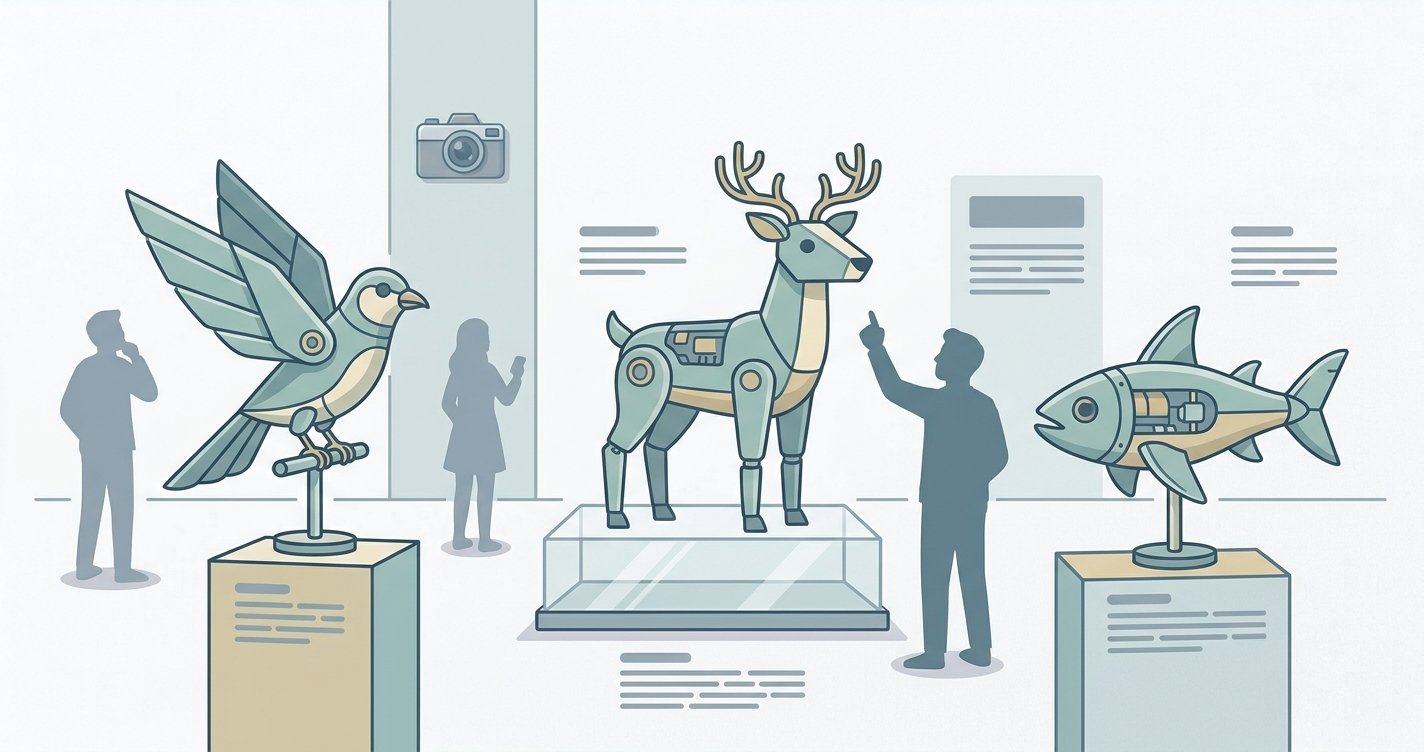
Artificial zoo is not the name of one established place or product. In the pages I read, it means a kind of visitor attraction that shows animals without keeping live ones, using robots, holograms, virtual reality or designed habitats. None of those pages names a real venue, so treat the phrase as a concept, and check any specific attraction by its own name, address and operator.
4 Ways the Phrase Is Used
| Source | What it says an artificial zoo is | What it doesn’t provide |
|---|---|---|
| Travel post on a Blooket-branded blog (Aug 2026, “Spero Agency”) | An attraction with holograms, robotic animals and projection mapping, “part museum, part theme park, part conservation classroom” | A venue, location or source; a source link points to a different domain |
| Article on MasterMind Escape Games (Jan 2026, “Sahil”) | A space simulating wildlife with robots, AR/VR and artificial habitats | A named facility or study; the site is a general blog and never mentions escape rooms |
| “Brand Industry” docs-subdomain post (no author or date) | A “virtual sanctuary” of digital animals made from code, 3D models and AI | A company or project; says the creatures are “sentient” without support |
| Real projects (below) | Robots, simulated environments and machine-made creatures shown in museums and parks | A single shared definition |
3 Real Projects Behind the Idea
1. Petting Zoo by Minimaforms
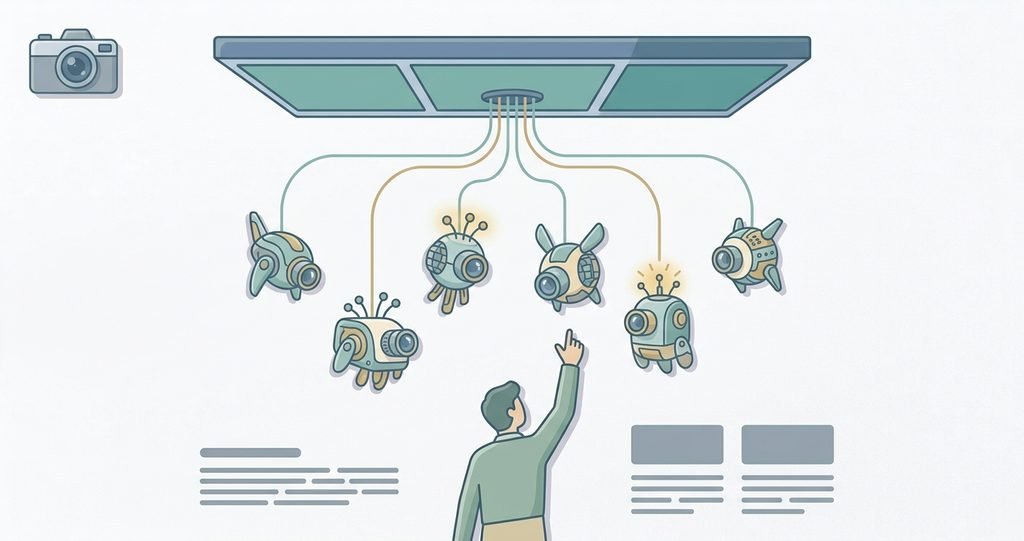
Minimaforms describes Petting Zoo as a generative robotic installation populated by “inquisitive and artificially intelligent creatures” that respond to people. A real-time camera-tracking system locates visitors and detects gestures, and each creature learns behaviors through interaction with people and with the others. The studio lists venues including the Barbican Centre in London, the Tekniska Museet in Stockholm, the Guangdong Science Centre and the Onassis Cultural Center in Athens. The page doesn’t state when it debuted. This is the closest match to an artificial zoo I found, and it’s an art installation.
2. The Robot Zoo at Science World
Science World’s page says The Robot Zoo is a temporary exhibition in Vancouver, running October 9, 2026 to April 4, 2027, with eight large-scale robotic animals built to mimic real behavior, such as a platypus swimming or a grasshopper jumping. It also lists more than a dozen interactive exhibits and says it explores the engineering behind animals. Confirm dates and tickets on the venue’s site before you go.
3. Simulated Habitats for Real Animals
A 2008 BLDGBLOG post by Geoff Manaugh describes the Zoo de Vincennes in France, with landscapes by TN PLUS and buildings by Beckmann N’Thepe, as covering 15 hectares with six “biozones” built from artificial earthforms. Manaugh’s argument is that all zoos are simulations built for animals. I did not verify the project’s details from a primary source, and the post is more than a decade old, so treat it as commentary, not a current fact sheet.
The Debate Over Replacing Live Animals With an Artificial Zoo
The blog pages claim that an artificial zoo solves the ethical problems of captivity, and they rarely cite anything. A more careful source is a 2022 article from Tessere’s ECHO Digital blog, which argues that animatronics should be judged by their purpose. Its arguments for include:
- Welfare: Stand-in birds could make small groups feel like larger flocks, which may help breeding.
- Research: Realistic “critter cams” can let researchers observe wild animals with less disturbance.
- Access: Robots could give people a close encounter with species that are hard to keep, such as baleen whales or narwhals.
- Behavior: Surrogates could show stressful behaviors, such as a wolf snarling, without stressing an animal.
It also notes concerns: the topic is polarizing, and replacing live animals may weaken the value of real connections with living things. It names no zoo or aquarium and cites no figures. Even the enthusiastic blog pages concede that technology can’t fully replace live animals. One says the experience can’t replicate their “unpredictability and emotional connection,” and another that technology alone “doesn’t guarantee responsible tourism.”
The Clickbait Pattern
Search results include dozens of near-identical headlines, such as “Artificial Zoo: Where Machines Breed Living Dreams Unlike Nature Ever Dreamed,” “This Artificial Zoo Let AI Create Creatures You’ve Never Seen” and “Discover the Artificial Zoo Where Synthetic Life Steps Alive.” They appear on many unrelated hosts, including subdomains labeled as docs, status, analytics and tools pages for other organizations. The one I opened had no author or date, an empty “Image Gallery” heading, a repeated title and “Related Articles” with sensational headlines on unrelated subjects. I can’t say who publishes them or whether the host sites knew. It’s the same pattern we flagged for aicot and for messagenal.
5 Claims to Doubt in Artificial Zoo Pages
- “Lower long-term cost.” One page says costs are high at first and lower later but quantifies neither.
- “Fewer zoonotic disease risks.” The same page gives no source.
- “Revolutionizing conservation.” Its own body says these attractions “complement” existing efforts.
- “Many people feel uncomfortable seeing captive animals.” The Blooket-branded post cites no survey.
- “Sentient creatures shaped by code.” The Brand Industry post gives no support for sentience.
What Is Verified and What Is Not
| Claim | Status |
|---|---|
| Petting Zoo is a robotic installation with learning creatures | Described on Minimaforms’ own page |
| The Robot Zoo runs Oct 9, 2026 to Apr 4, 2027 in Vancouver | Per Science World’s page; confirm before you go |
| Animatronics could help research and welfare | Argued by Tessere; no figures cited |
| An attraction named Artificial Zoo exists | None found in the pages I read |
| Artificial zoos reduce costs or disease risk | Claimed by one blog; no source |
| They replace the need for live-animal conservation | Not supported; pages themselves say they complement it |
| Digital animals are “sentient” | No evidence |
| Zoo de Vincennes details | Single 2008 blog post; unchecked |
Before You Plan a Visit
If an ad or post invites you to an “artificial zoo,” ask:
- What is its real name? Search for the venue by name, not the phrase.
- Who runs it? Look for an operator, an address and a phone number.
- Is it listed anywhere independent? Check a city tourism site or a map listing.
- What does the ticket include? A robot exhibition, a VR room and an animal park are different things.
- Are prices and hours on the venue’s own site? Don’t pay through a third-party page.
- Pay by credit card so you can dispute a charge, and report scams at ReportFraud.ftc.gov in the US.
How to Check a Concept Page Like These
- Look for a named example. A concept page with no venue, company or date is an opinion.
- Check the host. An article about zoos on a site that says it covers escape games, finance and real estate is a warning.
- Compare definitions. If the pages disagree on what it is, none is evidence.
- Spot the template. Empty gallery headings and unrelated teasers show auto-generated content.
- Use the same test elsewhere. We apply it in our guides to methatreams, wenrath and lucipara.
Frequently Asked Questions
What is an artificial zoo? A concept for an attraction that shows animals with robots, holograms, VR or designed habitats instead of live animals. I found no named operating venue.
Is there a real artificial zoo? I found no attraction by that name. Real projects such as Petting Zoo and The Robot Zoo use robots and creatures in exhibitions.
Is an artificial zoo better for animals? Some argue so, but the sources I read cite no data. Tessere lists possible welfare and research benefits and also concerns.
Can an artificial zoo replace real zoos? The blog pages themselves say it complements existing efforts. They don’t claim it replaces them.
What is Petting Zoo by Minimaforms? A robotic installation with creatures that learn from visitors through camera tracking, shown at museums in several countries.
What is The Robot Zoo? A Science World exhibition in Vancouver with eight large robotic animals, listed for Oct 9, 2026 to Apr 4, 2027.
Are digital animals sentient? One clickbait page says so, but gives no evidence.
Why are there so many identical artificial zoo pages? They appear to be auto-generated posts on unrelated sites. I can’t say who publishes them.
Bottom Line
artificial zoo is a concept, not an established attraction: the blog pages describe robotic or digital animals without naming a venue, and the real examples I found, Petting Zoo and The Robot Zoo, are art and science exhibitions. The claims about lower costs, disease risk and conservation benefits come from pages with no sources, and even they say technology complements live-animal work. Check any attraction by its own name and operator, and confirm dates and tickets on the venue’s own site before you pay.