Inurl:carried: 7 Proven Search Tricks and Costly Mistakes
Inurl:carried is a Google search query, not a product, a brand or a topic, and that is the first thing worth knowing about it. It combines the search operator “inurl:” with the word “carried,” and it asks the search engine to show pages that have “carried” somewhere in their web address.
This guide explains what inurl:carried does, how the operator works, how to combine it with others, which operators no longer work and where people go wrong.
A note on method: I read guides to Google search operators from Ahrefs, Search Engine Journal and IONOS, and checked search results for news on retired operators. I could not open Google’s own help page or Ryte’s wiki entry, and I could not run a live Google search, so I can’t tell you what inurl:carried returns today. The example searches below are my own constructions based on patterns in those guides, and I have not tested them.
What Does Inurl:carried Mean?
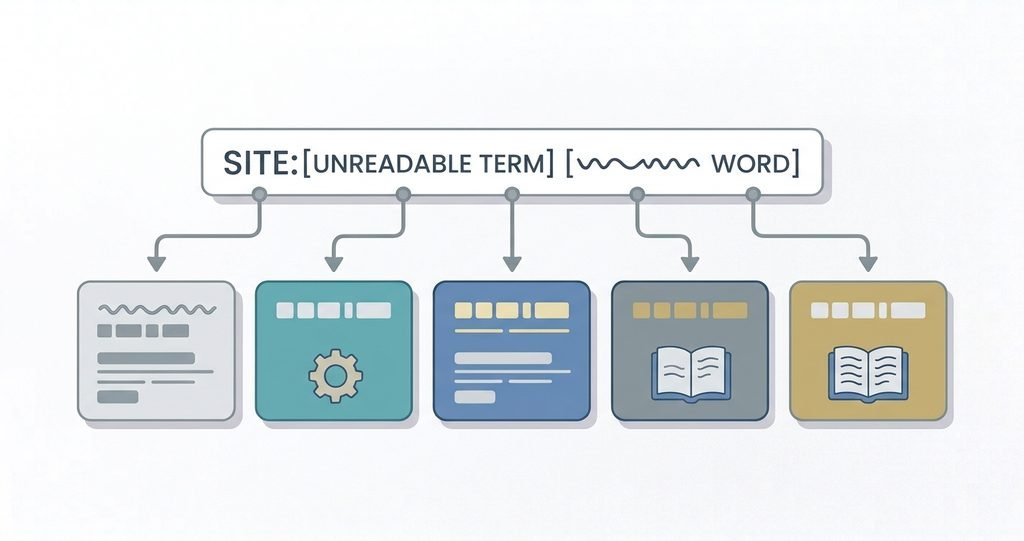
Inurl:carried breaks into two parts:
- inurl: an operator that tells Google to look for a term in the URL. Ahrefs says it finds pages with a particular word in the URL.
- carried: the word to look for.
So inurl:carried asks for pages whose address contains “carried.” The IONOS guide describes the operator the same way: the search engine “only displays results of websites that contain this search term in their URL.”
The URL is the web address. In an address like example.com/we-carried-it/, the word “carried” sits in the path. It is not the same as the page title or the page text.
What Inurl:carried Is Not
- It is not a brand, a product or a person.
- It does not search the page’s content unless you add other words.
- It is not an official Google tool with a guaranteed result. I found no Google page I could read that promises how it behaves.
How the Inurl Operator Works
The three guides agree on the basics:
- Write it with no space. IONOS says there shouldn’t be any spacing between the operator and the search term. So
inurl:carriedis right andinurl: carriedmay not behave the same way. - Add other words. IONOS gives
Audi A4 inurl:forum, which returns forums where people discuss Audi A4 cars. The plain words match the content, and the operator matches the URL. - Use allinurl: for several words. Ahrefs gives
allinurl:apple iphone. IONOS givesallinurl:technical blog linux. Search Engine Journal says allinurl: finds pages with all your terms in the URL. - Exclude with a minus. Ahrefs says a minus sign excludes a term, for example
jobs -apple.
Inurl vs. Allinurl
| Operator | What it does | Example from the guides |
|---|---|---|
| inurl: | Finds a term in the URL | Audi A4 inurl:forum |
| allinurl: | Finds all listed terms in the URL | allinurl:apple iphone |
| -inurl: | Leaves out URLs with a term | site:domainname.com -inurl:stage |
Search Engine Journal notes that its own description of inurl: (a term in the URL plus another in the content) doesn’t fully match its example, which uses only terms. That is a reminder to test any operator on your own searches.
Example Searches Using Inurl:carried
These are my own combinations, built on patterns in the sources, and I haven’t run them:
inurl:carriedfinds pages with “carried” in the address.site:example.com inurl:carriedlimits that to one site.inurl:carried -inurl:stagingleaves out staging pages, following the exclusion pattern in the Search Engine Journal guide."carried interest" inurl:carriedpairs an exact phrase with the URL term.inurl:carried inurl:blogasks for two URL words.
Results change over time, and Google decides what to show. Treat each query as a starting point and refine it.
Why Would Someone Search for Inurl:carried?
The sources I read don’t say why anyone would search this exact string, so these are general possibilities, not findings:
- Finding a word in URLs. A writer or researcher wants pages whose address contains “carried,” such as a topic slug.
- Retail research. “Carried” is a word stores use for products they stock, so someone may look for pages that mention it in the address.
- Competitor URL research. Search Engine Journal says inurl: is useful for finding sites with strong on-page optimization for a topic.
- Learning the operator. Many people test inurl: with a random word.
If you are using inurl:carried for a specific purpose, add a second word or a site: filter, or the results will be too broad to use.
SEO Uses of the Inurl Operator
The Ahrefs and Search Engine Journal guides describe these uses of the inurl: family of operators:
| Use | Example from the guides |
|---|---|
| Find guest post pages | coffee intitle:"write for us" inurl:write-for-us |
| Find resource pages | [topic] intitle:resources inurl:resources |
| Find where a guest blogger has written | [topic] inurl:author/[firstname-lastname] |
| Find Quora questions on several topics | site:quora.com inurl:([topic 1] | topic 2) |
| Check a site’s internal URLs | allinurl:amazon drawing tablet |
| Audit staging pages | site:domainname.com -inurl:stage -inurl:dev -inurl:staging |
| Audit an http to https move | site:domainname.com -inurl:https |
Ahrefs notes Quora uses the question as the URL, which is why the Quora search works. This shows the idea: a URL that contains a word is often a page about that word.
A Note on Guest Post Searches
The guest post example is one many marketers use. Results from those searches are only leads. Check the site’s content, who runs it and whether the page is current before you pitch anything. We apply the same checks in our guides to plusstories.com and Fontlu.
How to Combine Inurl:carried With Other Operators
Ahrefs lists the main ways to combine operators:
- OR or the pipe: matches either term, for example
jobs OR gates. - AND: requires both terms.
- Minus: excludes a term.
- Quotes: match an exact phrase.
- Parentheses: group searches, for example
(ipad OR iphone) apple. - site:: limits results to one domain.
Ahrefs also says many operators are “borderline useless unless paired with another operator, or two, or three.” That fits inurl:carried: on its own it’s broad, and paired with site: or a topic word it becomes useful.
A Step-by-Step Way to Narrow It
- Start with
inurl:carriedand look at the pattern of results. - Add a topic word, such as the subject you care about.
- Add
site:if you want one domain. - Add a minus term to remove unwanted results.
- Add quotes if you need an exact phrase.
- Change one thing at a time so you can see what worked.
Operators That No Longer Work
Not every operator you see in old guides still works. Ahrefs says Google officially dropped these:
| Operator | Dropped |
|---|---|
+ | 2011 |
~ | 2013 |
phonebook: | 2010 |
link: and info: / id: | 2017 |
# | 2019, when Google+ shut down |
inpostauthor:, allinpostauthor:, inposttitle: | Blog Search discontinued |
Ahrefs also calls some operators unreliable, not deprecated: inanchor:, allinanchor:, AROUND(X), loc:, location:, daterange: and #..#. It lists inurl: and allinurl: as working.
Search results from SEJ and SE Roundtable show headlines about Google retiring cached page links and the cache operator documentation in 2024. I saw only the headlines and did not open the articles, so check Google’s current documentation before you rely on any operator.
Accuracy Limits to Remember
- Result counts are estimates. Ahrefs says its own counts are snapshots from its searches and may not match yours.
- Dates can mislead. Ahrefs notes that site: with before: and after: isn’t always accurate because it includes updated pages.
- Names create false positives. Ahrefs says author searches can produce some, depending on how common the name is.
- Personalization. Google results can differ by location and account. That is general knowledge, not from the guides.
- Search mode. IONOS says operators are only considered if the search is set to read terms “word for word.”
Common Mistakes With Inurl:carried
- Adding a space after the colon. IONOS says there shouldn’t be one.
- Searching it alone and expecting precision. It matches any URL with the word, in any context.
- Assuming the term is in the title or content. inurl: looks at the address.
- Treating results as official data. Counts and rankings change.
- Using old operators that Google has dropped.
- Using a search to find private data. Don’t.
- Skipping a check of the page before using a result for outreach or research.
A Safety Note
Operators like inurl: are also used in security research to find exposed files. That is general knowledge, and I did not read a source for it in this session. Use them only on sites you own or have permission to test, and don’t use them to look for private information. If you run a website, check your own pages to make sure nothing private is public.
How to Use Inurl:carried to Audit Your Own Site
The audit patterns in Search Engine Journal show how to apply the operator to a site you manage:
site:yourdomain.com inurl:carriedlists your pages with that word in the address.site:yourdomain.com -inurl:staginghelps spot staging pages in the index, following the guide’s pattern.- Compare the list with your sitemap.
- Check each result for duplicate or outdated content.
For a more reliable view, use your own search console reports, since operator results are only a rough guide. I did not research search console in this session, so check Google’s documentation for details.
Quick Reference: Inurl:carried Cheat Sheet
Keep this short list handy when you test the query:
| You want to | Try this (my own examples with another word, untested) |
|---|---|
| See any URL with the word | inurl:carried |
| Stay on one site | site:example.com inurl:carried |
| Add a topic to the content | shoes inurl:sale |
| Require several URL words | allinurl:sale shoes |
| Remove a URL word | inurl:sale -inurl:blog |
| Match an exact phrase as well | "brands we carry" inurl:carried |
Why Words in a URL Matter
This is general SEO background, not a finding from the guides I read. A URL is often written from the page’s topic, so a word in it usually hints at what the page covers. That is why researchers use inurl: to find pages about a subject, as Search Engine Journal suggests for finding sites with strong on-page optimization. It is only a hint, though. A URL can contain a word the page barely discusses, and a page can cover a topic without the word in its address.
When to Stop Using Operators
If inurl:carried keeps returning noise, switch to plain keywords or to a site’s own search box. Operators are shortcuts, not guarantees, and Ahrefs itself says many are weak unless paired with others.
What Is Verified and What Is Not
| Claim | Status |
|---|---|
| Inurl: finds a term in a URL | Stated by Ahrefs, Search Engine Journal and IONOS |
| Allinurl: finds all listed terms in the URL | Stated by all three |
| No space should follow the colon | Stated by IONOS |
Google dropped +, ~, link: and info: | Stated by Ahrefs |
| Inurl: and allinurl: still work | Listed as working by Ahrefs |
| What inurl:carried returns today | Not checked; I could not run a live search |
| My example searches work as described | Not tested |
| Google’s own documentation on inurl: | Not read; the page wasn’t reachable |
| The cache operator was retired in 2024 | Seen in headlines only |
| Why people search for this exact string | Unknown |
Frequently Asked Questions
What is inurl:carried? A Google search query that asks for pages with the word “carried” in the URL.
What does the inurl operator do? It finds pages that contain a term in their web address.
What is the difference between inurl and allinurl? Allinurl: applies to all the words you list, while inurl: applies to the term right after it.
Is there a space after the colon? No. IONOS says there shouldn’t be any spacing between the operator and the term.
Does inurl:carried search page content? No, it searches the address. Add plain words to search content.
Can I combine inurl:carried with site:? Yes. Ahrefs says site: works with other operators.
Is inurl: still supported by Google? Ahrefs lists it as working. I couldn’t read Google’s own page to confirm.
What does the minus sign do? It excludes a term, such as -inurl:staging.
Is inurl:carried a keyword for a brand? Nothing I read suggests it is one.
Can I use it to find guest post opportunities? Ahrefs gives an example with inurl:write-for-us. Check each result yourself.
Bottom Line
Inurl:carried asks Google for pages with “carried” in the address. By itself it’s too broad to be useful, but paired with site:, a topic word or a minus term it becomes a handy research and audit tool. Use no space after the colon, avoid operators Google has dropped, treat result counts as rough and verify any page before you rely on it.
For more on how we check claims and names, see our brand name normalization rules.