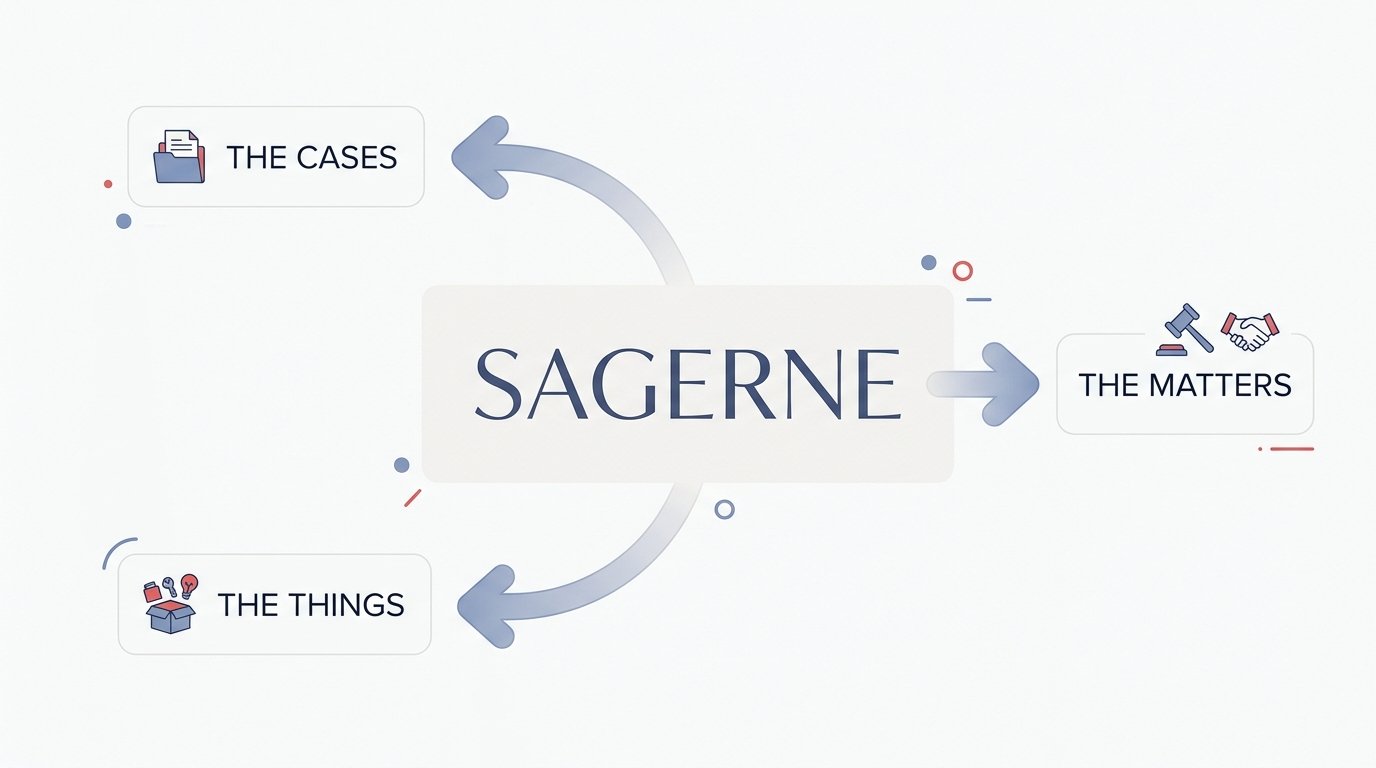
Sagerne Meaning: The Danish Word for “The Cases,” “The Matters,” and “The Things”
Sagerne tager tid. Depending on who is talking, that sentence could mean “The court cases take time,” “These matters take time,” or just “Things take time.” One Danish word, three correct English translations, and no way to pick between them without context.
That flexibility is the whole story of sagerne. It is not a brand, a username, or a hidden philosophy. It is an ordinary Danish word, and once you see how it is built, it stops being confusing.
The Short Answer
Sagerne is the definite plural of the Danish noun sag. It means “the cases,” “the matters,” “the affairs,” or “the things,” depending on the situation.
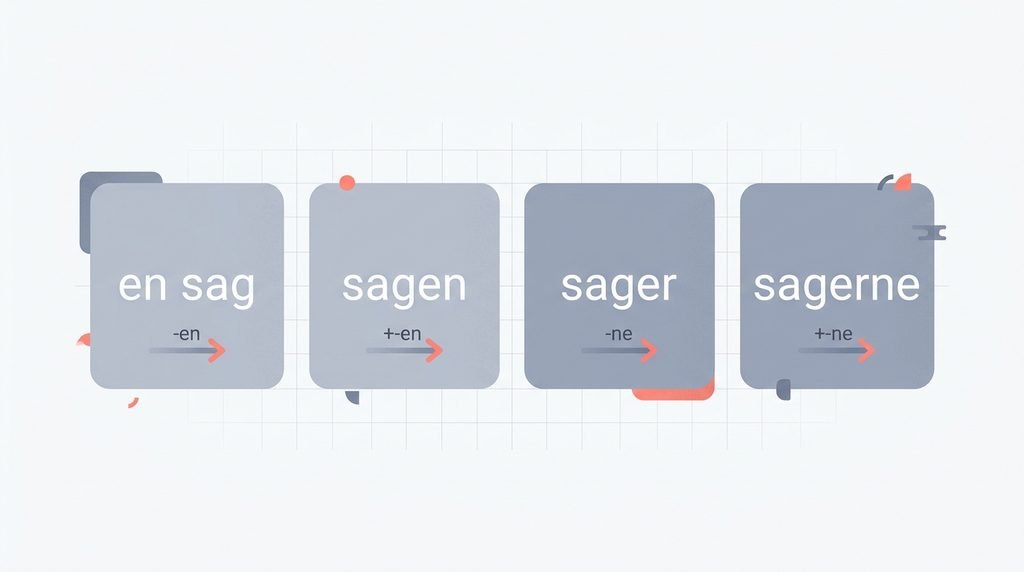
Sag is a common-gender noun, so the forms line up like this:
| Form | Danish | English |
|---|---|---|
| Singular, indefinite | en sag | a case / a matter |
| Singular, definite | sagen | the case / the matter |
| Plural, indefinite | sager | cases / matters |
| Plural, definite | sagerne | the cases / the matters |
Danish attaches “the” to the end of the noun instead of putting a separate word in front. So sager (“cases”) plus the plural definite ending -ne gives sagerne (“the cases”). English needs two words for what Danish does in one.
What Does “Sag” Actually Mean?
The root noun covers a surprising amount of ground. Dictionary entries list these main senses:
- Matter or affair: a topic that needs handling
- Cause: as in standing up for a cause
- Thing: a general, loose sense
- Case or lawsuit: the legal sense, closely related to retssag (“court case”)
- File: a case file or dossier
- Food: a minor sense that appears in the plural only, according to Wiktionary’s entry for sag
This spread is why translators hesitate. English has separate words for “case,” “matter,” “cause,” and “thing.” Danish has one noun that quietly does all four jobs.
Where the Word Comes From
Sag traces back to Old Danish sak, which comes from Old Norse sǫk and, further back, Proto-Germanic sakō. Its relatives are easy to spot in neighboring languages: Swedish sak, Icelandic sök, Dutch zaak, German Sache, and even the English word sake, as in “for the sake of.”
That family tree matters because some of the articles explaining sagerne online claim it has a separate or mysterious background from its German cousin. It doesn’t. German Sache (“thing, matter”) and Danish sag share a common Germanic root, which is a normal situation for related languages, not a puzzle.
How Sagerne Is Used in Real Sentences
Because the word is so flexible, context does the heavy lifting. Here are everyday examples with natural translations:
- Hvordan går det med sagerne? “How are things going?” (casual, about whatever is on someone’s plate)
- Lad os gennemgå sagerne. “Let’s go through the matters.” (a meeting or work setting)
- Sagerne er komplicerede. “The cases are complicated.” (legal or administrative)
- Vi må tage sagerne, som de kommer. “We have to take things as they come.” (a common idiom-style remark)
Notice that the English translation keeps changing while the Danish stays the same. That is not a flaw in the word. It is how the word works.
Legal and Official Settings
In courts and public offices, sagerne usually means “the cases.” You will see it in news reporting about investigations, tribunals, and administrative proceedings, wherever a group of related files is being discussed. The singular sagen tends to appear when one specific case is in focus, such as a single trial.
Workplace and Everyday Speech
Away from the courtroom, the word loosens up. A manager asking about sagerne may simply mean “the open items” or “the projects on the table.” A friend asking hvordan går det med sagerne? is not asking about lawsuits, just checking in.
Why Does This Word Trend Online?
Search interest in sagerne likely comes from three directions: language learners hitting the word in a text, people who spotted it in a name or link and wondered whether it was a brand, and general curiosity about Danish vocabulary. None of these needs a deeper explanation than the grammar above.
That said, the web has plenty of pages that stretch a plain word into something grander.
Where Online Explanations Overreach
When comparing the pages currently ranking for this word, a few patterns showed up that are worth treating carefully:
- Invented “traditions.” One page describes a “sagerne tradition” in Danish storytelling and admits there is no fixed canon. A tradition with no canon, no named works, and no sources is the writer’s framing, not a documented cultural practice.
- Unsupported claims about Danish national character. Statements that the word reflects Danes’ love of “order and fairness” or “transparent governance” are generalizations with no cited research.
- Cognitive-psychology references with no study named. Saying “research shows” without naming a study gives you nothing to check.
- Shaky pronunciation advice. Some guides describe a rolled “r” or a sounded hard “g,” which doesn’t match standard Danish. Danish pronunciation is genuinely hard for English speakers, so use an audio source from a Danish dictionary rather than a respelling in a blog post.
- Unsourced “news headlines.” A quoted headline with no outlet and no date is an illustration, not evidence.
None of this makes the basic meaning wrong. The core definition is consistent across sources. It is the surrounding decoration that you can safely ignore.
If you’ve read our breakdowns of serlig and incfidelibus, the pattern will look familiar: a real word with a modest meaning gets inflated into a “concept,” while truly invented terms like nerwey have no origin at all. Sagerne belongs firmly in the first group. Its meaning is easy to check, and it is just a plural noun.
Tips for Learners and Translators
If you are working with Danish text, these habits will save you trouble:
- Translate by context, not by dictionary entry. Ask whether the passage is legal, administrative, or casual, then choose “cases,” “matters,” or “things” accordingly.
- Watch the ending. Sag (a case), sagen (the case), sager (cases), and sagerne (the cases) differ by only a few letters. Mixing up definite and indefinite changes the meaning.
- Learn it as a phrase. Tage sagerne som de kommer (“take things as they come”) is more useful than memorizing a single gloss.
- Check compounds. Danish builds long words from sag, such as retssag (“lawsuit”) and sagsbehandler (“caseworker”). Recognizing the root helps you decode them.
Is “Sagerne” a Brand, Username, or Website?
As a word, no. If you are looking at a site or social account named Sagerne, treat it like any other unknown site and verify who runs it. The word itself tells you nothing about the owner, and plenty of people choose real words as usernames purely because they sound good. A name being a real Danish word is not a trust signal in either direction.
Frequently Asked Questions
What does sagerne mean in English? It means “the cases,” “the matters,” or “the things,” depending on context.
Is sagerne singular or plural? Plural. The singular definite form is sagen (“the case”), and the indefinite plural is sager (“cases”).
Is sagerne Danish or Norwegian? Danish. Norwegian has related forms, but sagerne with this exact ending is the standard Danish definite plural.
Where does the word come from? From Old Danish sak and Old Norse sǫk, from Proto-Germanic. It is related to English sake and German Sache.
Is sagerne a legal term? It is used in legal contexts to mean “the cases,” but it is also used in everyday speech for “the things” or “the matters,” so it is not exclusively legal.
Does sagerne have a hidden or philosophical meaning? No documented one. Some blogs describe cultural or psychological layers, but none of the pages reviewed provided sources for those claims.
Bottom Line
Sagerne is the definite plural of the Danish noun sag, and it means “the cases,” “the matters,” or “the things.” The flexibility comes from sag itself, a single noun that covers what English splits across several words. Everything beyond that, from storytelling traditions to national character, is interpretation rather than documented fact. Learn the four forms of sag, pay attention to context, and the word will stop being a mystery.