European Active Projects: What They Are, Who Funds Them, and How to Find Them
If you searched for “european active projects”, you probably expected one list, one programme, and one place to apply. The reality is broader and more useful than that. The phrase usually points to research and innovation projects that are running right now across Europe, paid for mainly by the European Union. The biggest single source of that funding is Horizon Europe, the EU’s research and innovation programme for 2021 to 2027, with a budget of €95.5 billion. But Horizon Europe is not the only programme behind active European projects, and the phrase itself has no single official definition. This guide explains what the term usually means, which programmes sit behind it, and how to find the right project — and it clears up one company that shares the name but has nothing to do with EU funding.
The Short Answer
European active projects are mostly EU-funded research and innovation projects that are currently running, led by Horizon Europe. Horizon Europe runs from 2021 to 2027 with a €95.5 billion budget, and its projects bring together at least three partners from EU member states, associated countries, or third countries. You can find active projects through the EU Funding & Tenders portal and CORDIS, the EU’s project database, or on the project pages of the universities and organisations taking part. Note that “European Active Projects Ltd” is a separate UK company in ship repair and marine services — it is not an EU programme.
What Does “European Active Projects” Mean?
The phrase “european active projects” is a search phrase, not the name of one programme. People use it when they want to know which European projects are running right now, who is funding them, and whether they can take part. In most search results, it means currently running EU-funded research and innovation projects, and Horizon Europe is the programme behind most of them.
That matters because the phrase has no single official list and no single official definition. No one organisation publishes a page called “European Active Projects” that covers everything. Instead, universities, research institutes, companies, and EU bodies each publish their own lists of the projects they are involved in. A list on one university’s website shows only that university’s projects. A list on a food research body’s website shows only food projects. So when you search the phrase, you need to know which programme and which organisation you are looking at, or you will mix up projects that have nothing in common except the word “European”.
The projects themselves share a pattern. They are usually run by a consortium — a group of partners from several countries — rather than by one organisation alone. They have a start date and an end date, a coordinator who leads the work, and a defined topic, such as health, climate, digital technology, or food. Most of them are funded by the EU, and most of them publish their results, reports, or tools publicly while they run.
Horizon Europe: The Biggest Programme
Horizon Europe is the EU’s funding programme for research and innovation from 2021 to 2027. It is the successor to Horizon 2020 and to the earlier Framework Programmes, including FP7. Its budget is €95.5 billion for its seven-year period, which makes it the largest single source of EU research funding and the programme most “european active projects” belong to.
The programme’s aim is to bring innovators together to answer major challenges identified by the European Commission. It does this by pooling the expertise of at least three partners from EU member states, associated countries, or third countries.
Horizon Europe is not a grant for one person or one company working alone. It is built around collaboration. The partners apply together, share the funding, and share the work. That structure is also why the projects are so visible in search results: each partner lists the project on its own website, so the same project can appear on a dozen different pages.
The Six Clusters Horizon Europe Covers
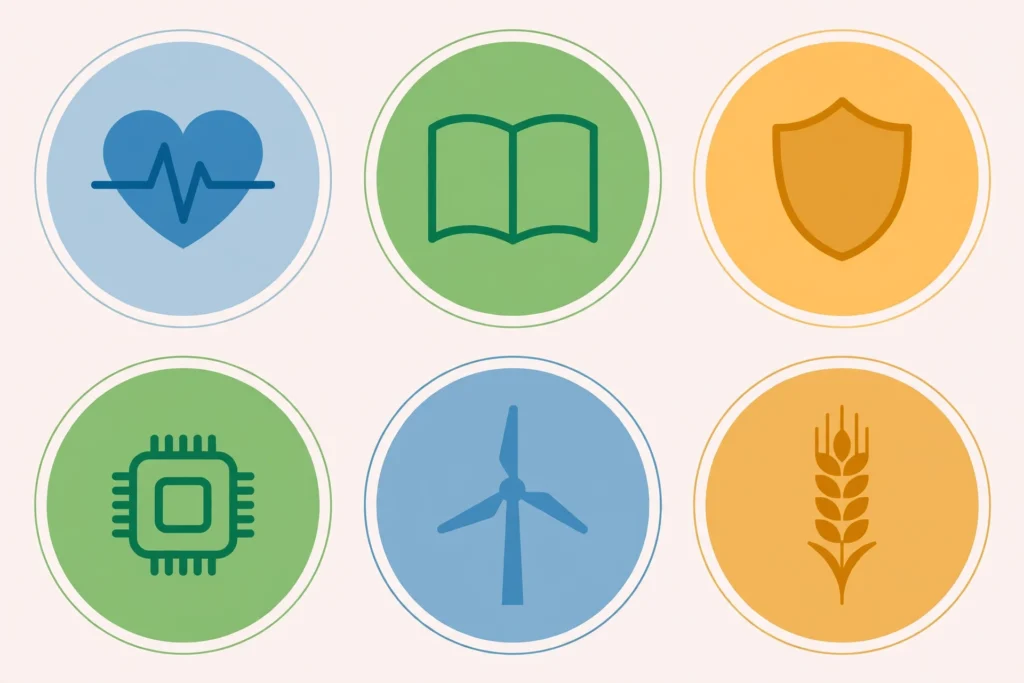
Horizon Europe organises much of its work into six clusters. Each cluster groups together the challenges in one broad area, and the projects inside it work on different parts of the same problem. The six clusters are health; culture, creativity and inclusive society; civil security for society; digital, industry and space; climate, energy and mobility; and food, bioeconomy, natural resources, agriculture and environment.
The health cluster covers medical research, disease prevention, and personalised care. The culture cluster covers heritage, democracy, and social inclusion. The civil security cluster covers protecting people and infrastructure from crime, disasters, and cyber threats. The digital, industry and space cluster covers artificial intelligence, advanced manufacturing, and space technology. The climate, energy and mobility cluster covers clean energy, transport, and cutting emissions. The food cluster covers farming, fisheries, forestry, and the food system as a whole.
Knowing the clusters helps you search. If you are looking for a project on batteries, you are looking in the climate, energy and mobility cluster. If you are looking for a project on food safety, you are looking in the food cluster. The cluster names are also the labels you will see on the EU Funding & Tenders portal when you filter projects by topic.
Active Projects You Can Look Up Today
The Université libre de Bruxelles (ULB) publishes a list of the European collaborative projects it takes part in, and it is a good example of what active projects actually look like. Here is a small selection from that list, with the dates ULB gives for each one. All of them are Horizon Europe projects unless the listing says otherwise.
Thera4Care works on theranostics for personalised care, running from 2025 to 2030. SustAIn.brussels2 looks at Brussels’ digital future with AI, running from 2026 to 2029. PQC-SCAN works on post-quantum cryptography, running from 2026 to 2029. BrinE-loop works on electrified brine valorization, running from 2026 to 2030. COBRAS works on circular building with robotic assembly swarms, running from 2026 to 2029.
RESISTANCE studies how to resist authoritarian networks, running from 2026 to 2029. UPRAISE works on sustainable processes for end-of-life batteries and critical raw materials recovery, running from 2026 to 2030. EHEAT works on electric heating for decarbonization in aluminium, steel and cement, running from 2026 to 2030. IMPACT works on a monoclonal antibody against poxviruses, running from 2026 to 2030. BE READY NOW is a European partnership for pandemic preparedness, running from 2026 to 2033.
Forest4Youth works on forest-based therapies for adolescent mental health in North-West Europe, running from 2025 to 2028. Hyacademy is the European Hydrogen Academy, running from 2024 to 2028. QSNP is the Quantum Secure Networks Partnership, running from 2023 to 2026.
Notice the pattern in those dates. Most of the projects run for three to five years, and several of them started in 2025 or 2026. A project listed as “active” is one whose dates cover today. A project whose end date has passed is finished, even if its website is still online. Always check the dates before you treat a project as current.
Other EU Programmes Behind Active Projects
Horizon Europe is the biggest programme, but it is not the only one. Other EU programmes fund active projects too, and the organisations running them often describe their work simply as “European projects”. Two examples show how different those projects can be.
Rapporteur, a European communications and research organisation, lists several current EU public projects on its own site. AIOLIA is a research-based framework to guide policymakers and institutions in interpreting and implementing AI regulation, with global collaboration across Asia, Africa and North America. LOCATEE helps municipalities combat energy poverty by renovating private multi-apartment buildings for vulnerable residents, with pilot projects in Poland, Portugal and Greece. ENEFIRSTplus supports the EU’s Energy Efficiency First principle with practical guidelines and real-life examples, tested in eight cases across four countries.
AI-CODE builds AI-based tools to support media professionals in producing trustworthy information, combating disinformation and assessing source credibility. AI4TRUST is a hybrid human-machine system against disinformation, monitoring social platforms in multiple languages — up to 70% of EU coverage — with a network of human fact-checkers. GOALSCORE fights violence against women and domestic violence, using sport to promote gender equality. TARGET is supported by four National Football Federations and UEFA, and it combats gender inequalities using youth football players as advocates. Rapporteur notes on its own site that it no longer submits for EU public project grants but continues to fulfil its existing projects, so these are running projects, not open calls.
The European Food Information Council (EUFIC) lists its own active food-systems projects, and they show the same pattern at a smaller scale. EmerGO tracks and reduces pollutants towards zero pollution in food and drink systems, running from 1 June 2026 to 31 May 2030. AGRIMED C works on agriculture management education towards climate resilience, running from 1 October 2025 to 30 September 2028. FoodChoices4LIFE runs from 1 October 2025 to 30 September 2028. FoSSNet is the Pan-European Food Systems Science Network, running from 1 February 2024 to 31 January 2028. MICROBIOMES4SOY works on healthier diets and sustainable food systems through microbiomes for soya, running from 1 January 2024 to 31 December 2028. CLEVERFOOD builds connected labs for food system transformation, running from 1 January 2023 to 31 December 2026. PLAN’EAT works on food systems transformation towards healthy and sustainable dietary behaviour, running from 1 September 2022 to 31 August 2026. EUFIC says its information is science-based and that it engages in active research and innovation-funded projects with partners from all over Europe.
Who Can Join a European Project?
Horizon Europe projects are built for organisations, not for individuals working alone. Universities, research institutes, companies, public bodies, and non-profit organisations can all take part, as long as they bring the expertise the project needs. The minimum is at least three partners from EU member states, associated countries, or third countries, and most projects have far more than three.
That does not mean the projects are only for researchers. A project on energy renovation needs municipalities and housing bodies. A project on food systems needs farmers, food companies, and consumer organisations. A project on disinformation needs media professionals and fact-checkers. A project on sport and gender equality needs football federations and youth clubs. If you work in one of those fields, you may be exactly the kind of partner a project is looking for.
For most people, the realistic way in is through an organisation. Universities and research institutes join as partners and hire researchers and staff to work on the project, and companies join as partners and assign their own people. If you are a student, a researcher, or an employee, the first step is to find out whether your organisation already takes part in European projects, and which ones it is running now.

How to Find Active European Projects Yourself
You do not need to rely on one list. The official places to search are the EU Funding & Tenders portal and CORDIS, the EU’s project database. Both let you search by topic, and both show the project dates, the coordinator, and the partners. Use them together: the portal shows the calls and the funding, while CORDIS shows the project factsheets, including the start and end dates and the organisations involved.
A simple way to search is to start with your topic and then narrow it down. First, pick the cluster or theme that fits what you are looking for — health, climate, digital, food, and the rest. Then check the project dates and status, so you only look at projects that are still running. Then read the project page and its CORDIS factsheet, and check who the coordinator and partners are.
Be careful with two common mistakes. The first is treating a project list on one organisation’s website as a list of all European projects. It is not — it shows only that organisation’s projects. The second is treating a finished project as an active one. Project websites often stay online for years after the funding ends, so always check the end date.
European Active Projects Ltd: A Different Thing With the Same Name
There is one more thing to clear up, because it confuses search results. “European Active Projects Ltd” is a UK private limited company, not an EU programme. It was incorporated on 9 May 2005, with company number 05447028, and it works in ship repair, marine and industrial services, and employment placement, based in Chatham and Glasgow. It has no connection to Horizon Europe and no connection to EU research funding.
If you search for the phrase and land on a company page about marine services or ship repair, you have found the company, not the programme. The company is a legitimate business in its own field, but it cannot help you find EU funding, join a research consortium, or apply for a Horizon Europe grant. The two things simply share a name.
What Is NOT Verified
A few things about this topic are easy to get wrong, so here is what this article does not claim. First, there is no single official list or definition of “european active projects” — the phrase is a search term, and the projects it points to come from several different programmes. Second, this article does not claim that every project listed here is still funded or still hiring; project dates come from the organisations’ own pages, and a project can end, change partners, or close its recruitment without its website saying so.
Third, the funding figure in this article — €95.5 billion for Horizon Europe over 2021 to 2027 — is the programme’s total budget, not the amount going to any one project or topic. Do not treat it as a promise of funding for your idea. Fourth, this article leaves out statistics about European projects that appeared in one search result without a verifiable source — figures about patent filings, political trust, or specific pilot systems were not independently confirmed, so they are not presented as facts here.
If you are checking a project or a company before trusting it, apply the same checks you would use for any unfamiliar website. A careful guide to how to check whether a website is safe and legitimate explains how to look at the organisation behind a page, what it claims, and what it can actually prove.
FAQ
What are European active projects?
They are mostly EU-funded research and innovation projects that are currently running, led by Horizon Europe. The phrase is a search term, not the name of one programme, so the projects it points to come from several different EU programmes and organisations.
What is Horizon Europe?
Horizon Europe is the EU’s funding programme for research and innovation from 2021 to 2027. It is the successor to Horizon 2020 and FP7, and its budget is €95.5 billion for its seven-year period.
How much funding does Horizon Europe have?
Its total budget is €95.5 billion for 2021 to 2027. That is the budget for the whole programme, not for one project. Individual projects receive a share of it, depending on their size and topic.
Who can join a European project?
Universities, research institutes, companies, public bodies, and non-profit organisations can join as partners. Projects need at least three partners from EU member states, associated countries, or third countries. Individuals usually take part through an organisation that is already a partner.
Where can I find active European projects?
The official places are the EU Funding & Tenders portal and CORDIS, the EU’s project database. You can also look at the project pages of universities and organisations taking part, such as ULB, Rapporteur, or EUFIC — but remember those pages show only that organisation’s projects.
Are European active projects only for researchers?
No. Projects need many kinds of partners. A project on energy renovation needs municipalities. A project on food needs farmers and food companies. A project on disinformation needs media professionals and fact-checkers. Researchers are central, but they are not the only people involved.
Is European Active Projects Ltd part of the EU?
No. European Active Projects Ltd is a UK private limited company in ship repair, marine and industrial services, and employment placement. It is not an EU programme and has no connection to Horizon Europe.
Bottom Line
European active projects are, in most cases, EU-funded research and innovation projects that are running right now, and Horizon Europe is the programme behind most of them. Its €95.5 billion budget for 2021 to 2027 funds work across six clusters — health, culture, civil security, digital, climate, and food — carried out by consortia of at least three partners from different countries. You can find them through the EU Funding & Tenders portal and CORDIS, and you can see real examples on the pages of the organisations taking part. Just remember to check the dates and the coordinator and partners, and do not confuse the programmes with European Active Projects Ltd, a UK marine services company that happens to share the name. If you do that, the phrase stops being confusing and starts being useful: a way to find real, funded work that is happening in Europe right now.