Dr Gina Sims Gastroenterologist: Who She Is and What Is Actually Verified
If you searched for “dr gina sims gastroenterologist,” you probably found two different names, two different cities, and a lot of pages that sound confident without showing their work. This article sorts that out.
The short version is this: the New York gastroenterologist behind this search term appears in hospital records under the professional name Gina Sam, MD. Her own practice websites use both “Gina Sam” and “Gina Sims,” which is why search results mix the two. There is also a completely different doctor named Gina Sims — a radiologist in Dallas — and she is not the gastroenterologist in this article.
Nothing here is medical advice. This is a professional bio based on publicly documented records, with a clear line between what a hospital profile confirms and what only a practice’s own website claims. For any personal health decision, talk to a qualified professional who can review your own situation.
The Short Answer
Dr Gina Sims, gastroenterologist, is the name many searchers use for Dr Gina Sam, MD, a gastroenterologist in New York City whose hospital profile lists her specialties as gastroenterology and internal medicine.
Her education and training, as listed by NYC Health + Hospitals, are: medical education at Tufts University School of Medicine in 2003, an internship and residency in internal medicine at Lenox Hill Hospital, and a gastroenterology fellowship at New York University School of Medicine in 2009. Her listed hospital affiliation is NYC Health + Hospitals/Kings County in Brooklyn.
Her practice websites describe her as the founder of the Gastrointestinal Institute of Motility and Integrative Health (G.I.M.I.H), also called the Institute of Gastrointestinal Motility Disorders and Integrative Health, with a focus on motility and functional digestive disorders. That founder claim comes from her own practice pages, not from the hospital profile, so this article attributes it rather than presenting it as hospital-confirmed.
If you remember only one thing, remember this: check the full professional name, the city, and the specialty together. “Gina Sims” alone can point you to the wrong doctor.
The Name Problem: Sims, Sam, and a Second Doctor
Why you see two names for one gastroenterologist
The confusion is understandable, because the practice’s own websites create it. One practice site is headed “Dr Gina Sims Gastroenterologist,” while another practice page about the same doctor is titled “Dr. Gina Sam, MD/MPH” and then refers to her as both Dr Sam and Dr Sims in the same text. A page on the second site even asks directly whether Dr Gina Sims and Dr Gina Sam are the same person, and answers yes.
The hospital record is cleaner. NYC Health + Hospitals lists her as “Sam Gina, MD,” with gastroenterology and internal medicine as her specialties. That is the name to use when you verify a license or look up a hospital affiliation, because directories and hospital systems file doctors under their professional name, not under every name a marketing site uses.
This article therefore covers the New York gastroenterologist, and uses “Gina Sam” when reporting what hospital and directory records say, and “Gina Sims” when explaining what searchers type and what the practice sites call her. It does not claim to know why both names are used. No explanation for the two names was found in a hospital or board record, so none is offered here.
The other Dr Gina Sims you need to rule out
A separate doctor named Gina Sims works in a different specialty and a different state. UT Southwestern Medical Center profiles Gina Cho Sims, MD, as an Associate Professor of Radiology and a member of its Musculoskeletal Radiology Division, with clinical interests in interpreting musculoskeletal X-rays, CT scans, and MRI images.
Her training path is entirely different: a bachelor’s degree in biochemistry from the University of Texas at Austin, a medical degree from UT Southwestern, a diagnostic radiology residency at George Washington University Medical Center, and advanced training in musculoskeletal radiology at the University of California–San Diego.
So if a result mentions Dallas, radiology, bones, joints, or MRI imaging, it is not the New York gastroenterologist. If it mentions New York, gastroenterology, IBS, or motility disorders, it is the doctor this article covers. Checking city plus specialty is the fastest way to tell them apart.
What Is Verified About the New York Gastroenterologist
Education and training
The strongest public record found for this doctor is her NYC Health + Hospitals profile. It lists, in order:
- Medical education: Tufts University School of Medicine, 2003
- Internship: Lenox Hill Hospital, internal medicine, 2004
- Residency: Lenox Hill Hospital, internal medicine, 2006
- Fellowship: New York University School of Medicine, gastroenterology, 2009
- Affiliation: NYC Health + Hospitals/Kings County, Brooklyn, New York
That timeline is consistent with the directory listings that describe her as having more than 20 years of experience since medical school. Experience counts vary slightly between directories because they count from different starting points, so treat any single “years of experience” number as approximate rather than exact.
Board certification: what is claimed versus what was confirmed
This is where careful wording matters. Her practice site states that she holds board certification in both internal medicine and gastroenterology from the American Board of Internal Medicine. Directory listings, including Healthline’s FindCare profile, also describe her as board certified in gastroenterology.
This article reports those claims, but it does not present board certification as independently confirmed, because this research did not check a primary American Board of Internal Medicine record. That distinction is not a doubt about the doctor. It is the honest limit of what was verified here. If board status matters to your decision — and it should — check it yourself through the steps in the verification section below before booking.
Her practice site also uses the letters MD/MPH, indicating a Master of Public Health alongside the medical degree. The hospital profile reviewed here lists medical education and clinical training but does not list an MPH, so this article attributes the MPH to the practice site only.
The Mount Sinai role: former, not current
Her practice site says she was formerly the Director of the Mount Sinai Gastrointestinal Motility Center. A Mount Sinai publication supports the historical part of that claim: a 2015 Mount Sinai blog post on colorectal cancer awareness is bylined as a guest post by “Gina Sam, MD, MPH, Director of the Gastrointestinal Motility Center at The Mount Sinai Hospital.”
Note the word “formerly.” Mount Sinai’s own later reporting names a different physician, Daniela Jodorkovsky, MD, as director of its Center for Gastrointestinal Physiology and Motility from October 2022. So if you see a current-looking page calling Dr Sam the Mount Sinai motility director, treat it as outdated. Her past leadership role there is documented. A current Mount Sinai directorship is not.
Her practice site also says she built a gastrointestinal motility centre at Stony Brook University before Mount Sinai. That claim appears in practice-linked publicity material, not in a hospital profile reviewed here, so it is noted as a practice-site claim rather than a confirmed hospital record.
What She Specializes In

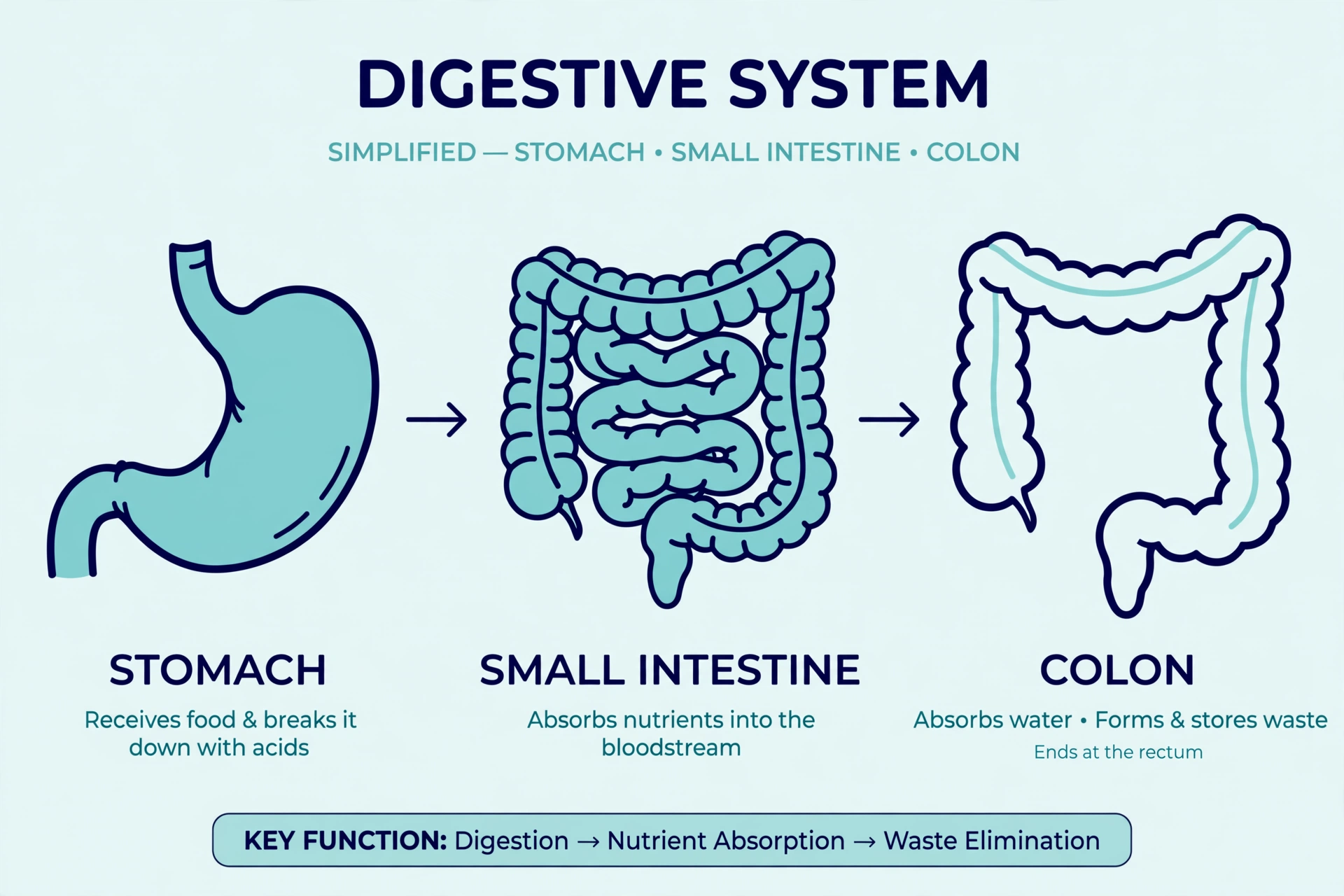
A gastroenterologist is a doctor who specialises in digestive diseases — conditions affecting the esophagus, stomach, intestines, colon, liver, pancreas, and gallbladder. Within that broad field, Dr Sam’s practice sites describe a narrower focus: gastrointestinal motility and functional disorders. In plain terms, motility is about how food and waste move through your digestive tract. When that movement is too slow, too fast, or uncoordinated, symptoms can follow even when standard tests look normal.
According to her practice sites, her stated focus areas include:
- Irritable bowel syndrome (IBS)
- Gastroesophageal reflux disease (GERD) and acid reflux
- Gastroparesis, where the stomach empties too slowly
- Achalasia, a swallowing disorder affecting the esophagus
- Pelvic floor dyssynergia, where the muscles used for bowel movements do not coordinate properly
- Crohn’s disease and ulcerative colitis, the main forms of inflammatory bowel disease (IBD)
- Chronic constipation and fecal incontinence
- Small intestinal bacterial overgrowth (SIBO)
These are the practice’s stated focus areas, not a promise about any individual case. IBS and IBD are worth separating here because searchers often mix them up: IBS is a functional disorder affecting how the gut moves and feels, while IBD involves inflammation and tissue damage that shows up on testing. They are managed differently, which is why an accurate diagnosis matters more than a label you found online.
Services and Procedures Listed by the Practice
Her practice sites list consultations alongside testing and procedures. The services named across those pages include:
- Digestive health consultations, in person and by virtual visit according to the practice site
- Colonoscopy, used for colorectal cancer screening and for examining the colon
- Upper endoscopy (EGD), for examining the esophagus, stomach, and upper intestine
- Anorectal manometry and biofeedback, used to evaluate pelvic floor function
- Breath testing, described by the practice as a tool for lactose intolerance and SIBO assessment
- Nutrition consultations and lifestyle and wellness planning
Whether a particular test or procedure is right for you depends on your symptoms, history, and examination, and this article does not recommend any of them for any individual. Virtual visits are described on the practice site as available for patients who cannot travel to New York, but procedures such as colonoscopy and endoscopy always require an in-person visit. That is a general fact about those procedures, not a claim about one clinic’s booking policy.
You may also see the practice site promote a digestive supplement called Emma. The practice site itself describes it as a dietary supplement rather than a drug, and notes it has not been evaluated by the FDA for treating any condition. This article does not recommend it, and a supplement is never a substitute for an evaluation if your symptoms are new, severe, or getting worse.
What Competing Pages Get Wrong
Many pages ranking for this keyword repeat the same problems, and recognising them will help you judge any doctor bio you read next.
First, several pages present practice-site marketing as verified fact. Claims about a “prestigious clientele” or celebrity patients appear on the practice’s own about page. No independent record was found to support that wording, so this article leaves it out. A doctor’s skill is not proven by who else supposedly visits them.
Second, several pages list awards — including “Top Gastroenterologist” years and similar titles — without naming the organisation that gave them. The practice’s about page lists awards in a table, but the awarding bodies are not identified there. An award without a named giver cannot be checked, so this article does not repeat the list as verified honours.
Third, some pages blend the two Dr Sims doctors, or blend old and current roles, so a reader can end up believing a Dallas radiologist treats IBS, or that Dr Sam still directs the Mount Sinai centre. Always match name, city, and specialty before trusting a bio.
Fourth, some pages answer medical questions — what to eat, which supplement to take, whether your symptoms are serious — as if a web article could decide that for you. It cannot. General information about warning signs is useful. Personal advice is not something a bio article should give.
How to Verify a Doctor’s Credentials Before You Book
You do not need to take any website’s word for a doctor’s credentials, including this one. The same habit applies here as when you are checking an online claim carefully in any other field: go to the primary record, not the marketing page.
Step 1: Confirm the exact professional name and location
Start with the name as it appears on a hospital profile — here, Gina Sam, MD — plus the city and specialty. If a booking page uses a different name spelling, ask the office to confirm that both names refer to the same licensed physician, and check that the answer matches the hospital record.
Step 2: Check the state license
In New York, physician licensing information sits with the New York State Education Department’s Office of the Professions. Its consumer information page explains that New York licenses physicians but does not itself certify them in specialty areas — specialty certification comes from specialty boards. Use the state’s official license verification search to confirm that a physician is currently licensed and registered, and note that a license alone does not prove a specialty claim.
Step 3: Check specialty board certification separately
Licensure and board certification are different things. A doctor can be licensed without holding a particular board certification, and a board certification can lapse while a license remains active. If a practice claims American Board of Internal Medicine certification in gastroenterology, confirm it through the board’s own verification route rather than through a directory or a practice website.
Step 4: Check the hospital affiliation
A hospital profile, such as the NYC Health + Hospitals listing used here, confirms an affiliation at the time it was published. Affiliations change, so if hospital access matters to you — for example, if you may need a procedure there — confirm the current affiliation with the hospital or the practice before you rely on it.
Step 5: Read reviews the same way you read marketing
Patient reviews can tell you about waiting times, communication, and office experience, but they cannot verify training, and they are not a medical record. Give more weight to reviews that describe specific, checkable experiences, and less weight to pages that repeat identical praise across many sites. If every page about a doctor reads like an advertisement, that is a reason to check the primary records more carefully, not less.
How to Choose a Gastroenterologist: A Practical Checklist

Choosing a specialist is a practical decision, not just a credentials check. Use this list when you compare any gastroenterologist, not only Dr Sam.
Before you book
- Confirm the doctor’s full professional name, specialty, and current practice location.
- Verify the state license and, separately, any claimed board certification.
- Check whether your insurance plan requires a referral from your primary care doctor, even if the specialist’s office accepts direct bookings.
- Ask what the first visit covers, what records to bring, and whether test results from other doctors will be reviewed beforehand.
- Bring a list of your current medications and supplements, a summary of your medical history, and any recent test results or imaging.
Questions worth asking at the first visit
- What conditions are you considering, and what would rule each one in or out?
- Which tests are you recommending, and what will each result change about the plan?
- How will results be communicated, and how quickly?
- What should prompt me to contact the office sooner rather than waiting for a follow-up?
- If my symptoms change or worsen, what is the fastest way to reach the practice?
Warning signs that deserve prompt attention
Seek prompt medical care — urgent care or emergency care where appropriate — if you notice blood in your stool, black or tarry stools, persistent vomiting, severe abdominal pain, unexplained weight loss, difficulty swallowing, or symptoms that are rapidly getting worse. This is general information, not a diagnosis of your situation, and it is not a substitute for advice from a qualified professional who can examine you.
What this article deliberately does not tell you
It does not tell you whether Dr Sam is the right doctor for you. It does not compare her with other New York gastroenterologists, because no verified comparison data was reviewed. It does not repeat patient ratings as a quality score, because ratings reflect individual experiences and office factors as much as clinical care. And it does not include personal contact details: use the practice’s or hospital’s official channels, found through their official websites, rather than a phone number or email address copied from a third-party page.
Frequently Asked Questions
Is Dr Gina Sims a gastroenterologist?
Yes, as far as the public record shows — with a name clarification. The New York doctor searched for as “Dr Gina Sims, gastroenterologist” is listed by NYC Health + Hospitals as Gina Sam, MD, with gastroenterology and internal medicine as her specialties. Her practice sites use both names for the same doctor. A different Dr Gina Sims in Dallas is a radiologist, not a gastroenterologist.
Are Dr Gina Sims and Dr Gina Sam the same person?
According to the gastroenterologist’s own practice sites, yes. One practice page states directly that Dr Gina Sims, also known as Dr Gina Sam, is a board-certified gastroenterologist in New York City. The hospital profile uses the name Sam. No hospital or board record reviewed here explains the use of both names, so this article reports the link without guessing at a reason.
Where does Dr Gina Sam practice?
Her hospital affiliation listed by NYC Health + Hospitals is NYC Health + Hospitals/Kings County in Brooklyn, New York. Her private practice, the Gastrointestinal Institute of Motility and Integrative Health, is described on her practice sites as based in New York City. Confirm the current private-practice location through the practice’s official site before travelling, because practice locations can change after a profile is published.
What did Dr Gina Sam study, and where did she train?
According to her NYC Health + Hospitals profile: Tufts University School of Medicine in 2003, an internship and residency in internal medicine at Lenox Hill Hospital, and a gastroenterology fellowship at New York University School of Medicine in 2009. Her practice site also credits her with a Master of Public Health, but that degree is not listed on the hospital profile reviewed here.
Is Dr Gina Sam board certified?
Her practice site states that she holds American Board of Internal Medicine certification in internal medicine and gastroenterology, and directories also describe her as board certified in gastroenterology. This article attributes that claim rather than confirming it, because no primary board record was checked during this research. Verify board status through the board’s own verification route before booking if it matters to your decision.
Was Dr Gina Sam the director of the Mount Sinai motility centre?
She held that role in the past. A 2015 Mount Sinai blog post identifies her as Director of the Gastrointestinal Motility Center at The Mount Sinai Hospital. Mount Sinai later named a different director for its motility centre in 2022, so she should be described as a former director, not a current one.
What conditions does she treat?
Her practice sites list motility and functional disorders as her focus, including IBS, GERD and acid reflux, gastroparesis, achalasia, pelvic floor dyssynergia, Crohn’s disease, ulcerative colitis, chronic constipation, fecal incontinence, and SIBO, alongside colonoscopy and colorectal cancer screening. These are the practice’s stated focus areas. Whether any of them applies to you is a question for a qualified professional who can review your history.
Do you need a referral to see a gastroenterologist?
It depends on your insurance plan, not only on the specialist’s office. Some offices accept direct bookings, while some insurance plans require a primary-care referral for the visit to be covered. Check your plan before booking so you are not surprised by the cost. Emergency symptoms should go to urgent or emergency care, not to a routine booking queue.
How is this doctor different from Dr Gina Cho Sims?
They are different people in different specialties and states. Dr Gina Cho Sims is a radiologist at UT Southwestern in Dallas who interprets musculoskeletal imaging. Dr Gina Sam, searched for as Dr Gina Sims, is a gastroenterologist in New York who treats digestive disorders. Shared first and last names are the only link between them.
Bottom Line
Dr Gina Sims, gastroenterologist, is best understood as the search name for Dr Gina Sam, MD, a New York gastroenterologist whose hospital profile confirms Tufts medical education in 2003, Lenox Hill internal medicine training, and a New York University gastroenterology fellowship in 2009, with a hospital affiliation at NYC Health + Hospitals/Kings County.
Her practice sites add the rest of the picture — founder of a motility and integrative health institute, a focus on IBS, reflux, gastroparesis, pelvic floor disorders, and inflammatory bowel disease, and a past directorship at Mount Sinai’s motility centre — but those additions are practice-site claims, and the careful version of this bio keeps them labelled as such.
Before you book with any specialist, verify the license, verify the board certification separately, and confirm the current practice location and hospital affiliation through official channels. A bio article can help you ask better questions. Only a qualified professional who reviews your own history can answer the medical ones.