How to Fix Frizzy Hair: The Ultimate Guide to Smooth, Healthy Strands
Dealing with unruly, puffed-up strands despite spending time and money on styling products is a daily frustration for many. Frizz is not merely a cosmetic annoyance; it is a structural indicator that the outer protective layer of the hair has lifted, allowing atmospheric moisture to penetrate deep into the cortex.
Moving beyond temporary fixes requires establishing a foundational, science-backed routine that heals dry frizzy hair from root to tip. By understanding the underlying mechanics of cuticle health and moisture retention, you can transform your hair care regimen into a targeted science.
Understanding the Root Causes of Frizz
Why Is My Hair So Frizzy
Explaining the biology of hair porosity reveals why some strands are naturally more unmanageable than others. When the outer protective layer of the hair fiber—known as the cuticle—is raised or damaged, moisture from the surrounding air enters the hair shaft, causing it to swell and create frizz. Furthermore, curly, coily, or structurally dry hair textures are genetically more susceptible to moisture loss because natural scalp oils (sebum) struggle to travel down the winding contours of the hair shaft. This leaves the mid-lengths and ends chronically parched and vulnerable to environmental humidity.
The Science of Cuticle Damage and Environmental Triggers
Examining how mechanical friction, chemical processing, and thermal styling impact hair reveals the true catalysts behind persistent frizz. Rough towel drying, tight elastic hair ties, chemical relaxers, hair dyes, and high-heat styling tools aggressively lift and chip away at the protective shingle layer of the hair fiber, stripping away vital lipids. According to expert guidelines from the American Academy of Dermatology, gentle handling and minimizing harsh mechanical stress are essential for maintaining healthy hair cuticles and preventing structural breakage over time.
Step-by-Step Routine on How to Fix Frizzy Hair
Optimizing Your Wash Day and Cleansing Habits
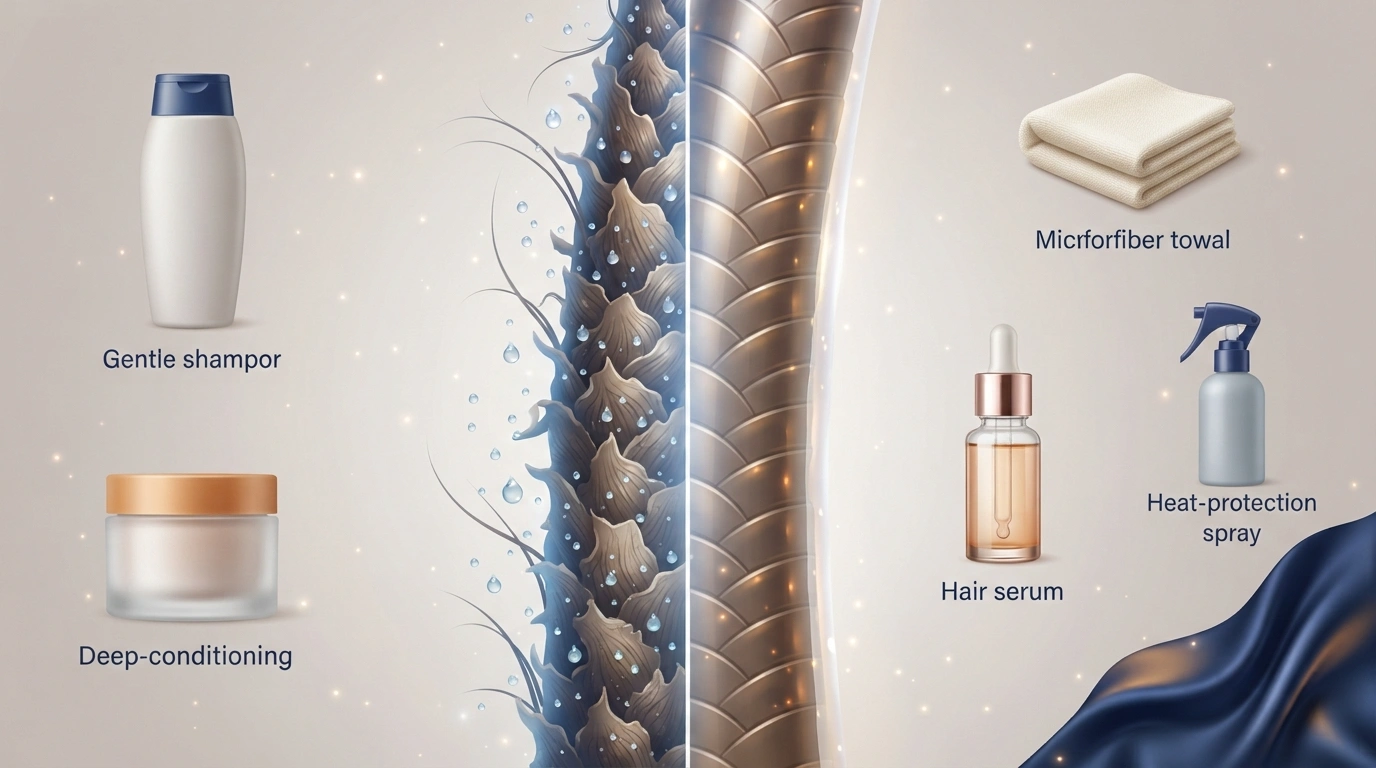
Shifting away from harsh, sulfate-based shampoos is the foundational step required to effectively get rid of frizzy hair. Traditional clarifying surfactants strip the scalp and strands of their natural lipid barriers, leaving the hair cuticle parched, vulnerable, and prone to static. When learning how to fix frizzy hair, your cleansing ritual should prioritize gentle, sulfate-free cleansers that cleanse the scalp without disturbing the hair’s natural moisture equilibrium. Always use lukewarm or cool water during your final rinse; hot water blasts open the cuticle scales, whereas cooler temperatures help flatten and seal them, instantly minimizing post-wash puffiness. Focus your shampoo application primarily on the roots and scalp, allowing the suds to gently slide down the lengths rather than aggressively scrubbing the fragile ends.
Deep Hydration and Moisture Retention Strategies
Incorporating targeted hydration into your regimen requires a strategic combination of humectants and emollients designed to lock water inside the hair cortex. Applying advanced hair products for frizzy hair—such as leave-in treatments and deep conditioners enriched with glycerin, hyaluronic acid, shea butter, and lightweight plant oils—creates a protective hydrophobic barrier over the cuticle. This external seal blocks ambient moisture from penetrating the hair shaft, which is the primary culprit behind humidity-induced swelling. For optimal results, layer your hydration products onto soaking-wet hair to trap water molecules within the strand before sealing them in with a smoothing serum or cream.
Post-Wash Styling and Friction Reduction
Managing your hair immediately after washing dictates whether your strands dry smooth or erupt into friction-induced frizz. Ditch traditional terrycloth towels, as their abrasive loops snag wet, vulnerable cuticles and cause micro-tears; instead, gently squeeze out excess water using a ultra-fine microfiber towel or a smooth cotton t-shirt. While hair is still damp, distribute a dedicated frizz control product evenly using a wide-tooth comb or a wet brush designed to glide through tangles without snapping the fiber. Avoid touching or manipulating your hair as it air-dries or diffuse-dries, as physical disruption while the hydrogen bonds are setting will instantly reactivate frizz and disrupt your smooth alignment.
Advanced Prevention and Maintenance Techniques
Protecting Your Strands During Heat Styling and Sleep
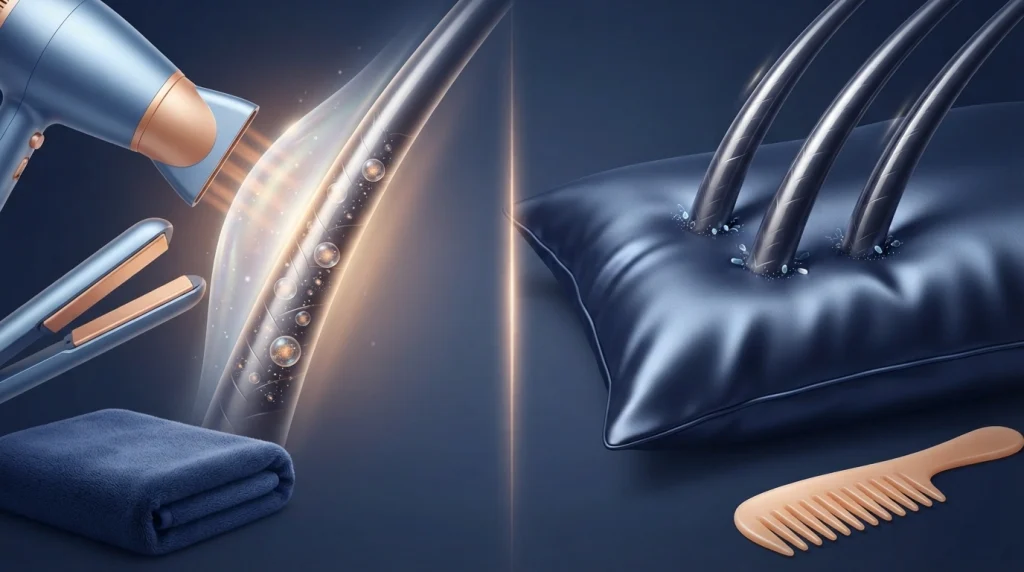
Safeguarding your hair from thermal damage and mechanical friction is essential for maintaining long-term manageability and preventing cumulative cuticle degradation. Whenever you use flat irons, curling wands, or blow dryers, applying a dedicated thermal protectant spray is non-negotiable; these formulas create a microscopic barrier that distributes heat evenly and shields the fragile protein structure of the hair fiber. Furthermore, lowering your styling tools to medium-heat settings drastically reduces moisture flash-evaporation. Beyond styling, your nighttime routine plays a pivotal role in frizz prevention. Swapping standard cotton pillowcases for smooth silk or satin alternatives eliminates nighttime friction, preventing your strands from tangling, breaking, and lifting the cuticle while you sleep.
Nutritional Support and Internal Hair Health
Achieving lasting frizz control extends far beyond topical treatments, requiring a solid foundation of internal nourishment and cellular support. Hair strands are primarily composed of a tough fibrous protein called keratin, making an adequate daily intake of high-quality dietary protein critical for structural integrity and tensile strength. Additionally, incorporating essential fatty acids—such as omega-3s found in salmon, chia seeds, and walnuts—along with vitamins A, C, D, and E supports the scalp’s natural sebum production and hydration levels. Staying properly hydrated by drinking sufficient water ensures that your hair shafts remain plump and elastic from the inside out, reducing their propensity to absorb ambient moisture from dry, humid environments.
Frequently Asked Questions About Frizzy Hair
What Is the Fastest Way to Fix Frizzy Hair Throughout the Day?
Applying a pea-sized amount of a lightweight hair serum or a hydrating leave-in conditioner directly to dry ends instantly smooths flyaways and tames midday puffiness.
Why Does Humidity Make Hair Frizzy Instantly?
Dry, porous hair acts like a sponge, rapidly absorbing airborne moisture that breaks and reforms hydrogen bonds within the hair shaft, causing it to swell and frizz.
How Often Should I Wash Dry Frizzy Hair?
Wash two to three times a week using a gentle, sulfate-free shampoo to cleanse impurities while preserving the scalp’s natural lipid barrier and moisture balance.
Do Silicones Actually Help or Hurt Frizzy Hair?
Water-soluble silicones temporarily seal the cuticle and block humidity effectively, whereas non-water-soluble silicones can create heavy, dull buildup if not periodically clarified.
Redefining Long-Term Hair Resilience
Managing persistent frizz is rarely a matter of finding a single magical styling product; rather, it is an ongoing commitment to preserving the structural integrity of your hair architecture. When you treat your strands with the same meticulous care you apply to skin care—focusing on moisture retention, gentle cleansing, friction reduction, and cuticle protection—smoothness becomes a sustainable, natural state rather than a temporary illusion. Embracing this holistic philosophy shifts your daily routine away from endless damage control and toward lasting hair health, ensuring your strands remain resilient, glossy, and manageable against any environmental backdrop.