Crackstube Explained: What It Really Is, Why It Is Risky, and What to Use Instead
Intro
You searched for crackstube, and you probably expected a simple answer: one website, one verdict, safe or not safe.
You will not get that answer here, because it would not be honest. The search results for this one word do not agree with each other, and that disagreement is the most important thing about it.
Some pages describe crackstube as a label for unlicensed websites that stream pirated movies or hand out cracked software for free. Others describe CracksTube.com as an ordinary article publishing platform covering technology, business, finance, and education, with guest posts from outside writers. Still others use the name for adult video content.
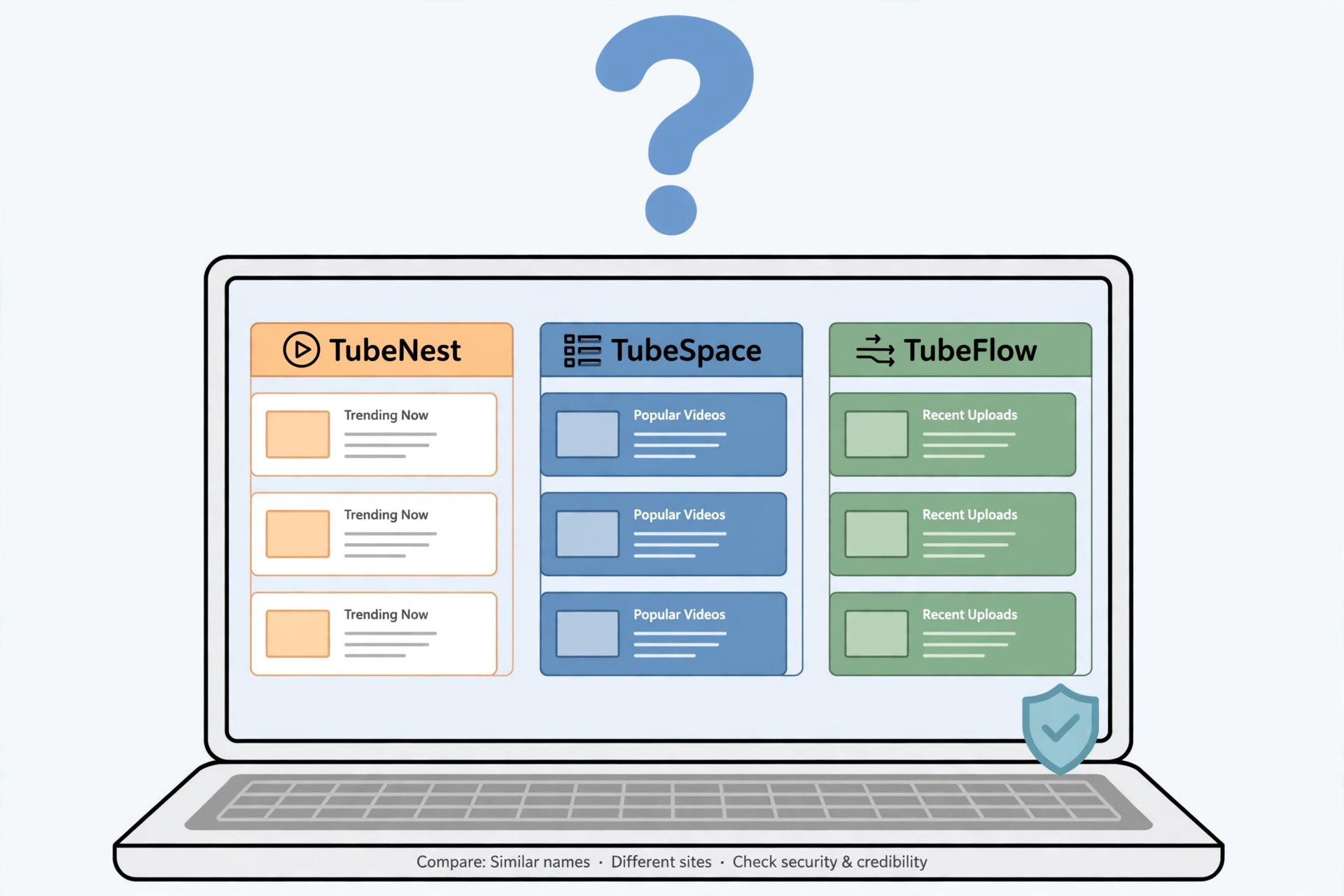
All of those pages cannot be describing the same site. In fact, they are not. Crackstube is a name that has been reused by different, unrelated websites, and the version you land on changes everything about the risk involved.
This article sorts out that confusion. It explains what the word itself suggests, the two very different kinds of site you may actually find, how the risky kind makes its money, what the real security and legal risks are, how to check any specific site before you trust it, and what to use instead if free movies or free software is what you were really after.
One thing to be clear about from the start: this article does not recommend, link to, or explain how to use any pirated streaming or cracked-software site. If you came here looking for a download link, you will not find one. What you will find is a safer way to get what you wanted.
The Short Answer
Crackstube is not a single official company, app, or platform. It is a reused name.
In most search results, it refers to one of two very different things:
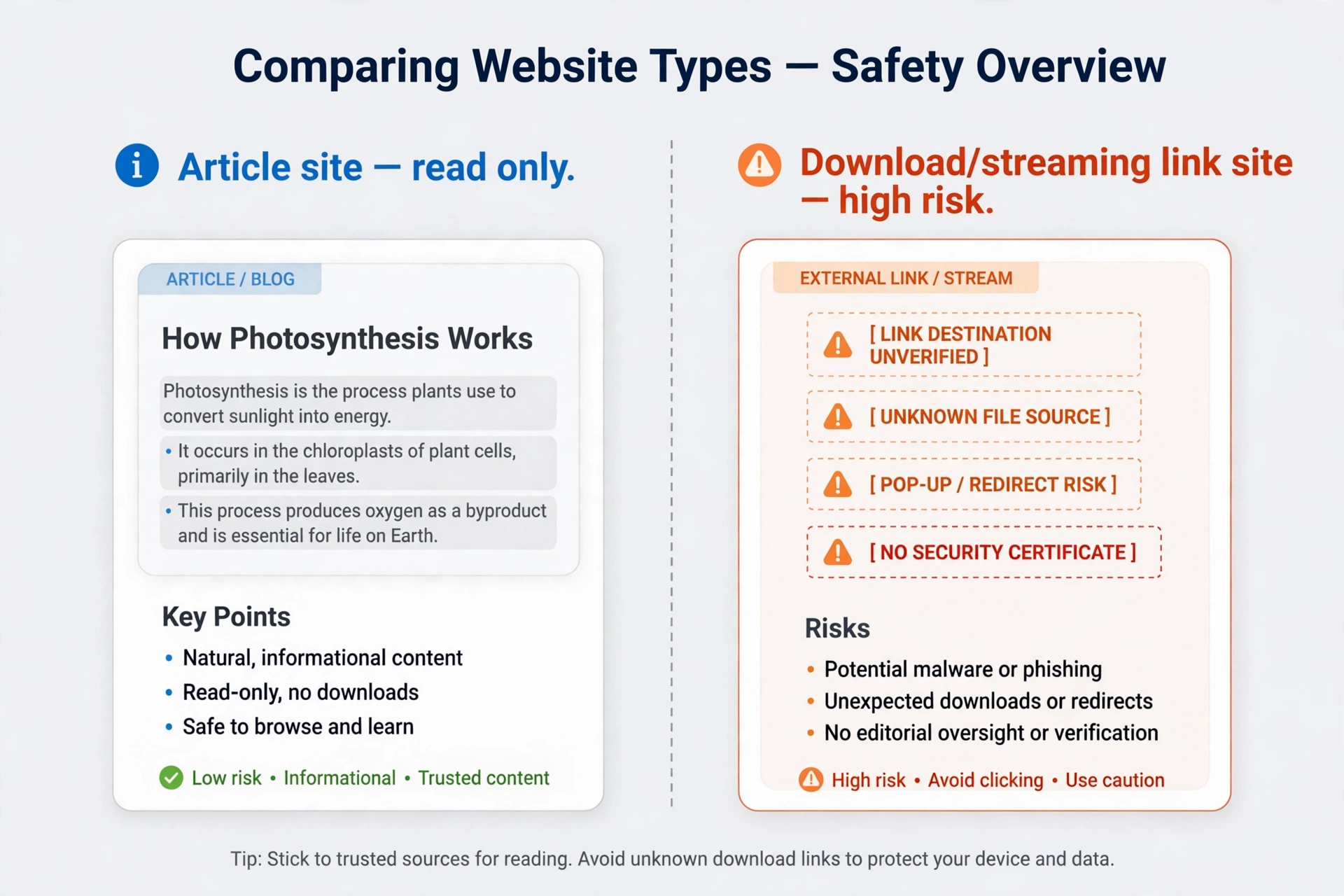
- An article and publishing site that uses the CracksTube name, publishes written articles across several topics, and says it does not host downloads, streams, or cracked software. Reading articles on a site like this is a very different activity from downloading software from it, and it carries a much lower risk profile.
- A crackstube-style download or streaming link site that points visitors toward unlicensed movies, TV shows, or modified “cracked” software. This is the risky version. It is commonly funded by aggressive advertising, pop-ups, and redirects, and it can expose you to malware, phishing, and copyright problems.
So the honest short answer to “is crackstube safe?” is: it depends entirely on which site using that name you are looking at. A blog article is not a download. A download button on an unlicensed site is not a blog article. Treating them as the same thing is exactly how people get hurt.
If you only remember one rule from this article, make it this one: never judge a site by its name, and never click a download, play, or install button on an unfamiliar site until you have checked it using the steps near the end of this article.
What the Name Crackstube Actually Means
Breaking the word apart
The name itself is a clue, and it explains a lot of the confusion.
“Crack” has a specific meaning in tech. A “cracked” copy of a program is one that has had its license or activation checks removed or bypassed, so it runs without a valid purchase. The small tools used to do this are often called cracks or keygens.
“Tube” became internet shorthand for video and media sites after YouTube made the word famous in the mid-2000s. Since then, many sites have added “tube” to their name to signal “this is where you watch things.”
Put together, crackstube reads exactly like what it sounds like: free, unlocked access to media or software you would normally pay for. That is the literal meaning of the name.
But a suggestive name is not proof of what a particular site does. No single company has a verified, exclusive claim to this name that covers every site using it. Different, unconnected websites have adopted it independently, which is why the same search term leads to such different destinations.
Why the same name keeps appearing on unrelated sites
There are two forces at work here, and they push in opposite directions.
First, domains built around piracy get shut down, blocked, or abandoned all the time. When one disappears, a new site can pop up reusing a name that people are already searching for, because that search traffic is valuable. The new site may have nothing to do with the old one except the name.
Second, content publishers noticed that people were searching for “crackstube meaning” and built explainer articles to capture that traffic. Many of those articles repeat each other, which is why so much of what you read on this topic sounds familiar even on the first read.
The result is a loop: the name generates searches, searches generate new pages using the name, and those pages generate more confusion about what the name actually refers to.
The Two Very Different Things People Mean by Crackstube
1. Article and publishing sites using the name
The publishing version of CracksTube, as described on crackstube.com itself and in several recent articles about it, is an article-only digital publishing platform. According to its own description, it covers topics such as technology, business, finance, education, real estate, law, and home improvement, and it accepts contributions from outside writers.
Its own guide stresses three points:
- It is not a streaming or media-sharing website.
- It does not host software cracks, installers, or pirated media files.
- Readers can browse its articles without creating an account, paying, or downloading anything.
If that description is accurate for the specific site you visit, then using it looks like using any other general blog: you read text, you leave, and no file ever runs on your device. That is a fundamentally lower-risk activity than downloading an installer.
But there is a limit to what can be verified here. The site’s own description is a self-description, not an independent audit. No verified owner, editorial team, safety audit, or traffic figure is claimed in this article, because none was verified from a primary source. Treat the publishing claim the same way you would treat any site’s claim about itself: useful, but worth checking against the signals in the checklist below.
There is also a separate commercial angle worth knowing about. Third-party marketplaces advertise paid guest-post placements associated with the crackstube.com domain, at prices that vary widely from seller to seller, and at least one listing is marked as not owner-verified. That means a marketplace offer should never be treated as official publisher pricing, and you should confirm seller authorization, link type, permanence, and refund terms directly before paying anything. The specific prices and search-metric scores in those listings conflict with each other, so this article does not quote them as facts.
2. Cracked-software and pirated-streaming link sites
This is the more common association with the name, and the one that generates most of the search interest — and most of the risk.
These sites typically work as directories rather than hosts. They collect and organize links pointing to third-party file hosts, cracked software installers, or unofficial streaming mirrors for movies and TV shows. The site you land on may not store the pirated file itself. That does not make it safe. The link, the redirect chain, and the file at the end of it are where the danger lives.
Here is how a typical visit plays out on this kind of site:
- You search for a piece of software or a movie title along with words like “crack” or “free.”
- You land on a page listing several “download” or “watch now” buttons.
- Clicking one triggers a redirect — sometimes several in a row — through ad networks before you reach an actual file or stream.
- The final destination may or may not match what was advertised.
That redirect chain is the business model. Because unlicensed sites generally cannot use mainstream, reputable ad networks, they rely on lower-tier networks that are far less selective about who they work with. Those networks are where the pop-ups, fake “your device is infected” banners, and misleading download buttons come from.
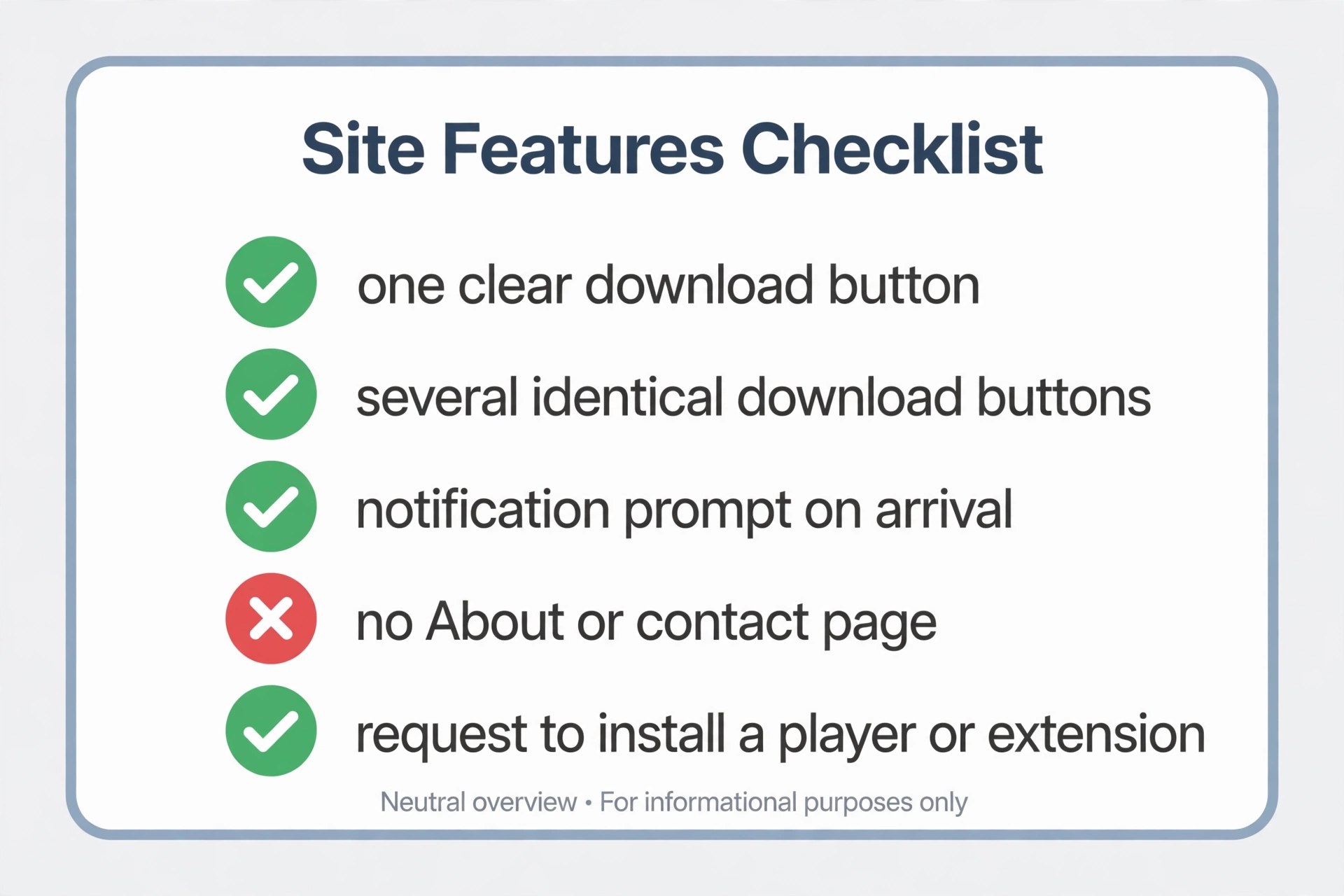
A pattern worth remembering: on a legitimate download site, there is usually one clear download button. On a site like this, you will often see three or four buttons that all look identical, and only one of them — if any — leads to the real file. The rest are ads designed to look like the thing you came for.
Another common tactic is the browser notification prompt. The moment you land on the page, a pop-up asks for permission to “verify you are human” or “continue to download.” If you click allow, you have opted into a stream of push notifications — fake virus warnings, fake prize alerts, fake urgent updates — that keep showing up on your device long after you have left the site.
A side note on adult content
Some pages using a crackstube-style name describe adult video content rather than software or mainstream movies. This article does not review or link to any adult site, and the same safety logic applies: an unfamiliar site asking you to click, install, sign up, or pay deserves the same checks as any other unfamiliar site, and adult sites carry their own additional privacy and scam risks. If that is not what you were looking for, close the page and use the checks below on the site you actually meant to visit.
How Crackstube-Style Sites Make Money
Understanding the money helps you understand the risk. Nothing on these sites is truly free. You pay in one or more of these ways:
- Aggressive advertising. Pop-ups, redirects, fake play buttons, countdown timers, and “update your player” prompts. A mis-click can launch an unwanted download or open an unrelated site.
- Bundled software. A cracked installer may carry extra programs you never asked for — adware, spyware, or worse — hidden inside the same installer that removes the license check.
- Data collection. Many of these sites publish no real privacy policy, so there is no way to know what is being logged — your IP address, device details, browsing behavior — or where that data goes.
- Phishing. Some pages mimic real streaming or software login screens to harvest credentials.
By contrast, the article-publishing version of the name makes money, if it makes money at all, the way other content sites do: through readership, contributor content, and commercial publishing placements. That is a different model with a different risk profile, which is exactly why identifying which kind of site you are on matters so much.
Is Crackstube Safe?
The direct answer, by site type
There is no single yes-or-no answer that covers every version of this name. Here is the breakdown:
If you landed on an article or content-style site: The risk is low, similar to reading any general blog. There is no download involved, so the usual malware and phishing concerns tied to piracy sites do not apply in the same way. Standard web-browsing caution is still sensible: do not click random pop-ups, do not grant notification permission without a reason, and do not enter personal or payment details on a site you have not verified.
If you landed on a cracked-software or streaming-link site: This is where real, well-documented risk shows up. The U.S. Federal Trade Commission has warned that websites and apps offering pirated films and television programmes may expose users to malware, and that malicious streaming software can steal login credentials, credit-card details, banking information, photographs, and other personal data. In one FTC account reported by the U.S. Navy’s CHIPS publication, computers used to download movies from five free sites were infected with malware and a flurry of unwanted ads in all five cases.
Common problems on this kind of site include:
- Malware bundled with installers. Cracked software frequently ships with additional payloads hidden inside the same installer, including spyware, adware, keyloggers, ransomware, and crypto miners.
- Fake players and required extensions. Streaming sites sometimes ask you to install a “special player” or browser extension to watch content. These are a well-known route for malicious extensions that can read your browsing activity or inject ads.
- Phishing pages disguised as login screens. A page that looks like a real service login can be built to harvest your password.
- No security standards and no accountability. These sites rarely publish real contact details, a privacy policy, or a way to complain. If one domain is shut down, the same operation can reappear under a new address.
- No updates or support. A cracked program cannot safely receive official updates and security patches in the normal way, so it can stay vulnerable to flaws that legitimate users have already had fixed.
Antivirus software and ad blockers reduce some of this risk, but they do not eliminate it. Some threats are designed to bypass antivirus tools, and no blocker can protect you from a file you deliberately run after disabling a warning.
A warning about “free” that sounds too good
If a site offers you a brand-new movie, a full paid app, or a premium subscription for free, with no login, no payment, and no catch, treat that as a signal, not a bargain. Legitimate services pay for licenses, servers, and staff. A site giving away someone else’s paid product for free has to pay its own bills somehow, and on unlicensed sites that “somehow” is usually advertising, bundling, or data collection that you cannot see.
Is Crackstube Legal?
This is not legal advice, and copyright law varies by country. But the general shape of the risk is consistent across most jurisdictions, and it splits the same way the safety risk does.
Reading articles on a content-style site is no different, legally, from reading any other blog. The legal exposure only shows up with the piracy-adjacent versions.
Cracked software works by disabling the licensing checks built into paid programs. Distributing or using software this way typically violates both copyright law and the software’s End User License Agreement. The U.S. Copyright Office states that uploading or downloading works protected by copyright without the authority of the copyright owner is an infringement of the copyright owner’s exclusive rights of reproduction and/or distribution, and that anyone found to have infringed may be liable for statutory damages, rising higher if willful infringement is proven.
For individuals, enforcement against casual personal use is rare in practice, but the exposure is real, and it is meaningfully higher for:
- Students, where school devices are often monitored and academic policies treat unauthorized software as a conduct violation.
- Employees, where installing cracked software on a work machine can trigger IT security policy violations and, in some cases, employer liability.
- Businesses, which face far steeper penalties than individuals if audited.
Pirated streaming carries its own wrinkle. Some unofficial platforms rely on peer-to-peer distribution, meaning that while you are downloading or streaming a file, you may simultaneously be uploading pieces of it to others. That shifts you from being a passive viewer to an active distributor in the eyes of copyright law — a meaningfully different, and riskier, legal position.
Simply visiting a webpage is generally not itself the same legal act as downloading, distributing, or using copyrighted material without authorization, but that distinction does not make the download or stream safe or legal. If you need advice about your own situation, talk to a qualified professional in your country rather than relying on a blog article, including this one.
How to Check a Crackstube-Named Site Before You Trust It
Do not rely on how professional a site looks. Templates are cheap and widely reused. A polished layout says nothing about what is actually behind the download button. Use these checks instead, and treat any one red flag as a reason to slow down. Several together are a reason to leave.
Check 1: What does the site actually do?
- Does it only publish written articles, with no download, stream, or install step? That points to the publishing version.
- Does it offer movies, TV shows, paid apps, or “cracked” installers? That points to the risky version, whatever its design looks like.
- Does the page you landed on match the site’s own description of itself? If the homepage says “articles only” but the page you found is full of download buttons, trust what the page does, not what the homepage claims.
Check 2: Who runs it?
- Is there a real About page with identifiable information, or just vague filler text?
- Is there a contact page with an address or email that actually works? Try it. A dead email or a missing contact page tells you a lot.
- Does the site have any track record, or did the domain appear recently and only exist to catch this keyword?
This is the same kind of check you would use when checking whether a website is a scam. Ownership transparency is not proof of safety on its own, but hidden ownership combined with downloads is a strong warning sign.
Check 3: Count the buttons
- One clear download or play button, on a site you already know and trust, is normal.
- Four identical-looking download buttons, pop-ups, countdown timers, and “update your player” prompts are not normal. They are the advertising model of an unlicensed site.
Check 4: Watch for permission traps
Legitimate article sites rarely ask for browser notification permission the second you land on the page. Be suspicious of:
- A notification prompt before you have read anything.
- A request to install a special player, codec, extension, or app to watch or download.
- A request for payment details to “verify” a free account.
- A fake virus warning telling you to call a number, install a tool, or run a command.
If any of these appear, close the tab. Do not click allow, do not install, and do not enter payment details.
Check 5: Compare ads with content
If ads outnumber actual content by a wide margin, the site’s real purpose is ad clicks, not the content it claims to offer. A genuine article site may run ads, but the article should still be the main thing on the page.
Check 6: Check the guest-post and marketplace angle separately
If you arrived because someone offered you a paid placement on a crackstube-named site — for example, as part of a guest posts service — verify that offer on its own terms. Confirm who the seller is, whether they are authorized by the site owner, what link type you will get, how long the article will stay live, whether sponsored content will be disclosed, and what happens if the article is removed. A marketplace listing is not proof of ownership, traffic, or ranking value, and conflicting marketplace scores are a reason to ask more questions, not fewer.
What to do if you already downloaded something
If you already downloaded or ran something from a site like this and you are worried, work through this damage-control list calmly:
- Disconnect from the internet temporarily if you suspect active malware.
- Run a full antivirus and anti-malware scan — not a quick scan.
- Check your installed browser extensions and remove anything you do not recognize.
- Review recently installed programs in your system settings.
- Change important passwords from a separate, clean device, especially email and banking.
- Turn on two-factor authentication wherever it is not already on.
- If a work or school device is involved, tell your IT team. They would much rather hear it from you early than discover it during an incident.
Safe Legal Alternatives
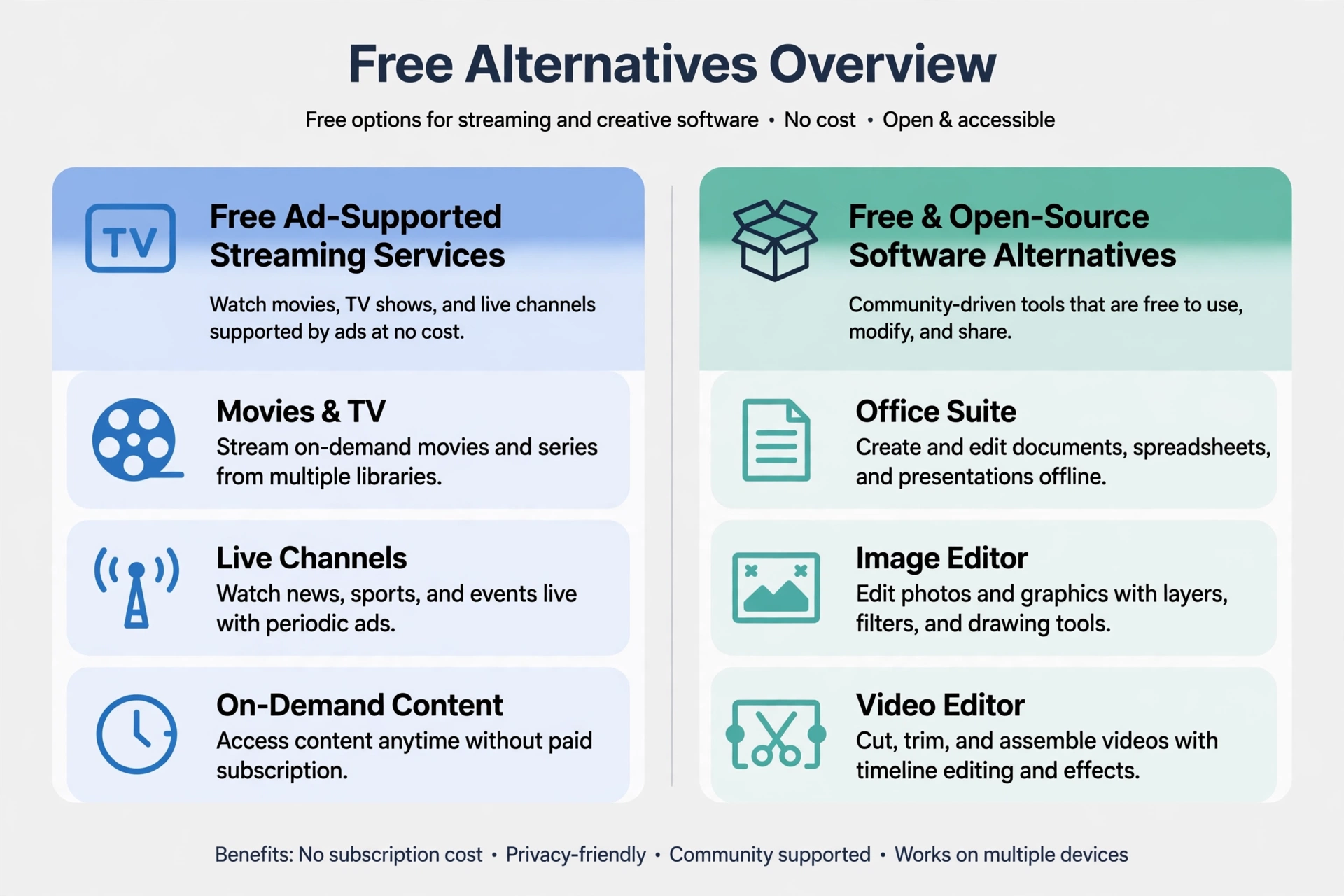
If the reason crackstube came up in your search is that you are trying to cut costs, there are legitimate paths that do not carry the malware or legal exposure. You will not get every paid title or every premium feature for free, but you will get a working product without handing your device to an unknown operator.
For watching movies and TV
Free, ad-supported, licensed streaming services exist in many countries. Well-known examples include Tubi, Pluto TV, and The Roku Channel, each offering a rotating library of licensed movies and shows with standard ads and no subscription. Availability and individual titles vary by country, so check what is offered in your region.
Paid services also run free trials, student discounts, and rotating free tiers from time to time. A trial on a legitimate service is a far better deal than a “free” stream that installs malware.
For software
Almost every expensive tool has a legitimate free or low-cost counterpart:
- Office documents: LibreOffice is a free, open-source office suite covering documents, spreadsheets, and presentations. Many providers also offer free browser-based versions of their office tools.
- Image editing: GIMP is a free, open-source image editor that covers most everyday Photoshop-style tasks.
- Video editing: DaVinci Resolve offers a free tier that covers a large share of professional editing work.
- PDF tools: Free tools such as PDF24, or the PDF features built into your browser and operating system, cover most everyday PDF tasks.
It is also worth checking whether you qualify for something you did not know existed. Many software companies offer student pricing, free educational licenses, nonprofit pricing, or extended trial periods. A five-minute check of a company’s official student or nonprofit page can sometimes solve the exact problem that sent someone searching for a cracked version in the first place.
For reading and publishing
If what you actually wanted was the article-publishing side of the name — reading multi-topic articles, or pitching a guest post — then judge that site the way you would judge any publication: read several articles first, check whether the writing is original and useful, look for real author names and dates, and ask the questions in the checklist above before paying for a placement. Do not assume that a site is worth pitching just because its name is familiar from search results, and do not trust it on the basis of a marketplace listing alone.
FAQ
Is crackstube a real website?
Not in the sense of one single official website. The name has been used by multiple unrelated sites, including an article publishing platform and various download and streaming link pages. Which site you land on depends on the exact domain, the search result you clicked, and when you searched.
Is crackstube safe?
It depends on the site. Reading articles on a content-style site using the name is low-risk, similar to reading any blog. Downloading cracked software or streaming from an unlicensed link site carries real malware, phishing, and privacy risks, and antivirus software does not remove that risk entirely.
Is crackstube legal?
Reading articles is not the issue. Downloading, distributing, or using copyrighted material or cracked software without authorization can infringe copyright and violate software license terms. The U.S. Copyright Office states that uploading or downloading copyrighted works without the owner’s authority infringes the owner’s exclusive rights, with statutory damages possible. Laws and enforcement vary by country, so this is general information, not legal advice.
Is crackstube.com the same as other crackstube sites?
No verified link connects every site using this name. The crackstube.com publishing site describes itself as article-only and unrelated to download sites using a similar name, while other pages using the name describe downloads and streams. Treat each domain as a separate site and check it on its own merits.
Does crackstube offer free movies and software?
Some crackstube-style link sites claim to offer free movies, TV shows, and cracked software. Those claims are the risky version of the name, not a safe free service. The cost is usually paid through aggressive ads, bundled software, data collection, or legal exposure, even when no money changes hands.
Why do so many sites use the same name?
Because the name already generates search traffic. Piracy-linked domains get shut down and replaced, new sites reuse a known name to capture searches, and content publishers build explainer pages around a trending keyword. Shared name does not mean shared ownership.
What should I do if a crackstube site asks me to install something?
Do not install it. Close the tab, especially if the request came with pop-ups, a notification prompt, a fake virus warning, or several identical download buttons. If you already installed something, run a full malware scan, remove unknown extensions and programs, and change important passwords from a clean device.
Can antivirus software make a cracked download safe?
No. Antivirus software reduces risk, but cracked installers are a known malware vector precisely because they ask you to run an unsigned file, often after disabling a security warning. Some threats are designed to bypass antivirus tools, and a clean scan does not prove that a cracked file is safe or legal.
What are the best legal alternatives to crackstube?
For streaming, use licensed free ad-supported services such as Tubi, Pluto TV, or The Roku Channel, where available in your country. For software, use free and open-source tools such as LibreOffice for documents and GIMP for image editing, and check official student, nonprofit, and trial offers before paying full price.
Should I pay for a guest post on crackstube.com?
Only after verifying the offer directly. Confirm the seller is authorized, what link type and permanence you will get, whether sponsored content will be disclosed, how long the article will stay live, and what refund terms apply. Marketplace prices and metric scores for this domain conflict with each other, so do not treat any single listing as verified proof of value.
Bottom Line
Crackstube is a name, not a verdict.
If you land on an article site using the name, you are reading a blog. Judge it like a blog: check who writes it, whether the content is useful, and whether anything about it asks you for more than reading.
If you land on a site offering free movies, TV shows, or cracked software under that name, you are looking at a different kind of site altogether — one funded by aggressive ads and redirects, with real malware, phishing, and copyright risks attached. No free download is worth handing your passwords, your files, or your device to an operator you cannot identify.
The safest move is also the simplest one. Close the unfamiliar download page, use a licensed free streaming service or a free open-source tool for the job you actually needed to do, and save the risky click for a problem that has no legal answer — because for movies and software, there almost always is one.