Droven.io Explained: What It Really Is, Why Reviews Disagree, and Is It Safe?
If you searched for droven.io and came away confused, you are not missing something obvious. One article calls it an AI knowledge platform. Another calls it an automation tool. A third describes it almost like a product you could buy, complete with features and a workflow builder.
Those descriptions cannot all be right. And the disagreement is not a small detail, because it changes the whole question you should be asking. If droven.io is a tool, you want to know its price, its features, and whether it works. If it is a publication, you want to know something different: whether its articles are worth reading, and how much weight you should give them.
Here is the short version, based on what multiple independent reviews agree on after looking at the actual site: droven.io is a free editorial website that publishes articles about AI, automation, and related technology topics. It is not software you buy, log into, or build workflows in. The product-style descriptions floating around online are not supported by what the site itself visibly offers.
That distinction is the whole story of this article. Once you have it clear, everything else — what droven.io covers, who it is for, and where you should be careful — falls into place.
The Short Answer
Droven.io is best understood as an AI and technology explainer site, not as a product:
- What it visibly is: a website that publishes guides, explainers, and breakdowns about artificial intelligence, automation, machine learning, cloud computing, and cybersecurity, aimed mainly at business readers and learners.
- What it is not, on the visible evidence: an AI tool, a robotic process automation (RPA) platform, a marketplace, or a consulting service. No login screen, dashboard, pricing page, or working automation builder for such a product appears on the public site, according to the independent reviews examined for this article.
- What it costs to read: nothing, as far as the published content shows. Reviewers consistently report no paywall, no forced signup, and no subscription wall for reading its articles.
- Is it safe to read? For casual reading, nothing in the reviews examined suggests an obvious scam pattern — there is no payment request and no account creation gate standing between you and the articles. That is a reasonable baseline, but it is not the same as being verified or authoritative.
- What is still unconfirmed: who owns and runs droven.io, who writes its articles and what their credentials are, where it is based, and whether it has any funding, company registration, or leadership team that can be checked publicly. Multiple reviewers flag exactly this gap.
- The biggest trap: trusting a third-party article that describes droven.io as a tool with specific features, integrations, or prices. Those claims keep circulating, but they do not match the site itself.
If you only want to read an article there, you can do that with normal caution. If someone asks you to pay for, sign up for, or download a “Droven.io tool,” stop — that does not match how the real site works.
What Droven.io Actually Is
Strip away the third-party hype and droven.io looks like a familiar kind of website: a tech publication.
Its homepage reads like a tech magazine, with article cards organised by category rather than a product pitch. The categories reviewers consistently list include AI, technology, digital topics, reviews, and a blog section. The writing is aimed at plain-language understanding: it explains a category before it dives into technical detail, so a business owner without an engineering background can follow it.
That framing matters. A vendor blog exists to sell you one product. A news site exists to tell you what happened today. Droven.io, as reviewers describe it, sits in a third lane: background reading you do before a decision, not during one.
To put the subject matter in plain terms, artificial intelligence is described by NIST, the US National Institute of Standards and Technology, as a machine-based system that can, for a given set of objectives, generate outputs such as predictions, recommendations, or decisions. That is a general definition of AI itself — not a claim about droven.io — and it helps explain why so much of the site’s coverage is about understanding categories like AI and automation before you spend money on any specific tool.
What it covers
Across the reviews examined, the same topic areas keep appearing:
- AI and generative AI: how large language models work in plain terms, where generative AI tends to help, and where it tends to fall short, across areas such as finance, healthcare, and marketing.
- Automation and RPA: workflow automation and robotic process automation explained at a conceptual level — what the categories are, where they fit, and where they do not — rather than as a directory of vendors to buy from.
- Machine learning: predictive analytics, model deployment, and natural language processing, covered at an introductory level that does not assume a statistics background.
- Cybersecurity: threat detection, ransomware awareness, and security ideas tied to AI adoption, such as data exposure and model risk, without overselling AI as a fix for every security problem.
- Cloud computing: the differences between software, infrastructure, and platform services, and migration timing, though reviewers note this area reads thinner than the AI material.
- Digital transformation and careers: strategy-level pieces and IT career guidance, including topics such as DevOps tools and development pipelines, aimed more at readers building toward a technical role than at specialists.
The depth is not even across those topics. Reviewers describe the AI and automation coverage as the strongest part of the site, machine learning as introductory, and cloud computing as noticeably lighter. That unevenness is normal for a broad content site, but it is worth knowing: if you came for cloud architecture guidance, you will want a second source before you are done.
What it does not do
This part is just as important as the coverage list, because it is where most of the online confusion lives. According to the independent reviews examined, droven.io does not:
- Sell or resell any AI software
- Offer a proprietary AI model, API, or dashboard
- Offer implementation or consulting services
- Rank automation vendors side by side as a marketplace
- Publish same-day breaking tech news
If you visit expecting a product demo or a signup page, you will not find one. What you find instead is a library of articles. That is not a flaw in the site — it is only a flaw in the expectations that some third-party write-ups have created around it.
Why Reviews of Droven.io Disagree So Much
This is the question most readers actually need answered, because the search results themselves are the problem.
The two stories in search results
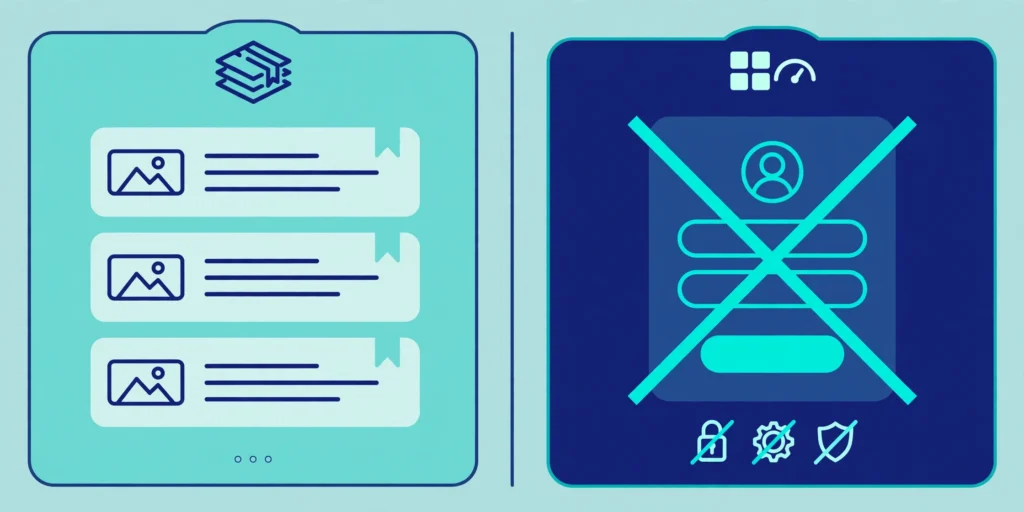
Story one: droven.io is an editorial site. This is the version supported by reviewers who describe looking at the site itself. They report no login, no dashboard, no pricing page, and no purchase flow. One review puts it bluntly: droven.io is a publisher, not a piece of software. Another review makes the same point in different words, while a further independent review calls it a free editorial site explaining AI, automation, and cloud topics — nothing more, nothing less.
Story two: droven.io is an automation platform. A smaller set of third-party articles describes it in product terms: a cloud-based, no-code or low-code RPA platform with a drag-and-drop builder, pre-built connectors, and AI-enhanced bots. Some of these descriptions read exactly like a product page.
Only one of those stories can match the public site, and the reviewers who checked the site itself come down firmly on the first one. The second story is not supported by any login, dashboard, pricing page, or official product documentation that those reviewers could point to. One review that examined the product claims directly warns that specific pricing, integration, and performance claims about droven.io are not clearly supported by the official site’s own content.
How the confusion probably happened
Reviewers offer a plausible explanation, and it is worth understanding because the same pattern shows up with other sites too. Droven.io brands itself with the word “platform,” and it writes about automation tools. A writer — or an automated writing tool — can easily read “platform” plus “automation tools” and infer a product, then fill in the kind of features a product like that would normally have.
Once one article makes that leap, others can repeat it, and suddenly search results describe a product that does not exist. That does not mean every article in the second group is deliberately misleading. It means you cannot treat agreement between third-party blogs as verification, especially when none of them shows you the product itself.
This is the same lesson behind a similar .com explainer about conflicting reviews: judge a site by what it visibly offers, not by what blogs claim about it. If a claimed feature cannot be found on the site itself, treat it as unconfirmed, however confidently it is written.
What about the “USA” version?
You may also see the name written as “droven.io USA” or described as a USA-focused tech platform. Reviewers describe this as a framing choice: the site uses US-oriented wording across its categories and content. That is not the same as a verified US company registration, headquarters, or office address, and no reviewer examined here could confirm those details from public sources. Treat “USA-focused” as a description of the site’s audience and wording, not as proof of where a company is legally based.
Who Droven.io Is For — and Who It Is Not For
Droven.io works best as a first read, not a final authority. That makes it a good fit for some readers and a poor fit for others.
Who gets the most value from it
- Business owners and operators who need enough context before a budget decision, but do not have an engineering background. If you need to understand what RPA is before a vendor meeting, an explainer like this can get you conversational quickly.
- Marketing and operations teams exploring automation, who want a plain-language starting point rather than a technical specification.
- Students and career-switchers using it as background reading before formal coursework, to learn the vocabulary of AI, automation, and cloud topics.
- Developers and IT professionals tracking where the field is heading in broad terms, even if it is not their primary technical reference.
Who should look elsewhere first
- Engineers who need implementation detail. Droven.io explains categories; it does not walk you through building, configuring, or integrating a real system.
- Researchers who need a citable source. Author credentials are not consistently published, and specific claims are not always traced back to a primary source. For academic or technical work, peer-reviewed or primary sources are a better starting point.
- Buyers comparing named tools. Because droven.io does not rank vendors or publish a tool directory, it cannot tell you which named product fits your budget and requirements. For that, you need vendor documentation, a dedicated tools directory, and ideally a trial.
- Readers who want same-day news. This is evergreen explainer content by design, not a breaking-news outlet. Check the publish or update date on any individual article before assuming it reflects the latest development in a fast-moving field like AI.
Verified vs Unverified: What You Can Actually Confirm
It helps to separate these clearly, because most droven.io coverage blends them together.
What is verified or consistently observed
- Droven.io is a real, active website with a functioning homepage, category pages, and article listings.
- Its content covers AI, automation, machine learning, cloud computing, and cybersecurity topics.
- Reading its articles does not visibly require a login, payment, or subscription.
- No software product, dashboard, or purchase flow is visibly offered on the public site.
- Its coverage is broad rather than deeply specialised, and its depth varies by topic.
What is claimed by some third parties but not supported
- That droven.io sells or operates a no-code RPA platform with a visual builder.
- That it offers specific integrations, connectors, or pricing tiers.
- That it delivers measurable performance results, such as guaranteed cost or productivity improvements.
- That it is a registered, easily verifiable company with a confirmed headquarters or leadership team.
None of those claims should be repeated as fact unless you can find them stated on droven.io’s own pages or in a reliable primary source — and the reviewers who looked could not.
What is simply unknown
- Who founded droven.io, who owns it, and who funds it.
- Who writes and edits its articles, and what their professional backgrounds are.
- Whether its claims of editorial independence can be checked, since no funding or vendor-relationship disclosures are publicly available to test them against.
- How large its audience is, and whether any traffic, ranking, or audience figure you see quoted elsewhere comes from a verifiable measurement.
An information gap is not proof of wrongdoing. Many newer content sites are thin on ownership detail. But it does limit how far you can trust the site on high-stakes questions, because you cannot weigh its advice against a track record you cannot see.
Is Droven.io Legit and Safe to Use?
The honest answer has two parts, and they should not be collapsed into one word.
The case for “legitimate”
On the legitimacy question itself, the reviews examined find nothing that resembles a scam pattern. You do not hand over a credit card to read an article. There is no forced account creation gating content that should be free. There is no bait-and-switch purchase flow. The site behaves like an advertising- or affiliate-supported publisher monetising attention rather than subscriptions — a common and ordinary model for a free content site.
In that narrow sense, yes: droven.io appears to be a real and active editorial website, not a placeholder domain or an obvious fraud.
The case for caution
Legitimate and authoritative are not the same thing, and droven.io is clearly the first without fully earning the second. The cautions are:
- Thin authorship. Named authors are not consistently attached to articles, and author bios with credentials are not visibly published in most cases.
- No third-party trust signal. There are no visible independent platform reviews, named-client case studies, or other outside checks that let you cross-check the site’s own claims about itself.
- Unsourced specifics. When an article includes a specific number, a named regulation, or a claim about what a particular vendor’s tool can do, there is not always a citation taking you back to the primary source. An unsourced number is functionally unverified, even if it turns out to be correct.
- Guest and outside content. At least one in-depth review notes that the site blends editorial publishing with guest submissions and service-style positioning. That mix does not make the content wrong, but it does mean quality can vary from article to article, so you should judge each piece on its own merits.
A practical way to think about safety
For reading alone, the risk profile is low: you are not paying, signing up, or installing anything. The risk grows the moment you act on what you read — especially if you act on a number, a vendor claim, or a recommendation without checking it elsewhere. Use droven.io for orientation, then verify anything that affects money, security, or a client commitment against a primary source.
How to Check Droven.io — and Any Site Like It — Before You Trust It
You do not need any special tool to run a useful check. Work through these steps in order, and stop at the first one that does not match what you were told.
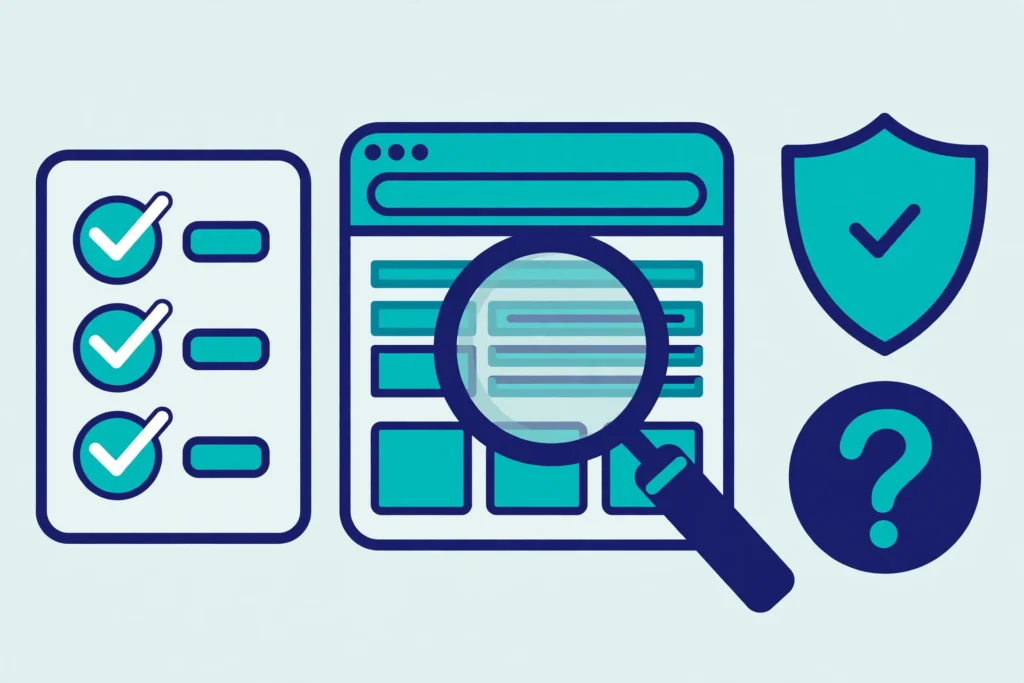
- Open the site yourself and look for the product. If someone told you droven.io sells a tool, look for a login, a dashboard, a pricing page, and a purchase flow. If none of those exist, the product story is unconfirmed, no matter how detailed the third-party article was.
- Check the exact domain spelling. Type droven.io carefully and watch for lookalike domains or extra words added to the name. Similarly named sites are not automatically the same site, and some describe themselves in inconsistent terms.
- Read the About, Contact, and policy pages. A real publication usually has them. Note what they actually say — and what they leave out. Missing ownership, team, or editorial-policy detail is a reason for caution, not automatic proof of a scam, as explained in checking whether a website is a scam.
- Look for authors and dates. Check whether the article you are reading names an author, shows credentials, and carries a publish or update date. Evergreen explainers age slowly, but in AI topics a date still matters.
- Follow one citation to its source. If an article cites a study, a vendor document, or a regulation on a point that matters to you, open that source. If there is no citation, treat the claim as a lead to verify, not a fact to quote.
- Compare the same claim across independent sources. If several unrelated reviewers describe droven.io the same way — free editorial site, no product — that agreement carries weight. If only one blog makes a product claim and no one else can show the product, that claim carries very little.
- Never pay, sign up, or download in its name. Droven.io’s visible model is free reading. Any payment request, forced signup wall, or download presented as “the Droven.io tool” does not match that model and should be treated as a red flag until proven otherwise.
- Keep your own data out of it. There is no reason a reading-only site needs your payment details or sensitive personal information. If a page asks for them, close it and re-check the domain.
Droven.io vs Other Types of Tech Resources
It is easier to use droven.io well once you see where it sits next to the other places you might read:
- Droven.io: free, introductory to moderate depth, stated as independent but not third-party verified. Best for background understanding before a decision.
- Breaking tech news outlets: free or subscription, timely but not always deep. Best for same-day product or industry news.
- Technical research platforms: often free through open access, high and technical depth, peer-reviewed. Best for original research and technical validation.
- Vendor or marketing blogs: free, deep on one product only, inherently promotional. Best for understanding a specific tool’s features — with the vendor’s interest in mind.
- Dedicated tools directories: useful for comparing named tools side by side, which droven.io does not do.
Read across that comparison and the pattern is clear: droven.io wins at the orientation stage of research and loses at every stage after it. Use it to get literate in a category fast, then switch to a directory, vendor documentation, or a practitioner conversation the moment you need to compare products or defend a claim.
Frequently Asked Questions
Is droven.io free to use?
Yes, based on the published content reviewed. There is no visible paywall, subscription, or account requirement for reading its articles.
Is droven.io an AI tool?
No. Despite some third-party write-ups describing it with product-style features, the site itself shows no login, dashboard, or purchase flow. It is a content publisher covering AI and automation topics, not a vendor in those categories.
Does droven.io sell automation software?
No, on the visible evidence. Claims about a droven.io automation builder, integrations, or pricing tiers are not supported by the official site’s public pages, according to the independent reviews examined.
Is droven.io a scam?
There is no evidence of scam behaviour in the reviews examined — no payment requests, no data-harvesting signup wall, and no bait-and-switch. The real caution is about sourcing and transparency, not about an obvious fraud pattern: verify specific claims before you act on them.
Who owns or runs droven.io?
That information is not clearly published on the site, as of the reviews examined. Treat any claim about its founder, funding, headquarters, or editorial independence that you see elsewhere as unverified until you find it stated in a reliable primary source.
Is droven.io reliable for academic or technical research?
It is better suited as background reading. For technical or peer-reviewed research, dedicated academic or research platforms are more appropriate, because droven.io does not consistently publish author credentials or trace specific claims to primary sources.
Should I trust a “droven.io review” that lists features and prices?
No, not on its own. If a review lists product features or prices, check whether those features and prices exist on droven.io itself. If they do not, treat that review as describing a product that has not been verified — and possibly one that does not exist.
Can I build automations directly on droven.io?
No. There is no indication of an automation builder or configuration tool on the site. Businesses looking to build automations would need a dedicated platform, and should evaluate that platform’s own official documentation and pricing.
Bottom Line
Droven.io is a free, broad, genuinely readable starting point for understanding AI and automation — and a weak place to stop.
It earns its keep in the research phase, before money moves and before a decision gets made, by turning intimidating categories into something a non-specialist can actually reason about. It loses that value the moment you need a source you can defend, a specific tool comparison, or implementation detail deep enough to build on.
So read it for what it is: the first read on a topic, not the last one. Enjoy the plain-language explainers, use them to ask sharper questions, and check anything that matters — especially any number, vendor claim, or product description — against a primary source before you act on it. And if you ever see droven.io described as a tool you can buy, remember the simplest test of all: open the site and look for the product. If it is not there, it is not the story.