ID Myself: What It Means and How to Figure Out Who You Are
If you searched for “id myself”, you probably want a simple answer to a personal question: who am I, really? The phrase is short, but it carries two very different meanings. Most of the time, people who type it are trying to figure out their own identity — their values, their roles, and what makes them who they are. A smaller group means something practical: proving who they are to a website or a government service with an ID document and a selfie.
The short version is this: identifying yourself starts on the inside. You look at what you value, what you have chosen, and what you only inherited, and you test which parts still fit. The online check is the easier half. You show a photo ID and take a selfie, and the service matches the two. This article covers both meanings, starting with the one most searchers want.
The Short Answer
“ID myself” is not a standard phrase with one fixed meaning, so search results split in two directions. The dominant meaning is self-identity: understanding who you are, what you stand for, and where you belong. Psychologists call your inner picture of yourself your self-concept, and the part of it you claim as yours is your identity. It is built, not found. You explore options, then commit to the ones that fit.
The second meaning is practical. To “ID yourself” online means proving you are who you claim to be, usually by photographing a photo ID and taking a selfie so the service can match your face to the document. If that is what you need, jump to the section on proving your identity online. Everything before it is about the personal meaning, which is what most people typing this phrase are after.
What “ID Myself” Usually Means
When someone asks who you are, you usually give your name or show a driver’s license. But that is not who you are. It is just a name you are called or a few facts on a card. Who you are has a much deeper meaning. Your real identification is usually determined by what you do, by the people you associate with, where you go, and even the family you come from. When your name is spoken, the people who know you form a mental picture of you and identify you not just by your looks, but by your actions.
That is the heart of self-identity. It is your inner answer to the question “Who am I?” It covers your values, your beliefs, your roles, and the story you tell about your life. A clear sense of self makes decisions easier, because you know what you stand for before the choice arrives. Psychologists call that clarity self-concept clarity: how clearly and confidently your self-beliefs are defined, how consistent they are, and how stable they stay over time. The idea comes from Jennifer Campbell and colleagues, who defined it in a 1996 paper.
Your identity is not fixed. It shifts with new experiences, relationships, and losses. A strong sense of identity still has room to grow. That is good news if you feel unsure right now. Feeling unsure of yourself is common at every age. Graduation, divorce, job loss, and retirement can all reopen the question, and that is normal.
What Is Self-Identity?
Self-identity is the picture you hold of yourself on the inside. It differs from personality. Personality describes how you tend to behave, for example how outgoing you are. Identity describes what you stand for and where you belong. It holds your core values.
Psychologists often describe identity in three layers.
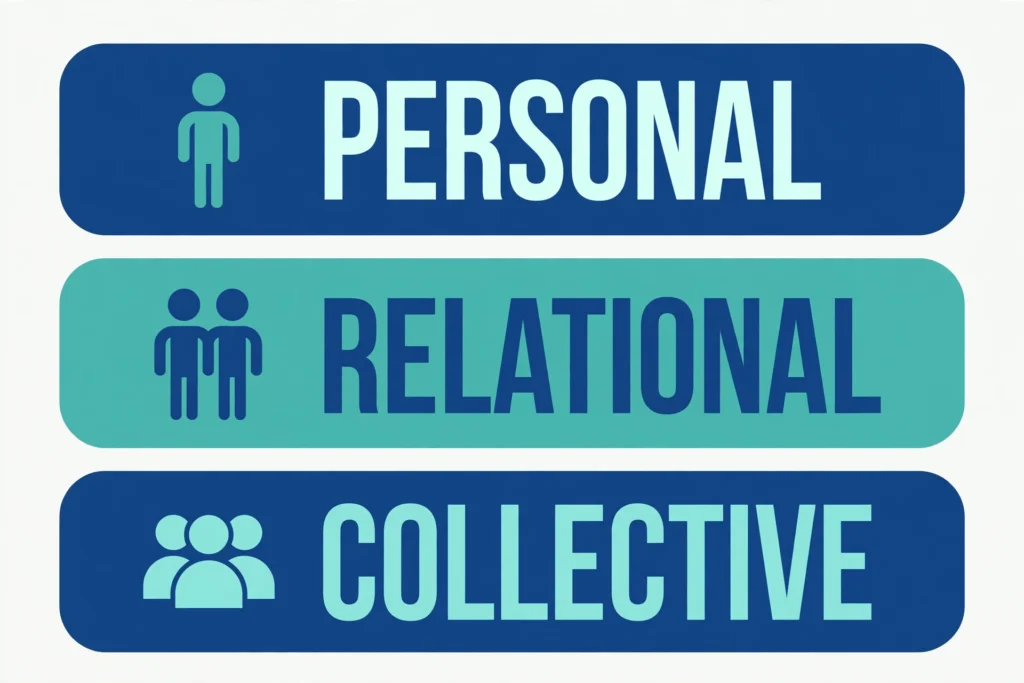
- Personal identity: Your own values, beliefs, traits, and goals. This is the part that feels most like “me.”
- Relational identity: Who you are as a parent, partner, friend, sibling, or colleague.
- Collective identity: The larger groups you belong to, such as your culture, ethnicity, faith, nationality, and generation.
Trouble often starts when one layer swallows the others. Someone whose whole identity is “mother” is shaken when the children leave. A person who exists only as “the manager” is lost when the job ends. A healthy identity keeps all three layers in view, so no single role has to carry the whole weight of who you are.
Many forces shape who you become, and most of them were in place before you could choose.
- Family: Your parents’ expectations set the first draft of your identity. Messages like “We are not artistic people” can stick for decades.
- Culture: Some cultures put the group first. Others prize personal choice. People who live between two cultures often switch between identities by setting.
- Relationships: Friends, partners, and coworkers mirror you back to yourself. Healthy ones let you change. Controlling ones shrink you.
- Work: In many Western settings, “What do you do?” really means “Who are you?” That fusion leaves people exposed when a job ends.
- Social media: An online version of you can drift far from the offline one. Constant comparison makes it harder to tell what you actually like.
- Trauma: Long-term childhood abuse or neglect can disrupt a stable self-image. Complex PTSD, a diagnosis in the ICD-11, includes distortions in identity or sense of self among its symptoms.
None of these forces is destiny. Seeing them clearly is the first step toward choosing which ones to keep.
How Identity Develops
Psychoanalyst Erik Erikson described eight stages of psychosocial development across the lifespan. Each stage centers on a tension that a person has to work through. The fifth stage, identity vs. role confusion, falls roughly between ages 11 and 19. Its question is “Who am I, and what can I be?” Teenagers try on roles, friend groups, styles, and beliefs. When the stage goes well, Erikson said, it produces fidelity: the ability to stay true to the values you chose.
Erikson is credited with coining the term “identity crisis.” He saw it as a normal turning point, not a disorder. It is the work of reconciling who you have become with who others expect you to be.
The questions do not stop at 19. Erikson’s later stages keep returning to identity.
- Early adulthood: Intimacy vs. isolation. Can you stay yourself inside a close relationship?
- Middle adulthood: Generativity vs. stagnation. What are you building or passing on?
- Late adulthood: Ego integrity. Can you make peace with the life you have lived?
Psychologist Jeffrey Arnett added another phase in a 2000 article. He called the years from 18 to 29 “emerging adulthood,” a period when many young people explore work, love, and worldview before settling down.
In 1966, psychologist James Marcia turned Erikson’s ideas into something researchers could measure. He looked at two things. Had a person explored options? Had they committed to any? The answers produce four identity statuses.
- Identity achievement: You explored, then committed. Your values are chosen, not borrowed.
- Moratorium: You are exploring right now and have not committed yet. It feels unsettled, but it is active.
- Foreclosure: You committed without exploring. A family’s plan became yours without testing.
- Identity diffusion: You are neither exploring nor committing. Life feels directionless.
These statuses are not one-way stages. A 2010 meta-analysis by Jane Kroger, Monica Martinussen, and Marcia pooled 124 studies. In the long-term studies, 36% of young people moved toward a more mature status. Another 15% moved backward, and 49% stayed the same. The authors also found that large shares of young adults had not reached identity achievement. Uncertainty in your twenties is the norm, not a personal failure.
Signs Your Sense of Self Is Unclear
An unclear sense of self tends to show up in daily life. One sign on its own means little. Several together suggest it is time to look inward.
- Borrowed decisions: You choose careers, partners, or plans mainly to please other people.
- Chameleon behavior: You become a different person in every group, with no steady core.
- Blank answers: Simple questions like “What do you enjoy?” leave you stuck.
- Hollow success: Your life looks fine on paper, yet it feels empty.
- Constant reassurance: You need others to confirm your choices before you trust them.
- Low-grade unease: A background anxiety that never fully lifts.
Persistent depression or anxiety deserves attention from a mental health professional, whatever the cause. The exercises below help with ordinary uncertainty. They are not a replacement for professional help when you need it.
How to Explore Who You Are
Identity exploration works best as a set of small, repeated experiments. These exercises come from counseling and coaching practice, and none of them needs more than a notebook and a little honesty.
- Write without editing: Journal for 15 minutes a day. Use prompts like “I feel most alive when…” and “What would I do if no one judged me?”
- Remember who you were at ten: Write about what you loved before age 12. Notice which interests faded under pressure.
- Map your timeline: Draw a line from birth to today. Mark turning points. For each one, ask what belief formed. Then ask what part of you got buried.
- Sort your values: Write down 20 values, such as honesty, adventure, security, creativity, and family. Cut the list to five. Then compare your calendar with those five. The gaps show where your life and your identity have drifted apart.
- Sample new experiences: Try one unfamiliar activity each month for six months. Notice what energizes you. Notice what drains you.
- Ask for outside views: Ask five people who know you well for three words that describe you. Look for themes you did not expect.
- Take a measured test: Validated tools like the Big Five personality inventory or the VIA character strengths survey show patterns you may not see yourself.
Mindfulness helps too. A 2017 study of 1,089 university students found that more mindful people tended to have a clearer self-concept. A clearer self-concept, in turn, went with greater well-being. The study measured traits at one point in time, so it shows a link, not proof of cause. A simple mindfulness meditation practice is still an easy place to start.
Give the process time. Real identity work takes months, sometimes years. The goal is not to finish with a perfect label. It is to reach a point where your choices match what you actually value.
Here is a short test you can try today. Write three sentences that describe who you are. Do not mention your job, your relationship status, or anything you own. Most people find it harder than they expect. The first drafts tend to list roles. Keep going until the sentences name what you value and how you want to treat people. Read the result in a month. If it still sounds true, you have found part of your core. If it does not, you have learned something just as useful.
What Is an Identity Crisis, and How Do You Move Through It?
An identity crisis happens when your current sense of self stops fitting your life. The old roles, beliefs, and goals no longer hold. New ones have not formed yet. Common triggers include graduation, marriage, divorce, job loss, illness, a move, retirement, and the death of someone close. Symptoms often include confusion, indecision, and anxiety. Many people feel cut off from their own lives. Some people describe watching themselves from the outside.
Moving through it takes patience more than answers.
- Expect a middle stretch: The gap between the old self and the new one is uncomfortable. It is also where Marcia’s moratorium happens. Being unsettled is not the same as being stuck.
- Do not rush to a new label: Grabbing the first available identity can become a fresh foreclosure. A label you did not test will not hold.
- Grieve what ended: Losing a role you loved is a real loss. Let yourself feel it. You can honor what a role gave you and still let it go.
- Get support: A therapist can help you separate an emerging identity from a reaction to pain. You do not have to sort it out alone.
If the confusion comes with thoughts of harming yourself, please contact a crisis line right away. In the US, the 988 line takes calls and texts.
Why Does Exploring Your Identity Feel So Hard?
Even people who want to change often stall. Three obstacles come up again and again.
Other people’s expectations. Families, cultures, and workplaces all hand you a script. A useful test is to ask, “Do I want this, or do I think I should want it?” Notice how often the word “should” runs your thinking.
Fear of the unknown. A familiar self feels safer than an uncertain one, even when the familiar self is unhappy. Start with low-stakes experiments rather than dramatic changes. Wear the new idea for a week before you decide.
Grief for the old self. Major changes ask you to mourn who you were. Skipping that grief and jumping to a replacement identity often leaves the new one feeling hollow.
Some of what you uncover may feel more spiritual than psychological. That is normal too. Identity is not only a psychology topic. For many people it is tied to faith, purpose, and belonging, and those threads belong in the picture as well.
If You Mean Proving Your Identity Online
Some people who type “id myself” mean the practical version: proving to a service that you are who you claim to be. If that is you, here is how it usually works.
To prove your identity online, you normally need two identity documents and a smartphone that can take photos. One document must have a photo. The usual steps are simple. First, start your application on the service’s own website or app. Then, when prompted, take a photo of your first identity document, then scan your face so the service can match it to your photo ID. Then take a photo of your second identity document. For example, the Victorian
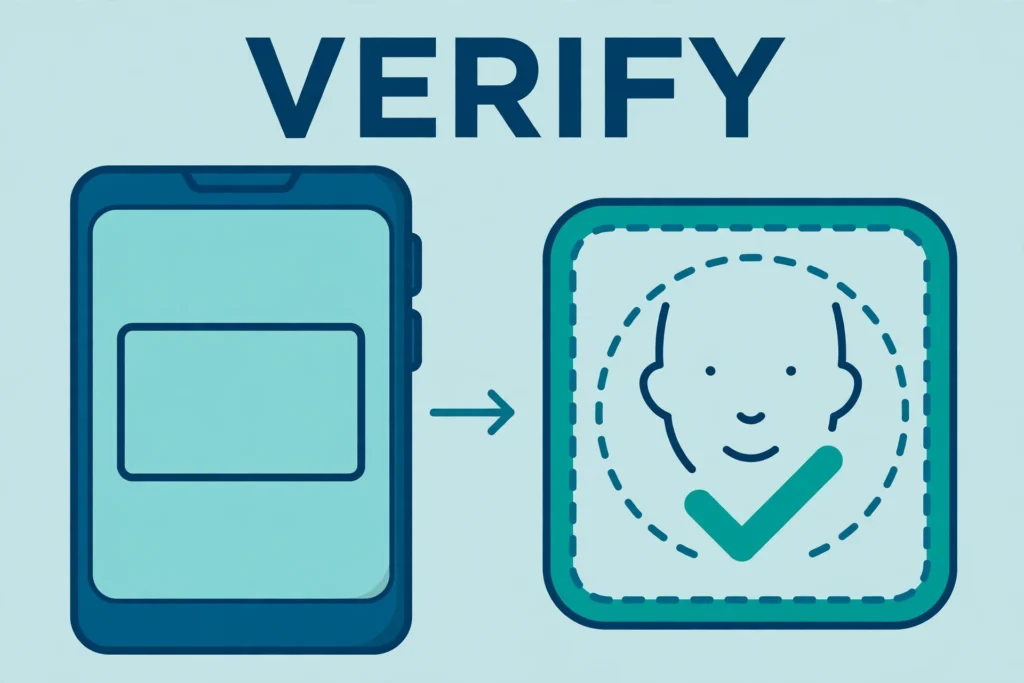
Registry of Births, Deaths and Marriages asks for one document from its first category, such as a passport or birth certificate, and one from its second category, such as a driver licence or Medicare card.
A few practical points make the check go smoothly. Enter your name exactly as it appears on each identity document. If the names do not match, you will usually need an extra document, such as a change of name certificate or a marriage certificate. Make sure your documents are in good condition, because damaged or worn-out documents will not work. You can start the application on a computer, but you will need to do the identity check itself on a smartphone. If you do not pass the first time, you can usually try again, and if online verification is not possible at all, certified copies of your documents are the usual fallback.
In the US, some government services use a verification provider called ID.me. Its self-guided process asks you to upload photos of a photo ID, take a video selfie, and enter your address and phone number. If the self-guided process does not work, you may be asked to verify on a live video call with a company representative instead.
One safety rule matters more than the rest. Only ever upload photos of your ID documents on the official website or app of the service you are dealing with. Never send them by email, chat, or a link someone sent you. Scammers build fake verification pages to harvest identity documents, so if a page asking for your ID looks even slightly off, stop and check the site before you trust it. Our guide on how to check whether a website is a scam walks through the checks you can run in a few minutes.
A Note on the Grammar Meaning
A small share of the results for this phrase are about English grammar, not identity at all. “Myself” is a reflexive pronoun. You use it when the subject and the object of a sentence are the same person, as in “I bought myself a new coat,” or to emphasize that you did something personally, as in “I did it myself.” If you came here from an English lesson, that is the meaning you were looking for.
FAQ
What does “id myself” mean?
It is not a standard phrase, so it has two main meanings. Most often it means figuring out your own identity: who you are, what you value, and where you belong. It can also mean proving your identity to a service, usually online with a photo ID and a selfie.
How do I figure out who I am?
Start with small experiments. Journal for 15 minutes a day, sort your values down to five, try one new activity a month, and ask five people who know you well for three words that describe you. Identity is built by exploring options and then committing to the ones that fit.
What is the difference between identity and personality?
Personality describes how you tend to behave, for example how outgoing you are. Identity describes what you stand for and where you belong. It holds your core values.
What are the four identity statuses?
Psychologist James Marcia described four statuses based on whether a person has explored options and whether they have committed to any: identity achievement, moratorium, foreclosure, and identity diffusion. They are not one-way stages. People move between them across life.
How long does it take to find yourself?
There is no fixed timetable. Real identity work takes months, sometimes years, and it reopens at every major life change. Uncertainty in your twenties is the norm, not a personal failure.
How do I prove my identity online?
Use the official website or app of the service. You will usually need two identity documents, one with a photo, and a smartphone. Photograph your documents, take a selfie for the face match, and enter your name exactly as it appears on your documents. Never upload ID photos through a link someone sent you.
Bottom Line
“ID myself” is a short phrase with a deep question inside it. For most people who type it, the question is “Who am I?” The answer is not a document or a label. It is a picture you build over time from your values, your relationships, and the choices you have actually tested. Erikson’s stages and Marcia’s four statuses give that process a shape, but the work itself is personal: journaling, sorting your values, trying new things, and listening to what other people see in you. If you feel unsettled, you are not behind. The research says most young adults have not settled the question either.
And if you meant the practical version, the answer is simpler. Gather two identity documents, use a smartphone, follow the official process, and never hand your ID photos to a page you have not checked. Once you know which meaning you need, the next step is clear either way.