TechNewsOutlets.com USA: 7 Essential Facts Before You Trust It or Pitch It
You searched for technewsoutlets.com usa, and you probably expected a news site.
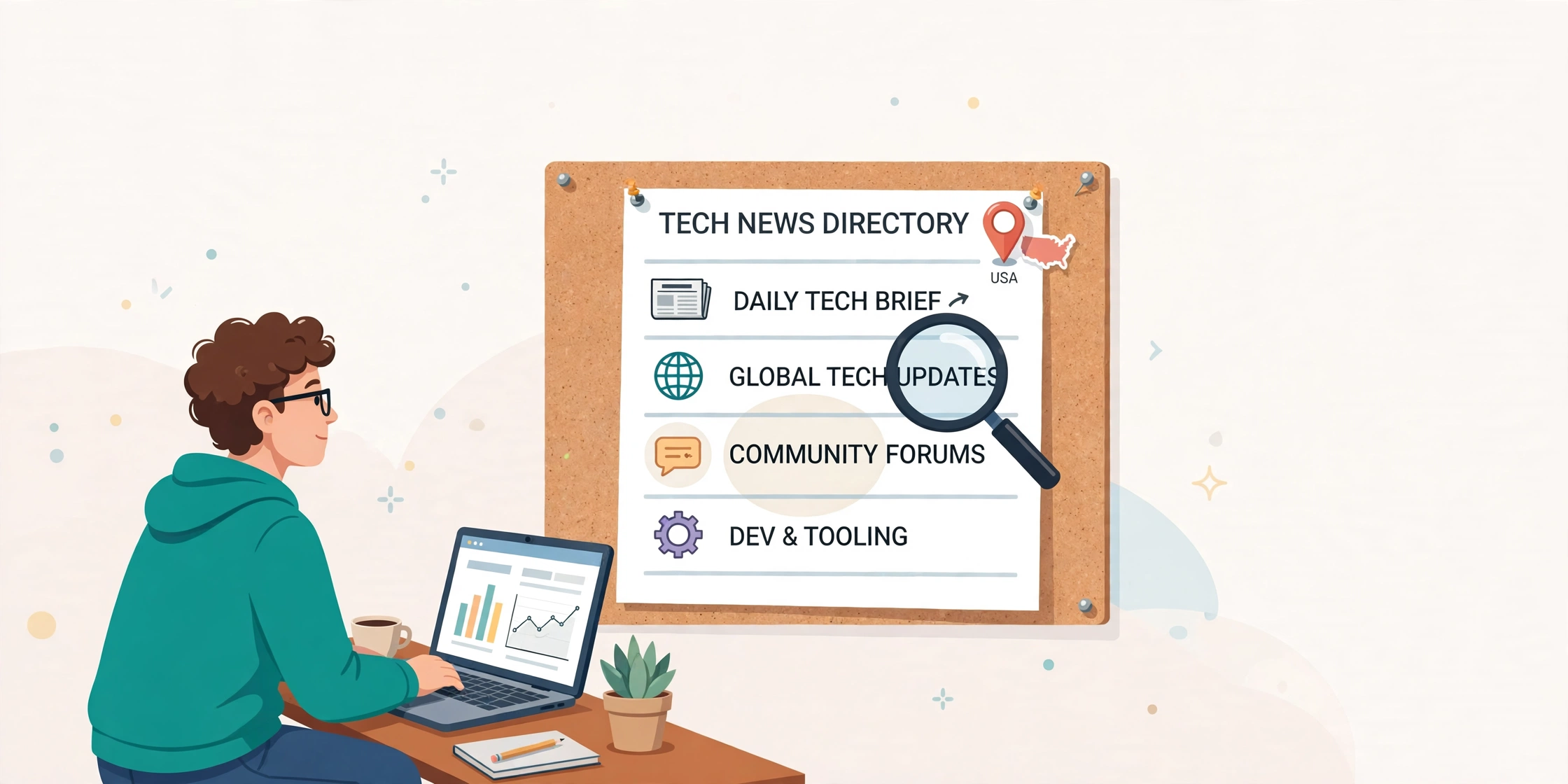
That is the first thing to clear up, because it changes everything else about how you should use it. TechNewsOutlets.com USA is not a newsroom. It does not send reporters out to cover a product launch, a funding round, or a data breach. It is a directory: a map that sorts well-known tech publications by topic so you can find the right source faster.
That map can be genuinely useful. It can also mislead you if you treat it as the news itself, if you land on a lookalike domain with almost the same name, or if you assume that being listed in a directory proves a story is accurate.
This article gives you the short answer first, then the seven facts that matter: what the site actually is, what it publishes, who runs it, whether it is safe, what the “USA” label really means, how the lookalike domains confuse the picture, and what to do if you want to pitch it a guest post. Where a fact could not be verified, this article says so plainly instead of filling the gap with a guess.
The Short Answer
TechNewsOutlets.com USA is a free, USA-focused directory of technology news outlets. It organises publications into categories such as AI, cybersecurity, startups, gadgets, and enterprise IT, and it points you to established outlets including TechCrunch, The Verge, WIRED, Ars Technica, CNET, VentureBeat, MIT Technology Review, BleepingComputer, Bloomberg Technology, and Axios.
It is safe to browse in the ordinary sense: it is a free reading directory, not a shop asking for your payment details, and no scam warning or safety audit against it turned up in the research for this article. But “safe to browse” is not the same as “safe to trust blindly.” The site names no owner or team on its About page, according to an independent review of that page, and its own blog drifts well beyond tech news. So use it to discover sources, then read the original publication before you act on anything important.
If you are here to pitch a guest post, read the pitch section before you send anything. No dedicated Write For Us page or public submission rules for this site were found, so there is no verified route, price, or acceptance promise to quote.
1. It Is a Directory, Not a Newsroom
This is the single most important fact about the site, and the site itself says it.
The homepage of TechNewsOutlets.com (https://technewsoutlets.com/) describes it as “a curated USA-focused directory of tech news outlets” and invites you to “build a reliable news stack that matches your goals.” Its own FAQ tells you to pick one fast daily source, one deep weekly source, and one specialist source, and to cross-check major claims across multiple outlets.
Here is why the distinction matters:
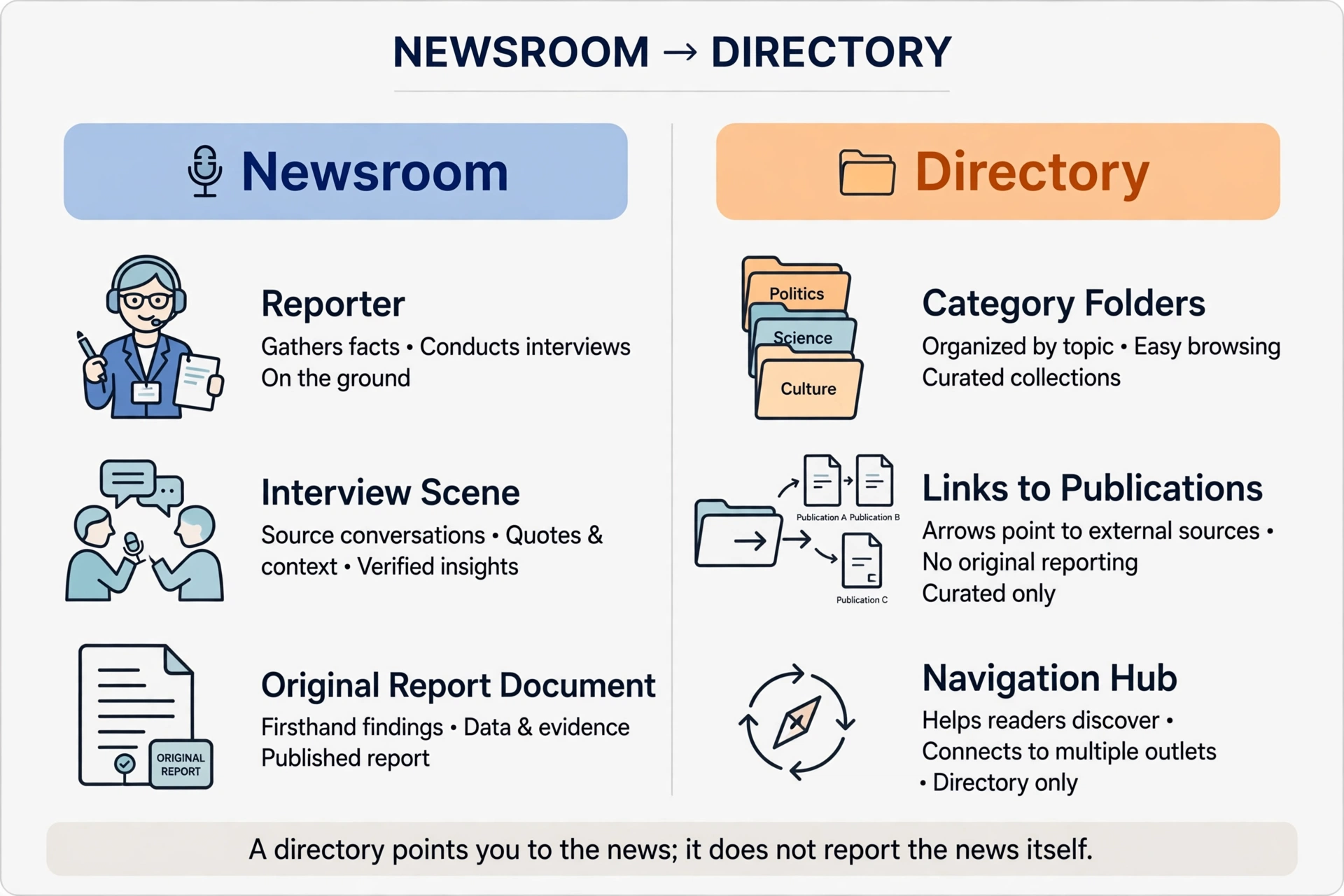
- A newsroom interviews people, checks facts, and publishes original reports. If a newsroom gets a story wrong, you can judge it by its reporting, its corrections, and its named journalists.
- A directory points you to newsrooms and explains what each one is good at. It does not report the story itself.
So if you read about a security flaw or a funding round through this directory, the original report lives on the outlet’s own site, not on the directory. Treat the directory as the map and the outlet as the place you actually read.
What this means for you
- If you want breaking news, go straight to the outlet the directory recommends.
- If you want to understand a topic, the directory’s category pages are a reasonable starting point.
- If a claim matters — money, security, health, or a business decision — never stop at the directory’s short description. Open the original article and check its date, author, and evidence.
2. What It Publishes: Category Hubs, Outlet Profiles, and a Blog
The site has three layers of content, and they are not equally useful.
Category hubs
The directory organises tech publications into topic hubs. The categories consistently reported across the site and independent guides are:
- AI, including models, generative AI, enterprise AI, and tools
- Cybersecurity, including breaches, malware, ransomware, and vulnerabilities
- Startups and venture capital, including funding, launches, and acquisitions
- Gadgets and consumer tech, including phones, laptops, TVs, and smart home gear
- Enterprise IT, including cloud, business software, and IT strategy
- Software development, including programming and engineering news
- Data science and analytics
- Venture capital and tech markets
Outlet profiles and top picks
The homepage lists ten “top picks” as quick links and suggests picking three to five of them for a balanced reading list:
- TechCrunch — startups, funding, and founders
- The Verge — consumer tech and digital culture
- WIRED — deeper reporting on tech, science, and culture
- Ars Technica — technical explainers and analysis
- CNET — product reviews and buying advice
- VentureBeat — AI and enterprise technology
- MIT Technology Review — emerging technology and research
- BleepingComputer — security incidents and malware
- Bloomberg Technology — tech business and markets
- Axios — short, fast news briefs
These are genuinely well-known publications. But remember that being listed together does not mean they share the same standards, audience, or style. A short consumer brief and a long technical analysis are different kinds of evidence, even when they cover the same event.

A blog that drifts off topic
The site also publishes its own blog posts, and this is where the quality gets uneven. On the homepage fetched for this article, the latest posts included an AI-powered app builder, a Canadian manufacturing company, a call blocker app for Android, local SEO for dentists, and an essay about super apps.
Some of those are loosely tech-related. Local SEO for dentists and factory assembly lines are not tech news by any reasonable definition. Independent reviewers noticed the same drift in earlier homepage checks, mentioning property, skincare, and footwear posts.
The practical takeaway is simple: trust the directory pages for discovering tech sources, and judge each blog post on its own merits. Do not assume a blog post carries the same weight as the established outlets the directory links to.
3. What “USA” Actually Means Here
“USA” describes the audience and focus, not a hard border.
The site aims at readers who follow American tech companies, startups, investors, consumer products, and digital policy. The outlets it lists, however, still cover world events. A security flaw found in one country can affect users everywhere, and an AI release can shift markets in several countries at once.
So if you are outside the United States, the directory can still be useful to you. You may just want to add one regional source of your own alongside it — for example, a local outlet that covers your country’s regulators, telecom providers, or startup scene.
The same logic applies to search variations. People type “technewsoutlets.com usa,” “technewsoutlets.com us,” and “technewsoutlets .com” looking for the same site. Those are search phrasings, not different websites. What matters is the exact domain in your browser’s address bar, which brings us to the confusion problem below.
4. Ownership Transparency: The Biggest Gap
Here is the fact that should make you pause before treating the site as an authority: no owner or team is named on its About page.
That observation comes from an independent reviewer who states they reviewed the homepage and About page on 12 October 2026 (https://rivonhome.com/technewsoutlets-com-usa/). The About page, as described in that review, gives a mission and a general contact email in the footer, but no people. Other guides likewise describe the contact method only as a website form and a general email address, with no prominently identified editors and no detailed review process explained.
That is common for small directories, and on its own it proves nothing bad. Many small content sites are run by a single person who simply never published a bio. But it does have a real consequence: you cannot easily tell who stands behind the picks, what their expertise is, or how an outlet earns its place in the directory. The site does not publish scores or rankings for the outlets it lists, so there is no visible method to audit either.
How to weigh this
- For casual reading: low risk. You are using the directory to find sources, and you will verify important claims at the original outlet anyway.
- For research or citation: higher bar. Cite the original publication, not the directory’s description of it.
- For a paid placement: highest bar. An unnamed operator, no published editorial policy, and no public rates mean you are negotiating in the dark, and you should not pay for promises about links, rankings, or traffic that nobody has put in writing.
No ownership name, company registration, traffic figure, or Domain Authority score for this site was verified from a primary source for this article, and none is claimed here. If a seller quotes you any of those numbers for technewsoutlets.com, ask them to show you where it came from.
5. Is TechNewsOutlets.com USA Legit and Safe?
The honest answer has two parts, and you need both.
Legit as a directory: yes, as far as anyone can tell. The site does what it says it does. It organises real, recognisable tech publications by topic, links out to them, and does not pretend in its own homepage copy to be a breaking-news newsroom. Browsing its directory pages costs nothing, and no subscription is required. No scam warning, fraud report, or safety audit against technewsoutlets.com turned up in the research for this article.
Safe to trust without checking: no. That is a different question, and the answer is no for three reasons already covered above: no named owner or editorial team, no published review method or scoring, and a blog feed that drifts into unrelated topics. A directory listing is not proof that an article is accurate, and a blog post about dentists’ SEO sitting next to a cybersecurity category does not inspire confidence in the site’s editorial filter.
There is also a practical safety point that has nothing to do with malware. The main risk with a site like this is not that it will steal your data. It is that you will act on second-hand information — a summary of a summary — without ever reading the original report. That risk is entirely avoidable, and the checklist later in this article shows you how.
If you are comparing this site with other unfamiliar sites you have been asked to trust, the same verification approach applies. Our guide to checking whether a website is a scam walks through the same kind of checks — domain, ownership signals, and independent evidence — in more detail.
6. The Lookalike Domain Problem
This is the trap most likely to catch a real reader, so read it carefully.
Several other websites use almost the same name as technewsoutlets.com, and nothing found in this research ties them to the main directory:
- technewsoutlets.org — its own About page describes it as an independent digital publication covering trending topics, technology, entertainment, lifestyle, and digital culture. That is a much broader brief than the .com site’s tech directory, and its pages read like general blog content rather than a directory of outlets.
- technewsoutletscom.com — a similar name with the dot removed, publishing general content.
- thetechnewsoutlets.com — the same name with “the” added at the front, also presenting itself as a tech guide.
These are separate domain names. A similar name does not prove shared ownership, shared editors, or shared standards. One independent reviewer explicitly reports finding nothing tying the lookalikes to the main directory.
There is a second confusion to avoid: retail “outlet” stores. Searches such as technooutlet, techoutlet us, and similar phrases point to online electronics shops, not to news directories. Those shops were not reviewed for this article, and nothing here says anything about whether any of them is legitimate. Do not mix up buying a gadget with reading about one.
The one-second check
Before you trust, share, or pay anything connected to this name, look at the exact domain in your address bar. The directory described in this article is technewsoutlets.com — no “the” at the front, no “.org” at the end, no missing dot. If the address is anything else, you are on a different site, and everything in this article stops applying.
7. Can You Pitch It a Guest Post?
This is where many readers of this article will be disappointed, and it is better to say it plainly than to invent a reassuring answer.
No dedicated Write For Us page, guest post page, submission guidelines, or public rate card for technewsoutlets.com was found in the research for this article. General web searches for guest posting on this site returned other, unrelated tech blogs’ write-for-us pages — not this site’s own policy.
That means the following are all unverified, and this article claims none of them:
- That the site accepts guest posts at all
- What topics or article lengths it accepts
- Whether links in contributed posts are dofollow or nofollow
- What it charges, if anything, for a placement
- How long a post stays live, or whether it is ever removed or edited
The site’s homepage does show that it publishes its own blog posts, including posts that read like contributed or promotional content — the manufacturing and dental SEO posts are examples. But publishing third-party-looking content is not the same as having an open guest post programme, and it tells you nothing about price, link type, or editorial review.
How to pitch it honestly, if you still want to try
- Use the site’s own contact route only. The guides that reviewed the site describe a general contact email and a website form. Do not trust a guest post email address quoted by a third-party seller unless you can see it on the site itself.
- Pitch a topic, not a finished article with a link already embedded. A real editor wants to judge the idea first. Sending a finished, link-loaded draft to an unnamed contact is the fastest way to look like a link seller.
- Ask the five questions before you pay anything: Is the link dofollow or nofollow? Is the post permanent? Will it be labelled sponsored? Who edits it, and can it be changed after publication? What exactly happens if the post is removed? Get the answers in writing.
- Never pay for ranking or traffic guarantees. No directory or small blog can promise you a Google ranking, and anyone who guarantees one is selling you something they do not control.
- Match the pitch to the directory, not the drift. A pitch about AI news sources or cybersecurity reporting fits the site’s stated purpose. A pitch about unrelated local services only fits the off-topic corner of its blog, which is exactly the part of the site with the least editorial credibility.
If the site does not reply, or replies without clear terms, that is your answer. There are many tech publications with public, transparent contributor programmes. A non-answer from an unnamed operator is not a door worth forcing open.
Our guide to trusting or pitching an unfamiliar site covers the same pitch-or-pass decision in a different case, and the logic transfers directly: when ownership, rates, and link rules are all unpublished, the burden of proof sits with the site, not with you.
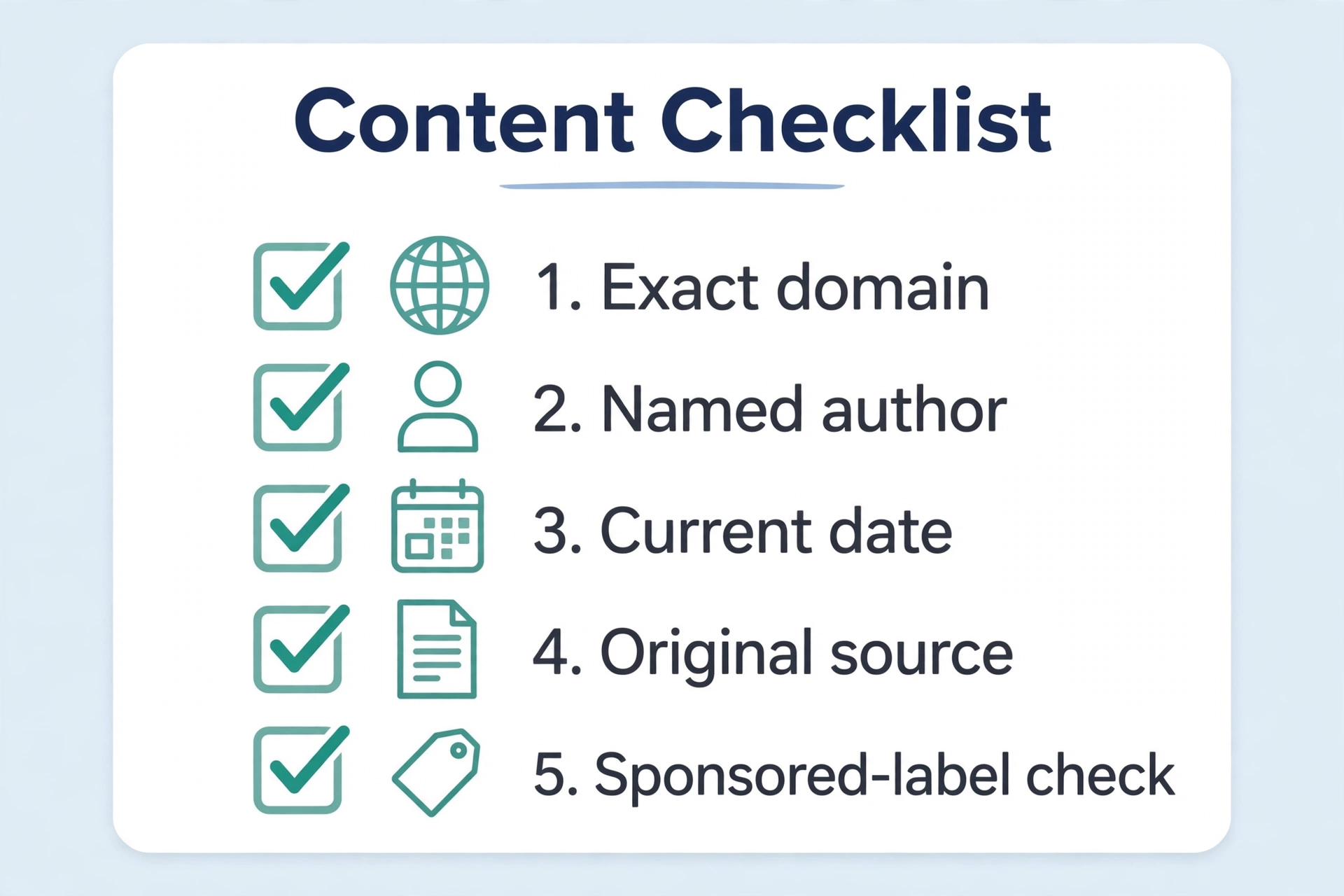
How to Check It Before You Trust It: A Practical Checklist
You can run this check on TechNewsOutlets.com, and on any tech source it points you to, in about five minutes.
Step 1: Confirm the exact domain
Type the address yourself or use a bookmark you made from the real site. Check for the “the” prefix, the “.org” ending, and the missing-dot variant described above. If the domain does not match exactly, stop and start over.
Step 2: Check the author and the date
A trustworthy article names its writer and shows a publication or update date. Tech facts go stale fast: a “best AI tools” list from two years ago and a security advisory from last week are not the same kind of information. If either the author or the date is missing, treat the page as background reading only.
Step 3: Follow the link to the original report
For any important claim, click through to the outlet the directory recommends and read the original article there. Check whether the original names its sources, links to documents or company statements, and distinguishes news from opinion. Google’s own advice for judging content is similar: ask who created it, how it was made, and why it exists, as set out in Google’s guide to creating helpful, people-first content.
Step 4: Cross-check big stories
For anything involving money, security, or a major product claim, confirm it with a second independent outlet or, better, the primary source: the company announcement, the research paper, or the official security advisory. One directory listing plus one article is a lead, not a verification.
Step 5: Check for sponsored labels
Ask whether paid posts and paid links are clearly labelled. A site that mixes promotional posts into its blog feed without labels is a site whose recommendations you cannot take at face value. If you cannot tell what is editorial and what is paid, discount everything on that page accordingly.
A starter reading list, built from the directory
If you are new to tech news, do not try to follow all ten top picks. Start with three:
- One fast daily source for headlines — for most readers, that means a startup or consumer tech outlet.
- One deep weekly source for context — a long-form or research-focused outlet.
- One specialist source for your interest — cybersecurity if you manage systems, AI if you build with models, gadgets if you buy hardware.
Revisit the list every few months. Outlets change focus, add paywalls, and lose or gain quality, and the directory itself notes that its listings may change over time for exactly those reasons.
FAQ
What is TechNewsOutlets.com USA?
It is a free, USA-focused directory that helps readers discover technology news publications by category, including AI, cybersecurity, startups, gadgets, enterprise IT, software development, data science, and tech markets. It is not a traditional breaking-news newsroom.
Does TechNewsOutlets.com publish original news?
Not in the traditional sense. Its main purpose is recommending and categorising other publications. It does publish its own blog posts, but original reporting on the stories that matter comes from the outlets it lists, and you should read those outlets directly.
Is TechNewsOutlets.com USA legit?
As a directory, yes, as far as can be verified: it lists real, recognisable publications and describes itself accurately as a directory. But it names no owner or editorial team, publishes no review method, and its blog drifts off topic, so “legit directory” should not be read as “verified authority.”
Is TechNewsOutlets.com safe to use?
Browsing it is low-risk in the ordinary sense: it is free, requires no subscription, and no scam warning or safety audit against it turned up in this research. The real risk is informational, not technical — acting on a second-hand summary without reading the original report. Use the five-minute checklist above before acting on anything important.
Is it free?
Yes. Visitors can browse its directory and category pages without buying a subscription, according to the guides that reviewed the site and the site’s own free-to-browse homepage.
Is TechNewsOutlets.com connected to TechCrunch?
No publicly available information establishes an ownership connection. TechNewsOutlets.com recommends TechCrunch as one of several external publications. Recommending an outlet is not the same as owning it or being endorsed by it.
Are technewsoutlets.com and thetechnewsoutlets.com the same site?
No. They are separate domains, and nothing found in this research ties them to the same owner. The same applies to technewsoutlets.org and technewsoutletscom.com. Always check the exact address before you trust a page or contact a site.
Does TechNewsOutlets.com accept guest posts?
No public guest post policy, submission guidelines, or rate card for this site was found. Its blog does carry posts that read like contributed content, but that does not prove an open programme, and no acceptance rule, link type, or price should be assumed. Contact the site directly through its own contact route and get any terms in writing before paying anything.
Should you trust everything listed on TechNewsOutlets.com?
No. A directory listing is not a guarantee that every article from a listed outlet is accurate, and the outlets listed do not share one editorial standard. Use the directory to discover sources, then judge each article by its author, date, evidence, and original reporting.
Bottom Line
TechNewsOutlets.com USA is best used as a starting point, not a destination.
Use it to find two or three tech publications that match your interests, build a small reading list you can actually keep up with, and then do your real reading at the original outlets. Check the exact domain before you trust any page carrying this name, ignore the off-topic corner of its blog, and do not pay anyone for a guest post placement on it until the site itself confirms the terms in writing.
A small, trusted reading list will serve you better than a long one. This directory can help you build that list — as long as you remember that it is the map, not the news.