TheAliteKeepSafe.com: 7 Essential Facts Before You Trust It or Pitch It
You searched for TheAliteKeepSafe.com, and you probably want a straight answer: is it a real website, is it safe, and can you trust what it publishes? The short answer is yes, it is a real, active website — but it is not quite what its name suggests, and you should judge it article by article rather than trusting the whole domain at face value.
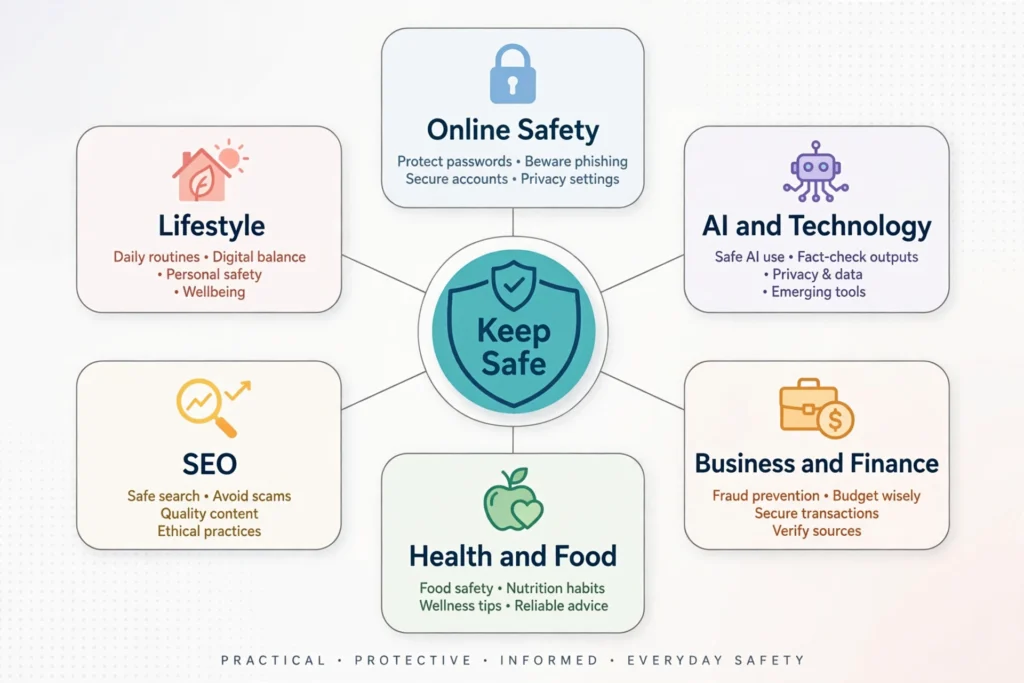
Here is the key thing to know up front: despite the “Keep Safe” name, TheAliteKeepSafe.com is not a security product, a security app, or a cybersecurity company. It is a general informational blog that writes about online safety alongside AI, technology, business, finance, health, food, SEO, sports, and lifestyle topics. Once you understand that, everything else about the site makes a lot more sense.
The Short Answer
TheAliteKeepSafe.com is an English-language informational website whose stated mission is helping readers browse the web more safely and make better decisions about online tools, websites, and digital privacy. In practice, it publishes a much broader mix of general-interest articles.
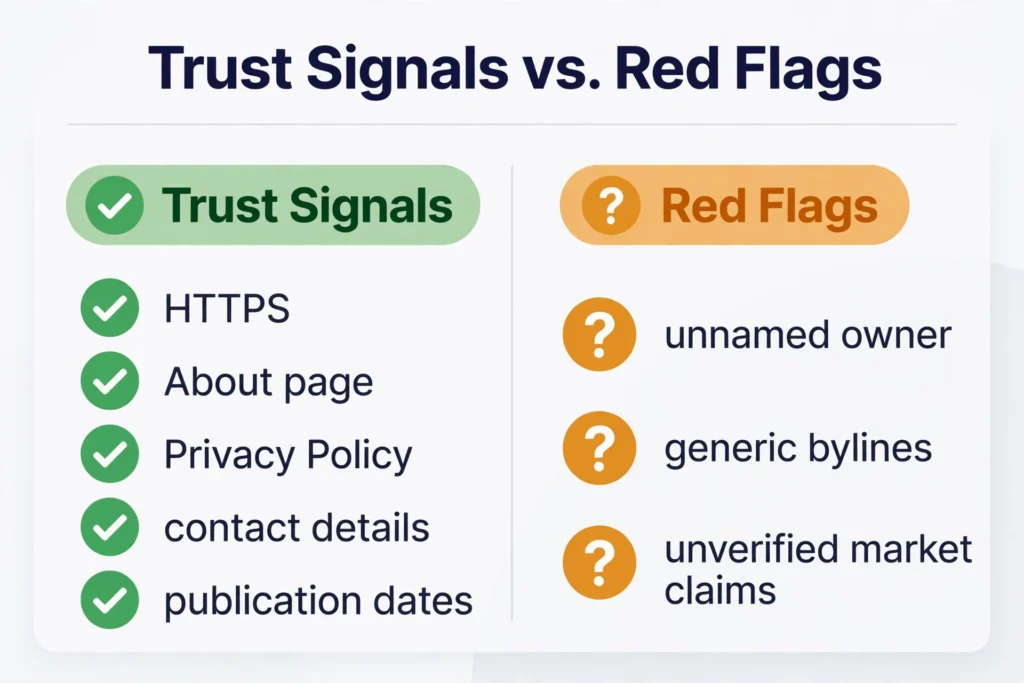
It is safe to visit in the basic sense: the site uses HTTPS, it has an About page, a Privacy Policy, a Disclaimer, and contact details, and it shows a visible publishing history. But HTTPS only encrypts your connection — it does not prove that every article is accurate, that every author is an expert, or that every recommendation is unbiased.
So the honest verdict is this: treat TheAliteKeepSafe.com as a useful starting point for general research, not as an automatically authoritative source. For everyday topics, its guides can be helpful. For health, money, legal, or cybersecurity decisions, verify important claims with a primary or professionally qualified source before you act on them.
1. What TheAliteKeepSafe.com Actually Is
TheAliteKeepSafe.com is a content publication, not a tool or a service you sign up for. You do not need an account to read it, and it does not sell a security product. Its content comes in familiar blog formats: guides, how-to articles, reviews, tips, and explainer posts.
Its About page says the site aims to explain security and privacy subjects in straightforward language, without unnecessary technical jargon or fear-based explanations. Its stated editorial principles include clarity, action-focused guides, updating articles when best practices change, and distinguishing opinion from factual information.
Those are the site’s own stated standards, though. They describe what the publication aims to do, not an independently verified fact about every article it has published. That distinction matters, and it runs through everything below.
2. What It Actually Publishes (It Is Broader Than the Name Suggests)
If you only read the domain name, you would expect a dedicated cybersecurity site. The live homepage tells a different story. Recent posts visible on the site include AI face-swap tool roundups, a safety review of a social media growth service, a local SEO guide for Brisbane businesses, and an article about language choices in Asian software markets.
Its main content areas include:
- Online safety and privacy — safe browsing, passwords, account security, phishing, suspicious links, backups, and secure Wi-Fi
- Technology and AI — AI tools, face-swapping and video-generation platforms, software, and productivity tools
- Business, finance, and cryptocurrency — money, entrepreneurship, online services, and digital business topics
- Health and wellness — general health, nutrition, supplements, and beauty
- Food and food safety — practical food-handling topics such as hot-holding temperatures, cooling, refrigeration, and cross-contamination
- Home and personal safety — home security systems, aging cameras, false alarms, and smart-home integration
- SEO and digital marketing — local SEO, search visibility, and social media services
- Sports, entertainment, lifestyle, and general news
One third-party review of the site counted more than 30 visible category labels and homepage pagination extending to page 52, which suggests a sizable content library. That archive size should not be treated as an exact article count, but it does confirm the site has been publishing steadily rather than appearing overnight.
The takeaway for you as a reader is simple: do not assume an article is written by a safety expert just because it sits on a “Keep Safe” domain. A health article, a finance article, and a cybersecurity article on the same site can be written by different people with very different levels of expertise.
3. Is TheAliteKeepSafe.com Legit?
By the usual signs, yes — it is a legitimate, functioning website rather than a fake storefront or a phishing clone. It has a live domain, a real archive of published articles, transparency pages, and working contact channels. Third-party domain checks report active DNS and email records for the domain.
But “legitimate website” and “authoritative source” are two different things. Here is what can be verified, and what cannot:
- Website exists and is active: Yes
- HTTPS connection: Yes
- About, Privacy Policy, and Disclaimer pages: Yes
- Contact information: Yes, email and WhatsApp
- Named authors on some articles: Yes, on some articles
- A prominently named legal owner or company: Not established
- Independent security certification: Not established
- Independent verification of every article: Not established
- Verified traffic or revenue figures: No — third-party estimates only, and they conflict
The most important gap is ownership. The site’s official pages describe its mission and editorial approach, but they do not prominently identify a named founder, individual owner, or incorporated company behind the publication. That alone does not prove a website is unreliable — many small blogs operate this way — but it does make accountability harder to assess. If an article turns out to be wrong, there is no named publisher to hold to account, only a contact form.
4. Who Owns and Writes for the Site?
Ownership: not clearly disclosed
The Contact page provides an email address (admin@thealitekeepsafe.com) and a WhatsApp number, with a stated response window of one to three business days, plus contact options for corrections, general inquiries, partnerships, and advertising.
The WhatsApp number begins with +971, which is the international dialing code for the United Arab Emirates. That should not be read as proof that the site’s owner or company is based in the UAE — a phone number can be used from anywhere, and the site’s own About page says its safety content is designed especially for readers in the United States. The honest conclusion is that the site offers identifiable contact channels, but no prominently named legal owner.
Authorship: mixed, so check each article
Authorship varies across the site. Some articles are attributed to named contributors, most notably Nicai de Guzman, whose author bio describes her as a digital marketer with marketing education and AI training. Other articles use generic bylines such as “admin” or “Blitz,” which tell you very little about who actually wrote the piece.
This matters more than it might seem. A named author with a verifiable background in digital marketing is a stronger signal than a generic byline — but even then, expertise is subject-specific. A marketing background does not automatically make someone an expert in medicine, food safety, finance, or cybersecurity.
When you read any article on the site, ask three quick questions:
- Is an author named, and does the article link to an author profile?
- Does that author’s background match the subject they are writing about?
- Can you find that author anywhere else online?
An article with a detailed named-author profile gives you far more to evaluate than one published under “admin.”
5. Is TheAliteKeepSafe.com Safe to Visit?
For ordinary reading, yes — with normal precautions. The site uses HTTPS, which encrypts the connection between your browser and the website. That protects your browsing from casual snooping on your network, but it proves nothing about content quality. In short: HTTPS means an encrypted connection, not guaranteed trustworthy content.
A few practical safety habits apply here exactly as they do on any unfamiliar website:
- Confirm the domain spelling. The correct domain is thealitekeepsafe.com. Lookalike sites can change a letter, add a hyphen, or use a different domain extension to imitate a real website.
- Pay attention to browser warnings. If your browser flags a dangerous site, do not enter personal information or download files until you understand why.
- Do not share sensitive information to read articles. Reading a blog post should never require your passwords, multi-factor authentication codes, bank details, recovery codes, or identification documents.
- Check where external links go. Third-party websites linked from the site operate under their own privacy policies. Check the destination before creating an account or entering payment information there.
- Use strong account security everywhere. Unique passwords, a password manager, and multi-factor authentication on your important accounts reduce the risk of account compromise far more than any single website’s safety claims.
No independent malware scan, security audit, or safety certification for TheAliteKeepSafe.com has been publicly established, so do not assume one exists. Nothing found during this research suggests the site itself is malicious — but “no evidence of a problem” is not the same as “independently certified safe.”
6. What Data Does It Collect?
Privacy matters more than usual for a site built around the idea of “Keep Safe,” so its Privacy Policy deserves a close look. According to the policy as reviewed by third-party guides in 2026 (last updated January 26, 2026), the site may collect:
- Information you provide directly, such as your name, email address, and message content
- Technical and browsing information, including IP address, browser type, operating system, pages viewed, referral data, and cookies
- Similar analytics information
The policy says this data may be used to operate and improve the website, respond to visitors, analyze traffic, and protect the site from spam or abuse. It also says cookies and similar technologies may be used for functionality, analytics, advertising, and affiliate measurement, and that analytics tools such as Google Analytics or similar services may be used — though the wording is conditional, so it should not be read as confirmation that any specific tool is always active.
Two points are worth noting. First, the site states that it does not sell personal information, though information may be shared with service providers, analytics or hosting companies, spam-protection services, when legally required, or during certain business transfers. Second, the policy does not give one fixed retention period; it says information is kept only as long as necessary for its purpose or to meet legal requirements.
The policy also says the site is not intended for children under 13 and does not knowingly collect personal information from children under that age. Some U.S. users may have rights under applicable state laws to request access, correction, or deletion of their personal information through the site’s contact channels.
All of this is the site’s own disclosure, not an independently audited finding. If you are uncomfortable with any of it, the practical move is simple: read the articles without submitting the contact form, and use your browser’s cookie controls if you prefer not to be tracked.
7. Does TheAliteKeepSafe.com Accept Guest Posts?
Yes — and this is the part most relevant if you found the site while researching guest posting opportunities, as many SEO professionals do.
The site’s footer includes a Write for Us link, and several third-party guest-post marketplaces advertise paid publishing or link-placement opportunities associated with the domain. Those marketplaces are third-party services, so their prices, link rules, and publishing requirements should not be treated as the site’s official policies. Always confirm terms directly with the site before paying anyone or submitting content.
A word of caution on the numbers those marketplaces show: different platforms report very different authority and traffic figures for this domain, and none of them are first-party data. Third-party SEO metrics are estimates built from crawled backlinks, keyword databases, and click-through models — not the site’s real analytics. Only data from tools controlled by the site owner, such as Google Search Console or its own analytics platform, would show real performance. And an SEO authority score is not a trust score: it does not establish that a site is secure, that its articles are accurate, or that Google endorses it.
If you are evaluating the site as a guest posting target, the same article-by-article rule applies. Check whether your topic genuinely fits what the site publishes, whether the specific section you would appear in is well-maintained, and whether the site’s editorial standards are visible in practice — not just promised on a Write for Us page. A link from a relevant, genuinely read article is worth far more than a link buried in a thin, off-topic post, whatever any marketplace metric says.
If you want a comparison point for how to judge an unfamiliar site before trusting or pitching it, the same checks apply to other review-style blogs — for example, the way you would check whether a website is a scam before relying on its claims, or how you weigh a guest posts opportunity against the actual quality of the site publishing it.
8. Don’t Confuse It With These Lookalikes
Part of the confusion around this keyword comes from similar names that have nothing to do with the domain:
- “Thealite Keep Safe” security-product articles. Some general blogs describe a supposed smart-security product ecosystem — cameras, sensors, dashboards, and AI monitoring — under the name “Thealite Keep Safe.” Nothing on the actual thealitekeepsafe.com homepage presents it as a product company selling security hardware, and those product-style descriptions appear to be generic content rather than verified information about this domain. Do not buy anything, or judge the blog, based on those articles.
- The Light Keeps Us Safe. This is an unrelated survival horror video game, not a website or a service.
- KeepSafe (keepsafe.com). This is an unrelated photo-vault app, not connected to thealitekeepsafe.com.
If a page you land on is selling security devices, reviewing a game, or asking you to install a vault app, you are not on TheAliteKeepSafe.com — even if the name looks similar.
How to Check Any Article on TheAliteKeepSafe.com Before You Trust It
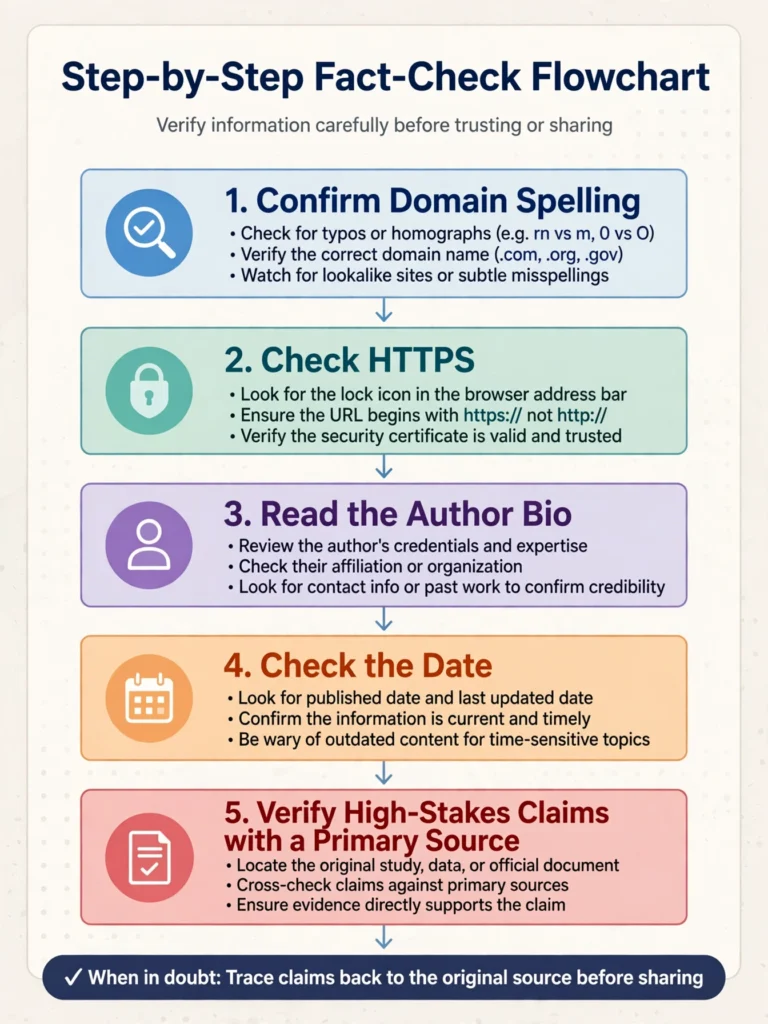
You do not need to run a full investigation for every article you read. A five-minute check is enough for most purposes:
Step 1: Confirm you are on the right domain
Check the address bar. The real domain is thealitekeepsafe.com — no hyphens, no extra words, no unusual extension. If the spelling differs, leave.
Step 2: Read the author and the date
Look for a named author and an author profile, and check whether the author’s background matches the topic. Then check the publication or update date. A cybersecurity, AI, finance, or software guide from years ago may contain outdated advice even if it was accurate when written.
Step 3: Look for primary sources
Strong articles point to evidence you can check yourself: government agencies, regulators, official product documentation, academic institutions, or original research. If an article makes a bold claim with no source at all, treat that claim as unverified.
Step 4: Separate facts from opinions
“Software X supports video uploads” is normally a verifiable statement. “Software X is the best AI tool” is an opinion unless it is backed by a transparent comparison method. Knowing the difference helps you decide how much weight to give a recommendation.
Step 5: Check for commercial relationships
Affiliate links and sponsored relationships do not automatically invalidate an article, but they are a reason to read recommendations more carefully. Ask whether advantages and disadvantages are both discussed, whether pricing is current, and whether official product information is linked.
Step 6: Verify high-stakes claims elsewhere
The higher the consequences of being wrong, the stronger your verification should be. For important decisions, go to primary sources: the U.S. Cybersecurity and Infrastructure Security Agency (CISA) for cybersecurity guidance, the Federal Trade Commission’s fraud reporting portal (ReportFraud.ftc.gov) for scams and fraud, qualified professionals and recognized medical authorities for health questions, and regulators or licensed professionals for financial decisions.
A useful rule of thumb for the whole site is: informational article first, primary source second, professional advice third when the decision actually matters.
Frequently Asked Questions
What is TheAliteKeepSafe.com used for?
TheAliteKeepSafe.com publishes informational content about online safety, privacy, AI, technology, business, finance, health, food, SEO, and other general topics. Its stated focus is online safety and privacy, but its actual library is much broader.
Is TheAliteKeepSafe.com safe to visit?
The site uses HTTPS and provides standard transparency pages, including an About page, Privacy Policy, and Disclaimer. However, HTTPS does not guarantee that every article or external link is accurate or trustworthy, and no independent security certification for the site has been established.
Is TheAliteKeepSafe.com a legitimate website?
Yes, in the sense that it is an active website with published content, archives, and contact information. Readers should still evaluate individual articles based on their authorship, evidence, and subject expertise rather than trusting the domain as a whole.
Who owns TheAliteKeepSafe.com?
The site’s official pages do not prominently identify a named individual owner or legal company. It does provide an email address and a WhatsApp contact, with a stated response window of one to three business days.
Does TheAliteKeepSafe.com collect personal information?
Its Privacy Policy says it may collect contact details, IP addresses, browser data, cookies, and browsing information. It also states that personal information is not sold, though data may be shared with service providers and analytics or hosting companies.
Does TheAliteKeepSafe.com accept guest posts?
Yes. The site has a visible Write for Us link, and third-party marketplaces advertise guest-post opportunities associated with the domain. Marketplace prices, link rules, and metrics should be verified independently and should not be treated as the site’s official policies.
Can TheAliteKeepSafe.com be trusted for health or financial advice?
It can be useful for general research, but important health, financial, legal, or cybersecurity decisions should be verified through qualified or authoritative sources. The site’s own Disclaimer states that its content does not replace professional advice.
Is TheAliteKeepSafe.com only a cybersecurity website?
No. Although it publishes online-safety and privacy content, its broader categories show that it functions more like a general informational publication with a safety-focused identity.
Is TheAliteKeepSafe.com a security product I can buy?
No. The site is a blog, not a product company. Articles elsewhere describing a “Thealite Keep Safe” security device ecosystem are not verified descriptions of this domain, so do not make purchasing decisions based on them.
Should I use TheAliteKeepSafe.com as a source for research?
For low-risk, general topics, its guides can be a reasonable starting point. For academic work or high-stakes decisions, use stronger primary sources and treat the site’s articles as background reading rather than final evidence.
How do I contact TheAliteKeepSafe.com?
The site’s Contact page lists an email address and a WhatsApp number for general inquiries, corrections, partnerships, and advertising, with a stated response time of one to three business days.
Bottom Line
TheAliteKeepSafe.com is best viewed as a broad informational website with a strong safety and privacy theme — not as a security product, not as a dedicated cybersecurity authority, and not as a site you should trust blindly.
It earns some genuine trust signals: an active publishing history, HTTPS, transparency pages, contact channels, and named authors on at least some articles. But it also carries real limitations: no prominently named owner, mixed authorship with generic bylines, a very broad topic range that outgrew its safety-focused name, and third-party marketplace data that varies too much to rely on.
Use it the way you would use any general blog you just discovered. Read the article, check the author and the date, look for real evidence, and verify anything that affects your money, health, legal rights, or account security somewhere authoritative before you act. Follow that habit and TheAliteKeepSafe.com can be genuinely useful — as a starting point, not the final word.