TW Meaning: 7 Clear Things It Stands For and How to Use It
TW is the two-letter label you see at the top of a post before a story about grief, violence or illness, and in nearly every case it stands for “trigger warning.” It tells you what is coming so you can scroll past, brace yourself or keep reading. But TW can also mean other things depending on where you spot it, and a lot of the pages that explain it are auto-generated filler with titles like “the forbidden truth.” This guide sticks to what dictionaries and research actually say.
A note on method: I read the Merriam-Webster and Dictionary.com entries for “trigger warning,” Slang.net, Dexerto’s explainer, three other slang pages, and the 2023 research review on whether warnings work. Where sources disagree, I say so.
The Short Answer
TW means trigger warning: a notice that the material that follows may be upsetting. Merriam-Webster defines a trigger warning as a warning that a text, video, class or other material may be disturbing or upsetting. Dictionary.com says it flags content that may cause distressing psychological or physiological reactions, especially in people with a related past trauma, and gives TW as the abbreviation. You’ll usually see it written as “TW: topic,” for example “TW: car accident.”
7 Clear Facts About TW
1. TW Usually Means Trigger Warning
On TikTok, Instagram, X (Twitter), YouTube, Reddit and in group chats, the label is shorthand for a heads-up. Dexerto describes it as an alert creators place at the start of videos so viewers can decide whether to keep watching distressing content, and says it shows up in captions, hashtags and text overlays. The word “trigger” comes from the psychology of trauma, where a trigger is something that can make a person relive a distressing experience.
2. The Format Is “TW: Topic”
Slang.net says it’s typically written with a colon or slashes so it stands out. Typical topics after the label:
- “medical content” before a post about a hospital stay
- “flashing lights” before a video with strobe effects
- “spiders” before a nature clip
- “rant ahead” before a long vent in a group chat
The last one stretches the term. A true trigger warning is about content that might distress someone, not just a heads-up that a message is long.
3. It Is Not the Same as CW

CW stands for content warning. Slang.net draws the line this way: a trigger warning is for material that may bring back past trauma, while CW covers content some people may simply find objectionable. In practice, people use the two interchangeably, and the dividing line isn’t official. If you want a safe default, use CW for general sensitive content and the TW label when the topic is likely to be traumatic.
4. The Origin Is Disputed
Sources give different dates, so be careful with confident origin stories:
- Dictionary.com says the term was first recorded in 1990 to 1995.
- Merriam-Webster gives 2005 as the first known use, and says warnings became common in online feminist spaces and in 21st-century political debate, citing the writer Sarah Seltzer.
- Several slang pages claim the labels spread widely on Tumblr in the 2010s, but they cite no sources.
What is clear is that the idea grew out of the PTSD concept of “triggers,” and the term entered common use through the internet.
5. Common Topics That Get a Warning
The topics listed on slang sites are consistent: suicide and self-harm, eating disorders, physical or emotional abuse, violence, and hate speech. People also use it for needles, medical procedures, animal harm and flashing lights. There is no official list, so creators decide for themselves.
6. It Has Other Meanings
Context usually tells you which one is meant. Here are the ones that show up:
| Where you see it | What it can mean |
|---|---|
| Social media, chats | Trigger warning (by far the most common) |
| Fandom and LGBT spaces | Trans woman, according to one slang page |
| Jewelry | Total weight, the combined carat weight of stones |
| Web addresses | The country code for Taiwan |
| Older chat slang | Short for Twitter, according to one list |
Lists on a few sites add less common ones like “treatment week” in medical notes. If a message has no topic after it and isn’t about content, check the context before assuming it’s a warning.
7. Research Says Warnings Don’t Work the Way People Expect
A 2023 meta-analysis in Clinical Psychological Science, led by Victoria Bridgland of Flinders University with Payton Jones and Benjamin Bellet of Harvard, reviewed 12 studies. The results:
- Warnings increased anxiety before viewing sensitive material.
- They did not change distress after viewing.
- They did not reduce avoidance, since people viewed the material at about the same rate.
- They did not affect comprehension of written material.
The authors wrote that existing research “almost unanimously suggests that trigger warnings do not mitigate distress.” A British Psychological Society summary adds important limits: only 12 studies, samples from Western, educated, wealthy countries, mostly single-session measurements, and a narrow definition of “warning.” It also notes that many people still find warnings useful for making informed choices. Put simply, a warning may not protect anyone from distress, but it does give people a choice, and the research doesn’t say that choice is worthless.
How to Use a Trigger Warning Well
- Put it first. The warning should appear before the content, not after.
- Name the topic. “TW: self-harm” is more useful than a vague “heavy topic.”
- Add space. Leave a few lines or a spoiler block between the warning and the content, so readers can stop before they see it.
- Don’t overuse it. Labeling every mildly unpleasant post makes the label meaningless.
- Respect people who skip it. Don’t pressure anyone to read or watch.
If you came across the label because something in a post is hitting close to home, it is fine to stop reading. If a topic is affecting you personally, in the US you can call or text 988 to reach the 988 Suicide & Crisis Lifeline.
Replying When Someone Uses a Trigger Warning
- Thank them, or simply respect it. A short “thanks for the heads-up” is enough.
- Don’t mock it. Some people use warnings to make fun of others, and that tends to land badly.
- Ask, don’t assume. If a friend wants a warning added to your post, add it. It costs a few characters.
The Slang Around It
The label sits in a family of internet shorthand like CW, NSFW and “spoiler.” If you enjoy decoding terms like this, see our explainers on geeked, sagerne and TikTok emojis.
A Warning About Search Results
Searching for the meaning returns many pages with sensational titles, such as “the scandalous secret that’s breaking the internet,” hosted on unrelated company, school and government-looking sites. They appear to be auto-generated and say very little. A reliable explanation names its sources, cites a dictionary or study, and doesn’t need a dramatic headline.
Frequently Asked Questions
What does TW mean? Usually “trigger warning,” a heads-up that content may be upsetting.
What does it mean on TikTok? The same thing: creators add it to captions or the start of a video before sensitive topics.
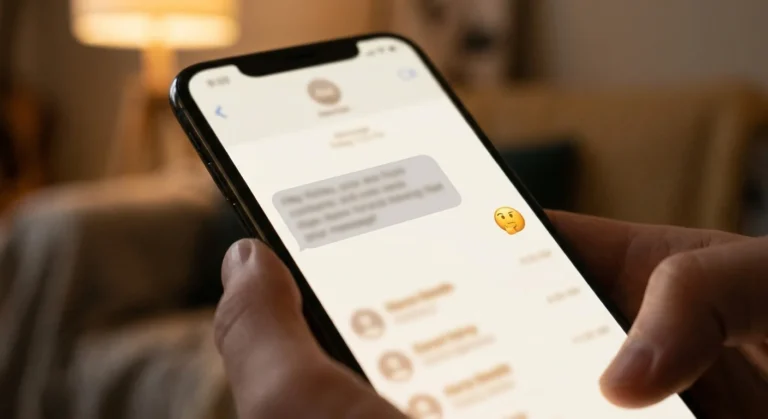
What does it mean in text? In texts and group chats it is typically a trigger warning too, and sometimes loosely used for “heads-up, long message.”
What is the difference between a trigger warning and a content warning? A trigger warning is for potentially traumatic material, while CW covers a broader range of sensitive or objectionable content. Many people use them interchangeably.
Does it ever mean trans woman? Sometimes, according to one slang page, usually in LGBT spaces. Context decides.
What does the .tw domain mean? It is the web domain for Taiwan.
Do trigger warnings work? A 2023 meta-analysis of 12 studies found they don’t reduce distress and slightly increase anticipatory anxiety, though many people still value the choice they give.
Is it the same as NSFW? No. NSFW warns about content unsuitable for a workplace, such as adult material, while a trigger warning warns about content that may distress.
Bottom Line
TW means trigger warning in almost every online setting, with a few other meanings like trans woman, total weight and Taiwan depending on context. Use “TW: topic” before sensitive content, keep it specific, and don’t treat it as a guarantee of safety, since research suggests warnings don’t reduce distress even though many people appreciate them. When you look it up yourself, trust dictionary entries and named studies over pages with dramatic titles.