AI Transformation Is a Problem of Governance, Not a Problem of Technology
Picture the moment most AI projects actually get stuck. It is not the demo. The demo usually works. A small team builds something clever, shows it to a room full of people, and everyone nods. The trouble starts a few weeks later, when that team moves on to the next thing and someone asks a simple question: who owns this system now?
Nobody can answer with confidence. Nobody knows exactly what data it is allowed to touch, what it is allowed to do without asking a human first, or what should happen when it gets something wrong. The system is still running, but it is running without a clear owner, without a clear boundary, and without a clear record of what it has done. That is the point where transformation stalls — not because the model failed, but because the organisation around it never decided how it would be run.
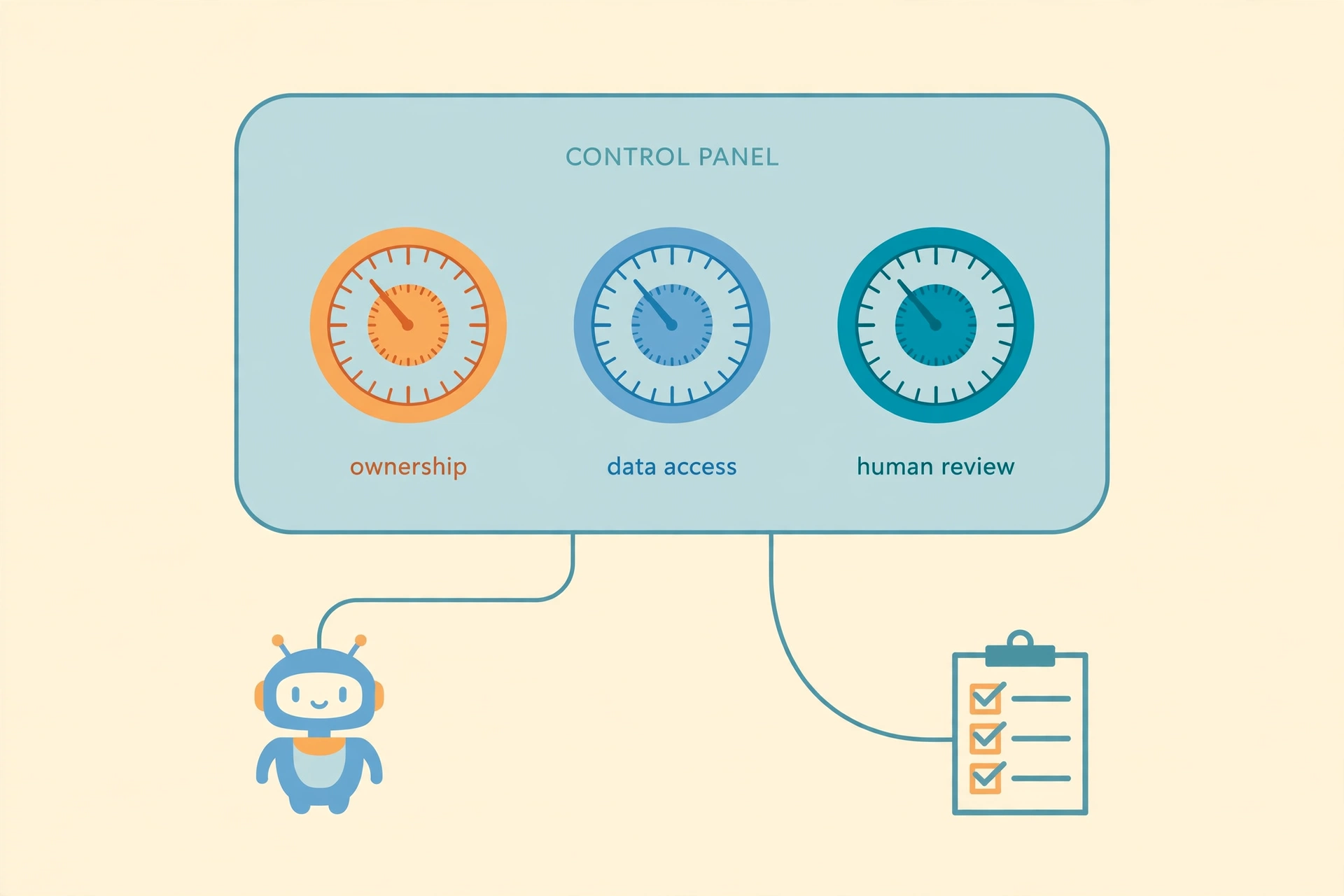
That is why ai transformation is a problem of governance. The hard part of scaling AI was never just building a better model. It is deciding, in advance and in writing, who decides, who is accountable, what is allowed, and how you will know when something has gone off track. Until those decisions exist, every new tool adds risk faster than it adds value, and every pilot that “works” in a controlled room becomes harder to defend in the real world.
AI Transformation Is Not a Technology Problem
The model was never the bottleneck
For most teams, getting a model to produce a decent answer is no longer the difficult step. Off-the-shelf models are capable, APIs are easy to call, and a competent team can put together a working prototype in days. The bottleneck appears later, when that prototype has to live inside a business with customers, employees, contracts, and regulators.
A prototype only has to work once, for one audience, under supervision. A production system has to work repeatedly, for people who were not in the room when it was built, in situations nobody predicted, long after the original builders have left. Technology can answer a question. It cannot, on its own, decide who is responsible for that answer.
What changes when AI moves from demo to daily work
Three things change, and all three are governance problems.
First, the system starts touching real data and real decisions: customer records, employee information, financial figures, medical or legal material, or simply the reputation of the company in a customer-facing chat. The stakes go up, but the controls often stay at demo level.
Second, the system keeps changing. Models are updated, prompts are tweaked, new tools are connected, and data sources shift. A system that was approved in January may not be the same system in June, even if nobody formally “changed” it.
Third, other people start relying on it. Staff copy its output into reports. Customers act on its advice. Managers quote its summaries in meetings. Once that happens, an error is no longer a curiosity in a test environment. It is a decision the organisation has made, whether it meant to or not.
Why buying a better model keeps failing
When a rollout stalls, the instinct is often to shop for a better model, a better vendor, or a bigger budget. That instinct misses the cause. If nobody owns the system, a better model still has no owner. If nobody has defined what data it may use, a better model still has unclear data boundaries. If nobody is monitoring its outputs, a better model still fails quietly.
Model shopping feels like progress because it is concrete and easy to buy. Governance feels slow because it is about meetings, documents, and decisions that nobody can point to on a screen. But the second is what turns a tool into a system the business can actually run. Companies that lead with tools tend to accumulate pilots. Companies that lead with ownership, decision rights, and monitoring tend to accumulate systems that stay in production.
What AI Transformation Governance Actually Means
Governed intelligence for AI transformations
It helps to use a plainer phrase for what we are talking about: governed intelligence. That means AI that is allowed to do specific things, with specific data, under specific oversight, by specific people — and where every one of those choices can be checked later.
Governed intelligence is not a policy document sitting in a shared drive. It is the set of working arrangements that answer, for each system: who approved it, what it is for, what it must not do, who watches it, and how it can be stopped. If you cannot answer those questions for a system in under a minute, that system is not yet governed, however good its results look.
Governance is an operating system, not a document
Think of ai transformation governance as an operating system for AI, in the same way an operating system manages access, permissions, and resources for software. It does not do the work itself. It decides what is allowed to run, who can run it, what resources it can reach, and what gets logged.
That operating system has a few essential parts, and they need to work together:
- A register: a list of every AI system in use, including the ones nobody formally approved.
- Ownership: a named person or team for each system, not a committee in general.
- Risk tiers: different levels of scrutiny for different levels of risk, so low-risk work moves fast and high-risk work gets proper attention.
- Approval paths: a clear route from idea to production, with checks that match the risk.
- Monitoring: ongoing checks on outputs, data, drift, and incidents, not a single check at launch.
- Retirement: a way to switch a system off, or re-approve it, when it no longer meets its original purpose.
If any of those parts is missing, the rest wobbles. A register without owners is a list nobody maintains. Owners without monitoring are titles without information. Monitoring without a retirement path means bad systems linger because nobody wants to be the person who switches them off.
Governance is not compliance
Compliance and governance are often confused, and the confusion matters. Compliance means satisfying a regulator or an external standard. Governance means having an internal accountability structure that would exist even if no regulator were watching.
A company can be compliant on paper and still be badly governed. It can pass an audit because the right documents exist, while in practice nobody knows which version of a model is live, or which employees are pasting customer data into an unapproved tool. Conversely, a company can be well governed before a specific regulation arrives, because it already knows its systems, its owners, and its risks, and can therefore map them to new rules without starting from scratch.
That distinction is why governance is worth building for its own sake, not just as a response to a law. Laws change, and they differ by country and sector. The internal question does not change: who decided this system could do this, and on what evidence?
A useful reference point here is the NIST AI Risk Management Framework, which organises AI risk work around four functions — Govern, Map, Measure, and Manage. Govern is the cross-cutting function: culture, accountability, and policies that inform everything else. Map, Measure, and Manage are the operational work of understanding context, assessing risk, and responding to it over time. The framework is voluntary guidance, not a law, which is exactly the point: it describes how an organisation should run AI responsibly, whether or not a regulator is currently asking.
The Five Decisions Every AI System Needs Before It Scales
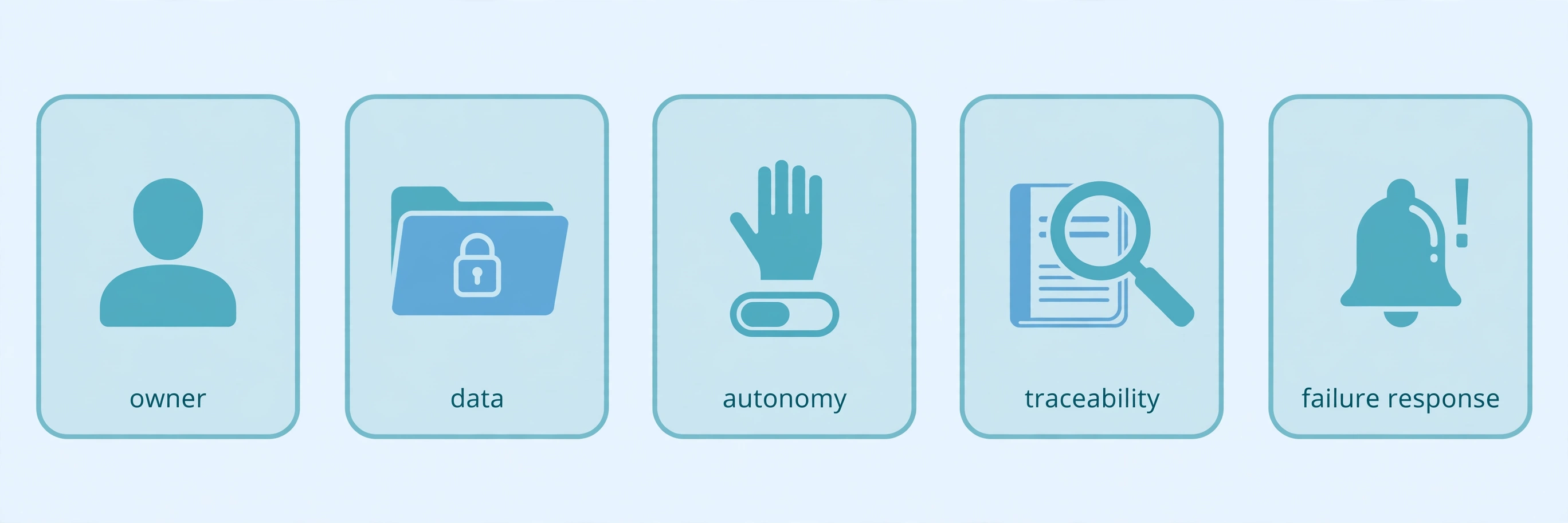
Before any AI system scales, five decisions need to be made and written down. They sound obvious. In practice, most stalled projects are missing at least two of them.
Who owns it
Every system needs a named business owner, not just a technical builder. The owner is the person who can answer for the system’s purpose, its risks, and its continued use. If the owner leaves, ownership must transfer formally, not drift to whoever happens to be nearby. “The team owns it” usually means nobody owns it.
What data it may touch
This is not just a privacy question. It is a practical question: which datasets, documents, and systems is this tool allowed to read, and which are off limits? Can it read customer emails? Can it summarise internal strategy documents? Can it send data to an external model provider, and if so, what data, under what contract? If those boundaries are not written down, staff will guess, and guesses tend to drift towards convenience.
What it may do on its own
There is a large difference between an assistant that drafts a reply for a human to check and an agent that sends emails, changes records, or places orders on its own. The approval boundary needs to be explicit: which actions are automatic, which need human review, and which are never allowed without a person in the loop. This matters most for agentic AI, where a system can take a chain of actions across email, a CRM, a code repository, or a database before anyone notices a mistake.
How you will know what it did
A governed system leaves a trail. That means logs of what it was asked, what data it used, what it produced, and what actions followed — in enough detail that a human can reconstruct a decision later. Without that trail, you cannot audit, you cannot explain a bad outcome to a customer or regulator, and you cannot learn from failures. You can only guess.
What happens when it is wrong
Every system will be wrong sometimes. The question is whether that is a planned event or a crisis. A governed system has pre-agreed triggers: if confidence is low, if the output falls outside expected patterns, if a customer complains, or if a human reviewer disagrees, what happens next? Who is notified, how quickly, and what gets paused while you check? If you only work that out after an incident, you will work it out under pressure, inconsistently, and too late.
| Decision | Question to answer in writing | Written artefact | Owner |
|---|---|---|---|
| Ownership | Who is accountable for this system, and who takes over if they leave? | Owner record in the AI register | Business owner |
| Data boundaries | Which data may it read, and which data must it never touch? | Data access list, per system | Data owner with the business owner |
| Autonomy | Which actions are automatic, which need human approval, and which are banned? | Approval matrix | Business owner with risk/security |
| Traceability | What logs exist, and can a decision be reconstructed later? | Logging standard, per system | Engineering / platform team |
| Failure response | What triggers a pause, who is notified, and in what timeframe? | Incident and escalation plan | Business owner with support/security |
That table is short on purpose. If a team cannot fill it in for a system, that system is not ready to scale, whatever its demo looked like.
Why Enterprises Struggle With AI Governance Software
Tools that record, tools that enforce, and tools that do neither
This is one reason enterprises struggle with ai governance software: the market sells three different kinds of tool under one label, and buyers often discover the difference too late.
Some tools record. They give you a register, a risk assessment form, and a dashboard. That is useful, but recording a risk is not the same as controlling it.
Some tools enforce. They sit in the path of the work: they block a disallowed data source, require approval before an agent can take a write action, or redact sensitive information before it leaves the organisation. Those tools change behaviour, but they are harder to deploy, because they have to integrate with the systems people actually use.
And some tools do neither well. They produce impressive reports and workflows, but the work itself happens elsewhere — in personal accounts, in browser tools, in spreadsheets — untouched by any control. When leadership asks whether AI is governed, the answer is a dashboard. When security asks what actually happened yesterday, the answer is silence.
Before buying, ask a blunt question for each candidate tool: does this change what a system is allowed to do, or does it only describe what a system is supposed to do? Both have a place. Only the first counts as enforcement.
The inventory problem and shadow AI
You cannot govern what you cannot see. Most organisations do not have a complete inventory of their AI systems, because many of them were never formally launched. An employee tries a new assistant to summarise meeting notes. A team connects a chatbot to a shared drive. A manager pastes a customer list into a public tool to “quickly analyse” it. None of this is usually malicious. It is usually a sign that the approved path is slow, unclear, or missing.
Shadow AI is therefore best treated as feedback, not just as a security incident. If people are going around the process, the process is probably failing them in some way: too slow, too opaque, or too disconnected from the work they need to do. A governance programme that only bans unapproved tools, without offering a fast approved alternative, will keep discovering new shadow tools, because the underlying demand has not gone away.
The practical response is twofold: make discovery routine (regular scans, questions in onboarding and project reviews, a simple way for staff to declare a tool they are using), and make the approved path genuinely usable. An inventory that only lists the systems leadership already knows about is not an inventory. It is a wish list.
Data fragmentation underneath the tools
Even with good tools, governance struggles when the underlying data is fragmented. If customer data lives in five systems with different owners, different quality, and different access rules, then no AI governance tool can give a clean answer to “what data may this system use?” The AI will inherit the mess underneath it, and its outputs will reflect that mess — inconsistent, hard to explain, and hard to trust.
That is why data governance and AI governance cannot be separated. Cleaning up data ownership, access, and quality is not a side project to AI transformation. It is part of it. A model trained or prompted on inconsistent data will produce inconsistent decisions, and no amount of policy language will fix that after the fact.
AI Governance Paralysis: When Governance Becomes the Bottleneck
Signs you have crossed from careful to paralysed
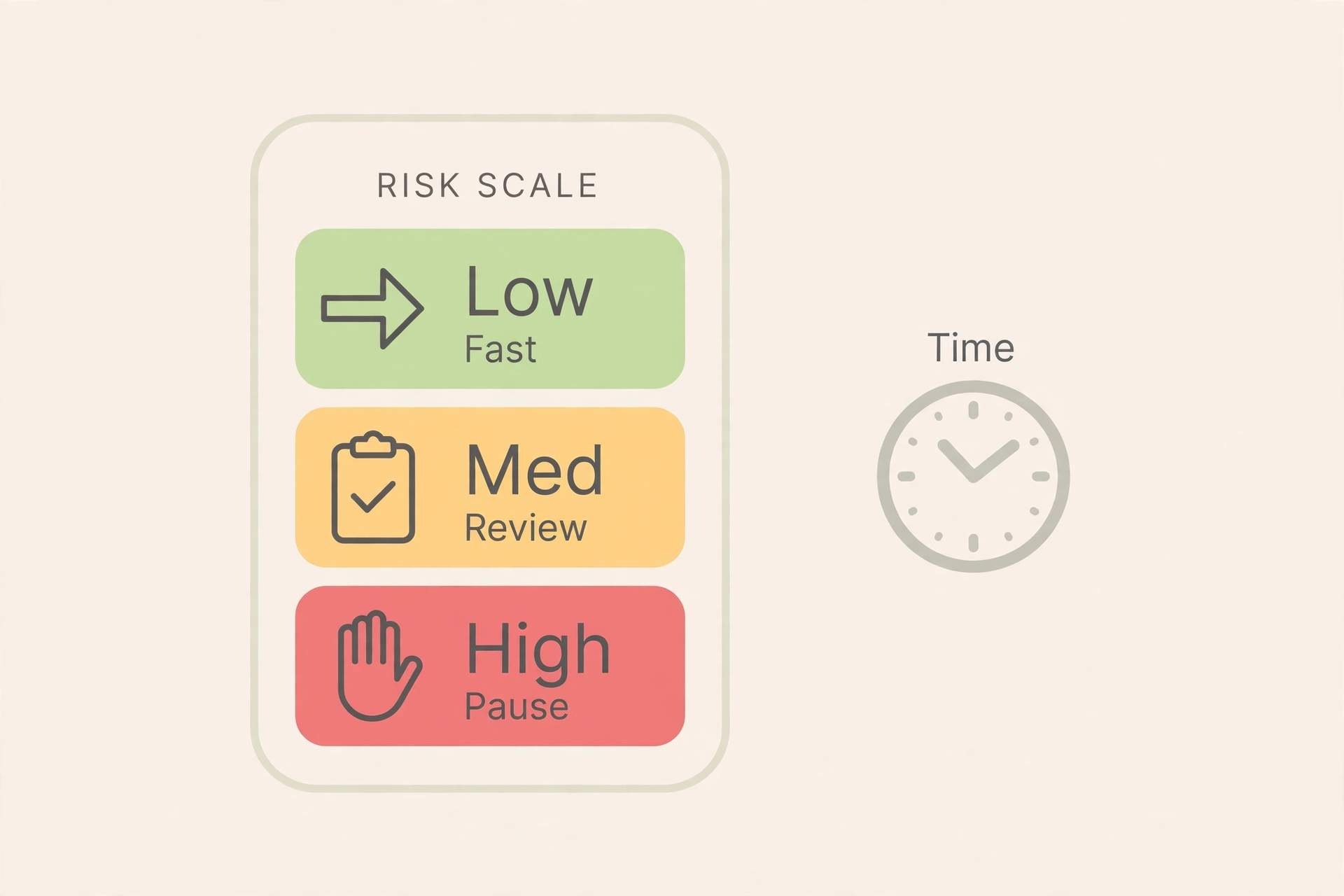
Governance can also fail in the opposite direction. Ai governance paralysis is what happens when review becomes so heavy, so slow, and so uniform that teams stop proposing ideas, or stop asking for approval at all. The symptoms are easy to recognise once you look for them:
- Every system, however low-risk, goes through the same long approval process as a high-risk system.
- Reviews ask for information nobody can provide at that stage, so projects stall waiting for perfect documentation.
- Committees meet rarely, decisions take weeks, and nobody can say what would count as “good enough” to proceed.
- Teams start working around the process, not because they are reckless, but because the process has become the main obstacle to doing their jobs.
- Approved systems pile up in a backlog, while unapproved systems quietly multiply in the background.
Paralysis is not the same as caution. Caution is proportionate: more scrutiny where the risk is higher, less where it is lower. Paralysis is indiscriminate: the same weight applied everywhere, which means high-risk work does not get the deep attention it needs, because reviewers are exhausted by low-risk work.
Proportional review, not uniform review
The fix is risk tiers, applied honestly. A low-risk internal summariser that only touches public documents should not need the same review as a system that makes decisions about hiring, lending, medical care, or children’s safety. If your process treats them identically, it is not being rigorous. It is being lazy about risk.
| Risk tier | Example | Approval path | Monitoring |
|---|---|---|---|
| Low | Internal summariser for public documents, human-checked output | Team lead approval, logged in the register | Periodic spot checks |
| Medium | Customer-facing assistant with human review, or internal tool touching non-sensitive business data | Business owner plus security/data review, written data boundaries | Regular output sampling, incident log |
| High | System affecting employment, finance, health, safety, or children’s data, or an agent that can change records | Full review: business owner, legal, security, data, and risk, with pre-agreed human-review triggers | Continuous monitoring, drift checks, formal incident plan, scheduled re-approval |
| Do not deploy | System that cannot be explained, cannot be monitored, or uses data it has no right to use | No approval path until the gap is closed | Not deployed |
That table does two jobs at once. It speeds up low-risk work, which builds trust in the process, and it concentrates attention where it matters. Teams are far more likely to use a process that respects their time on low-risk work, and reviewers are far more likely to catch real problems when they are not drowning in routine approvals.
A Concrete Operating Model: Register, Tiers, Owners, Triggers
Frameworks are useful, but teams need a sequence they can follow. This is the operating model that ties the earlier sections together, in the order that actually works.
Register every system, including the quiet ones
Start with a single register. Every AI system, tool, and agent in use gets an entry: purpose, owner, data sources, risk tier, approval date, and next review date. Include the quiet ones — the chatbot a team set up months ago, the summariser someone uses daily, the agent connected to a shared mailbox. An incomplete register is worse than no register if it creates false confidence, so the first pass should be about discovery, not perfection. Ask teams directly, check common platforms, and give staff a simple way to declare a tool without fear of punishment for past use.
Assign a risk tier and a named owner
For each entry, assign a risk tier using the table above and name an owner. If no owner can be named, the system pauses until one is. That rule sounds harsh, but it is the single most effective governance control available: an ownerless system is an ungoverned system, and pausing it forces the decision that should have been made at launch.
Set human-review triggers in advance
For each system, write down the triggers that require a human to step in: low confidence, an output outside expected patterns, a request involving sensitive data, a customer complaint, or any action that changes a record or sends a message externally. Triggers should be specific enough that a reviewer knows what to do, not just that they should “be careful.” Vague instructions produce vague review.
Monitor drift, outputs and incidents
Monitoring is not just checking that a system is still running. It means sampling outputs for quality and bias, watching for drift as data and models change, and logging incidents with a clear owner and timeframe for resolution. A system that was accurate at launch can become inaccurate as the world changes around it. Without monitoring, that decay is invisible until a customer or auditor points it out.
Retire or re-approve, on a schedule
Every system gets a review date. At that date, it is either re-approved, changed, or retired. Retirement is a normal, healthy outcome, not a failure. Systems that have served their purpose, systems whose data sources have changed, and systems whose risks now outweigh their value should be switched off cleanly, with data and access removed. Organisations that never retire systems end up maintaining a growing museum of half-forgotten tools, each one a small, unmonitored risk.
Cross-Functional Adoption Without a Veto Committee
Who sits at the table, and what each function actually decides
Ai transformation services cross-functional adoption governance sounds like jargon, but the underlying idea is simple: AI touches so many parts of a business that no single function can govern it alone. Business owns the purpose and the value. Legal owns regulatory and contractual risk. Security owns access and data protection. Data owns quality and lineage. Product and engineering own how the system is built and monitored. Human resources or people teams own the impact on staff, where that is relevant.
The mistake is to invite all of those functions to approve everything, which creates a veto committee. The better approach is to define, in advance, what each function actually decides. Legal does not need to approve the choice of model for a low-risk internal tool. Engineering does not need to approve the business case. Each function reviews the part it owns, at the level of scrutiny the risk tier demands, and the business owner remains accountable for the whole.
How to keep review fast for low-risk work
Speed matters, because a slow process drives people to shadow tools. Three habits keep review fast without making it meaningless: standard templates for low-risk systems, so teams are not writing a novel for a summariser; clear service levels for review, so teams know when they will get an answer; and a fast path for small changes, so a prompt tweak does not trigger a full re-approval unless it changes data, autonomy, or risk. When teams experience governance as a service that helps them launch safely, rather than a gate that delays them, they start bringing systems to it voluntarily. That is the moment governance starts working.
Minimum Viable Governance: The Checklist to Start This Month
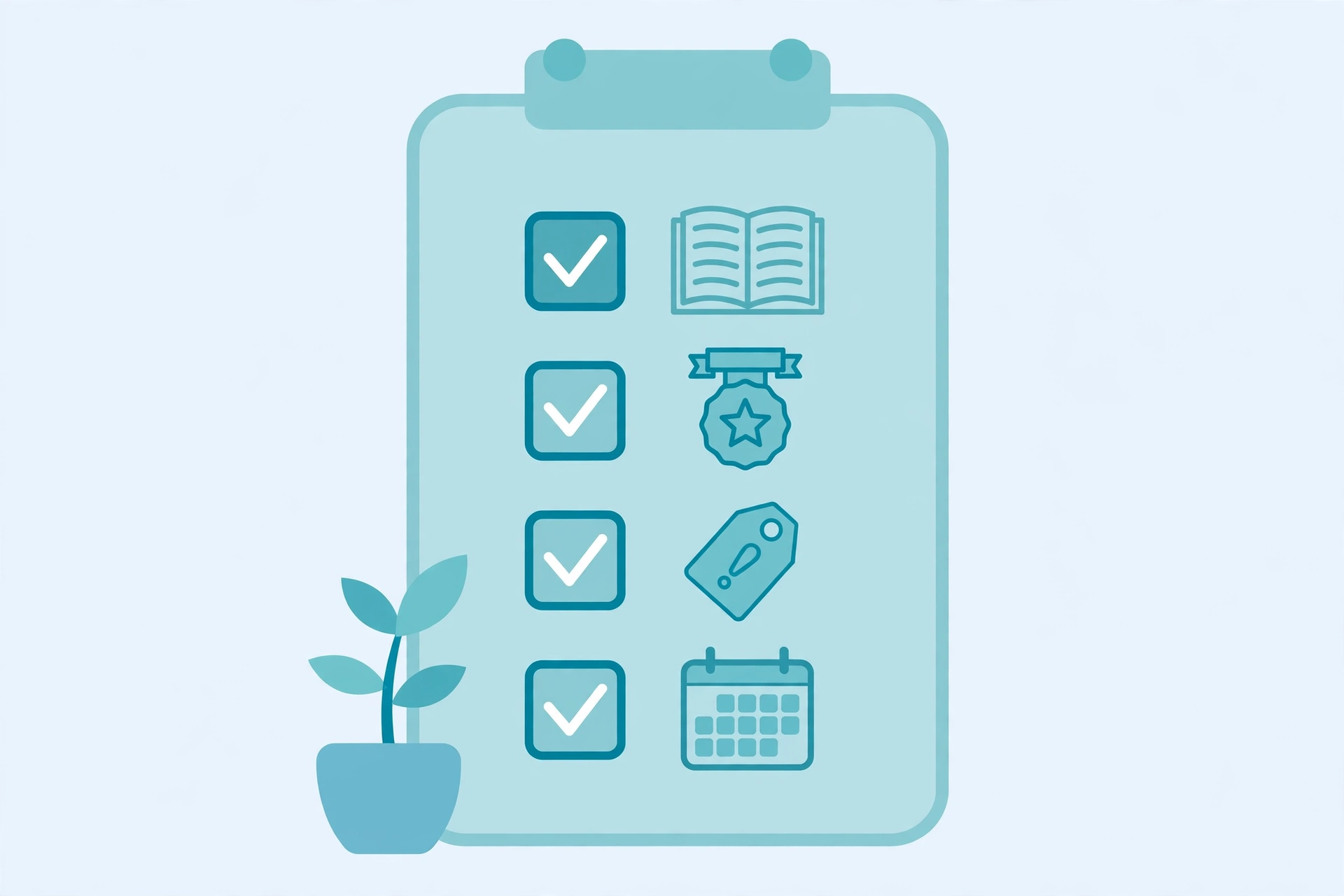
If your organisation has no formal AI governance yet, do not try to build the full programme in one go. Start with the smallest set of controls that actually changes behaviour, and expand from there.
| Checklist item | Done when |
|---|---|
| AI register created | Every known system is listed, with purpose, owner, and data sources |
| Named owner per system | No system in the register has a blank owner field |
| Risk tier assigned | Every system has a low, medium, high, or do-not-deploy tier |
| Data boundaries written | For each system, allowed and banned data sources are listed |
| Human-review triggers set | For medium and high-risk systems, triggers and the reviewer are named |
| Logging switched on | Outputs and actions can be reconstructed for medium and high-risk systems |
| Incident contact named | Staff know who to contact, and in what timeframe, when an AI output looks wrong |
| Review dates set | Every system has a next review date, and someone owns the review calendar |
That checklist will not make an organisation “fully governed” in a month. It will make it governable: visible, owned, and reviewable. That is the foundation everything else builds on. If a vendor or consultant tells you that you need a large platform before you can start, ask them which item on that list their platform would replace. Usually, the answer is none. Platforms help at scale. They do not replace decisions.
The First 30, 60 and 90 Days
| Period | Focus | Exit test |
|---|---|---|
| Days 1–30: See it | Discover and register systems, including shadow tools; name owners; assign initial risk tiers | You can list every AI system you know about, with an owner and a tier, and you know where the gaps in that list probably are |
| Days 31–60: Bound it | Write data boundaries and human-review triggers for medium and high-risk systems; switch on logging; agree an incident process | A reviewer can pick any medium or high-risk system and say what data it uses, what needs human approval, and what happens when it fails |
| Days 61–90: Run it | Run the first monitoring cycle; hold the first re-approval reviews; retire or fix anything that fails its review; publish a short internal guide so new teams know the path | At least one system has been through a full review cycle, and at least one decision — approval, change, or retirement — has been made through the process, not around it |
Ninety days is not a magic number. It is a useful discipline: if governance has not produced a single real decision in ninety days, it is probably still a document, not an operating system.
Metrics That Show Governance Is Working
Governance is often judged by how many documents exist, which is the wrong measure. Documents are easy to produce and easy to ignore. Better measures ask whether the system is visible, owned, fast where it should be fast, and careful where it should be careful.
| Metric | What it tells you | Warning sign |
|---|---|---|
| Percentage of systems in the register | Visibility across the organisation | A low percentage means shadow AI is probably widespread |
| Share of systems with a named owner | Accountability coverage | Blank owners mean decisions will drift |
| Time from approved idea to production, by risk tier | Whether governance speeds up low-risk work and scrutinises high-risk work | Uniform slowness means the tiers are not working |
| Incidents per quarter, and time to resolve | Maturity of response | Zero incidents may mean incidents are not being reported, not that none happened |
| Share of systems reviewed on schedule | Whether governance continues after launch | Overdue reviews mean the register is decaying |
| Shadow tools discovered and brought into the process | Whether the approved path is attractive enough to use | A rising number of undisclosed tools means the process is being bypassed |
A healthy programme usually shows shorter approval times for low-risk work and deeper scrutiny for high-risk work, not uniform slowness. If every metric is green but staff still work around the process, the metrics are measuring the process, not the reality. Ask staff directly, and believe the answer.
Governance Theatre: Five Signs Your Programme Is Only Paper
Governance theatre is the gap between what an organisation says about AI and what it actually does. It is common, because it is easy to produce: a committee, a set of principles, a risk assessment, a press release. The test is always the same: what changes in practice?
A committee with no authority
If the AI committee can advise but cannot approve, pause, or retire a system, it is a discussion group, not a governance body. Test: name the last system it stopped or changed.
Principles nobody was trained to apply
If staff cannot explain what “responsible AI” means for their specific job, the principles are decoration. Test: ask three teams how the principles change what they do on a Tuesday.
A risk assessment done once, never revisited
If a system was assessed at launch and never again, despite model updates, data changes, and new uses, the assessment is history, not governance. Test: find a system whose risk tier changed after launch, and why.
Policies that only cover the approved path
If policies describe how to launch a system properly, but say nothing about what to do when staff use an unapproved tool, they describe an ideal world, not the real one. Test: is there a simple, non-punitive way to declare a tool already in use?
No one can reconstruct a decision
If a customer, auditor, or manager asks “why did the system do that?” and the answer is a shrug, the system is ungoverned, however many documents surround it. Test: pick a recent AI-assisted decision and reconstruct it from logs, not from memory.
If several of those signs are present, the fix is not more documents. It is to give the existing structures real authority, real triggers, and real review dates — and to start with the systems that matter most, rather than trying to fix everything at once.
Regulation makes this more urgent, not less. Rules are now arriving from different directions at once: the EU AI Act is being enforced, US states are writing their own AI rules, and earlier government attempts to set boundaries for powerful models show how quickly the expectations can shift. The UK’s earlier move to set rules for the most powerful models, covered in Tech 2 Explore’s report on the UK government’s AI rules, is one example of that shifting landscape. An organisation that already knows its systems, owners, and risks can map itself to new rules as they arrive. An organisation that does not will have to start that work under deadline pressure, which is the worst time to do it well.
FAQs
Is AI transformation really a governance problem, or just a technology problem?
It is a governance problem first, because the barriers to scaling AI are usually decision rights, accountability, risk control, and monitoring, not access to technology. Technology determines what a system can do. Governance determines what it is allowed to do, who is responsible for it, and how you will know if it goes wrong. Without the second, the first does not scale safely.
What is the difference between AI governance and AI compliance?
Compliance is about satisfying an external regulator or standard. Governance is about having an internal accountability structure that would exist even if no regulator were watching. Compliance asks, “Does this meet the rule?” Governance asks, “Who decided this was acceptable, on what evidence, and who will answer for it if it fails?” Good governance makes compliance easier, because the evidence already exists. Compliance alone does not make a system well governed.
What is the smallest governance setup a small team can start with?
A register, a named owner per system, a risk tier, written data boundaries, and a review date. That is enough to start. Add human-review triggers and logging for anything medium or high risk, and an incident contact that everyone knows. Do not wait for a platform, a committee, or a perfect policy. Start with visibility and ownership, and let the rest grow from real systems, not from templates.
How do you govern AI agents that take actions, not just give answers?
By being explicit about autonomy. List which actions an agent may take on its own, which need human approval, and which are never allowed. Limit the tools and data it can reach to what its task actually requires. Log its actions in enough detail to reconstruct them. And set triggers — low confidence, unusual patterns, sensitive data, external messages — that pause the agent and bring in a human. An agent without those boundaries is not a productivity gain. It is an unmonitored employee with access to your systems.
How do you stop governance from slowing everything down?
Use proportional review. Low-risk work should move fast, with a light approval and a log entry. High-risk work should get deep review, because that is where the cost of a mistake justifies the time. If everything moves slowly, the tiers are not working, or the process is asking for information it does not need at that stage. Measure approval time by risk tier, and fix the tier that is slowest relative to its risk.
When should an AI system be retired?
When it no longer serves its original purpose, when its data or model has changed so much that its original approval no longer applies, when its risks outweigh its value, or when nobody can name its owner. Retirement should be a scheduled decision, not an admission of failure. Switch it off cleanly, remove its access and data, and record why. Organisations that never retire systems end up carrying a growing list of half-forgotten risks.
The Boring Test
Here is a useful way to judge whether AI transformation has actually happened, rather than just been announced: is the system boring yet?
Boring, in this sense, is a compliment. A boring AI system has an owner, a purpose, a risk tier, a set of data boundaries, a log, a review date, and a way to be switched off. It does not surprise anyone. It does not depend on one person remembering how it works. It does not produce answers nobody can explain. It just does its job, within limits, day after day, and when it fails, someone notices, someone is responsible, and something changes.
Most AI projects fail the boring test, not because the technology is weak, but because nobody did the unglamorous work of making them ownable, checkable, and stoppable. That work is governance. It will never make a good demo. It is what makes a demo into something a business can rely on after the demo is over.
So the question for any AI transformation is not, at its heart, which model to buy or which vendor to trust. It is simpler, and harder: who owns this, what may it do, and how will we know? Answer those questions for every system, keep answering them as systems change, and transformation stops being a slogan. It becomes something you can run.