BlessingTide.com: 7 Essential Facts Before You Trust It, Share It, or Quote It
You searched for blessingtide com, and you probably expected a simple answer.
Maybe you found one of its prayers or blessings in a search result and wanted to know whether the site behind it is real. Maybe you landed on a very different kind of article — about trading, vaping, or business law — and wondered how it ended up on a site with a name like BlessingTide. Or maybe you saw “blessingtide.com usa” in a search suggestion and wondered whether there is a separate American version.
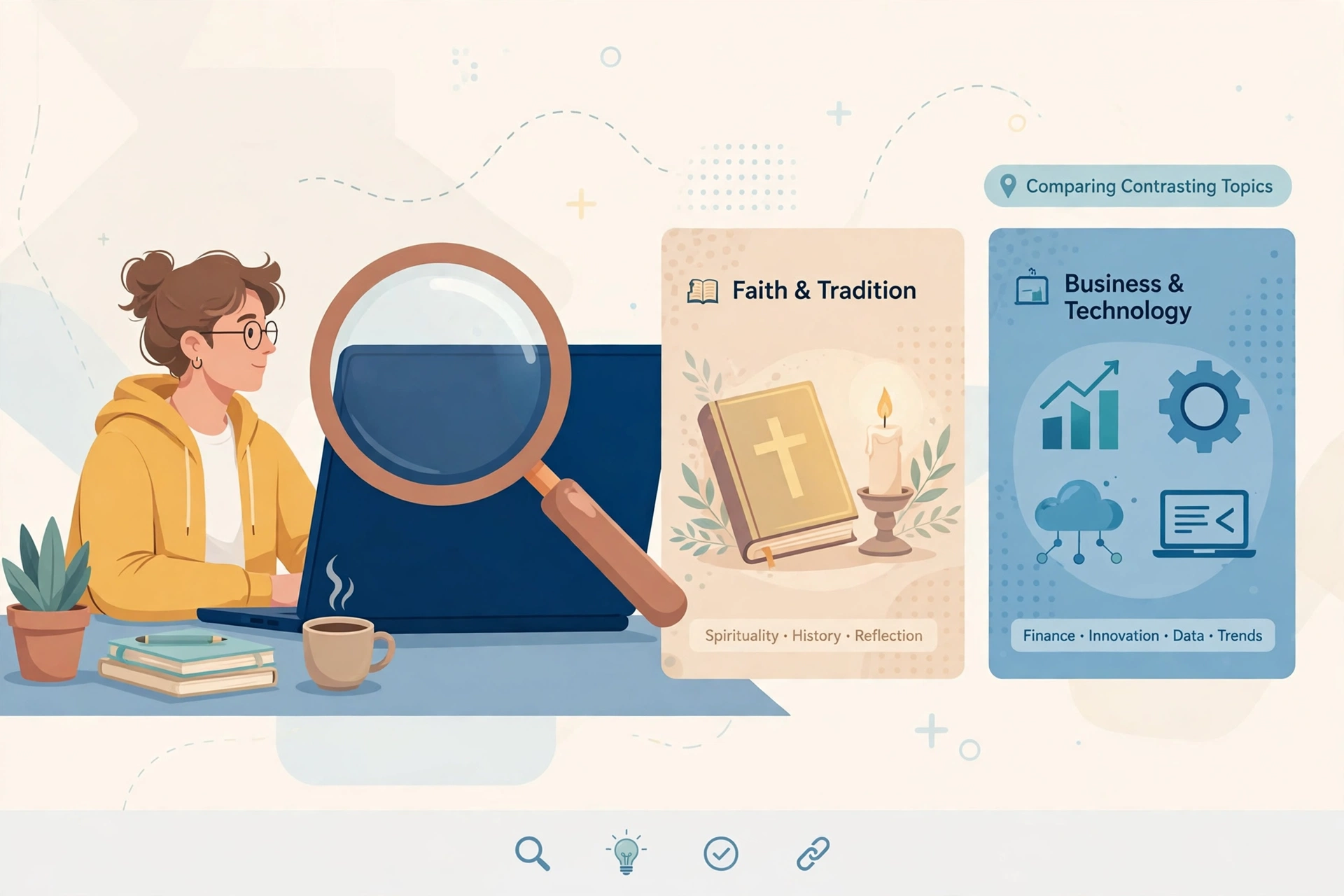
Here is the short answer, up front: BlessingTide.com is a real, publicly readable content website whose stated mission is faith and inspiration, but whose homepage also publishes a much wider mix of general-interest articles. That split between what the site says it is and what it actually publishes is the single most important thing to understand about it.
This article gives you the full picture in plain language. It separates what reviewers have actually observed on the site from what nobody has verified. It does not call BlessingTide a scam, and it does not call it definitively safe either, because neither label is supported by the evidence available. What it does give you is a practical way to judge any single article on the site before you share it, quote it, or act on it.
The Short Answer
BlessingTide.com is best described as a general informational publishing website with inspirational and Christian roots.
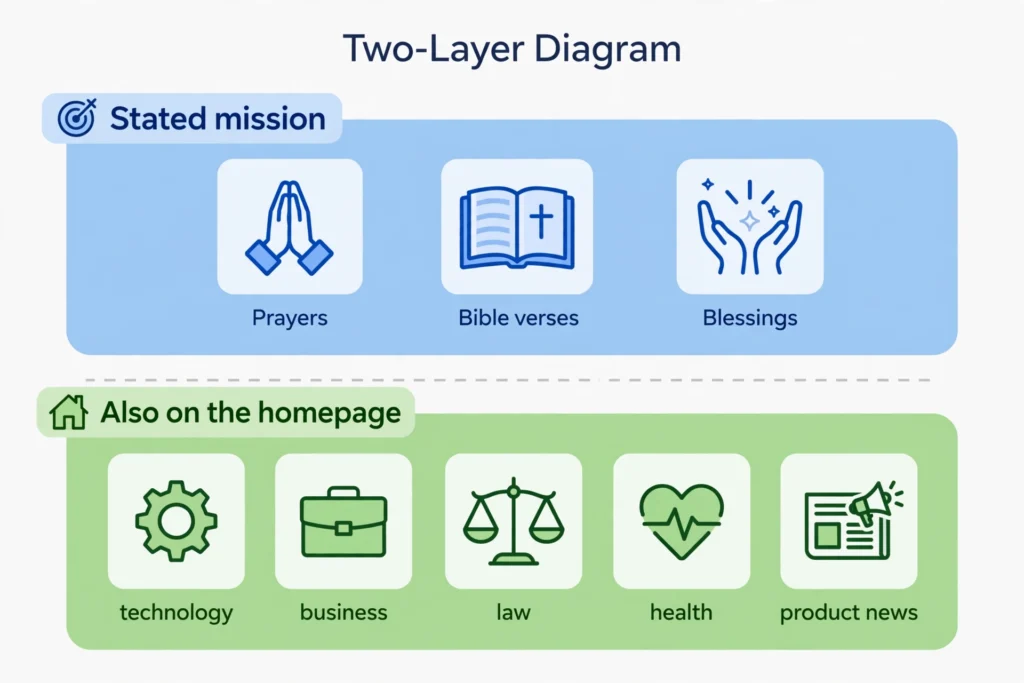
Its own About page, as quoted by several independent reviewers, describes BlessingTide as a place where faith meets inspiration, sharing daily and weekly prayers, Bible verses, blessings for different occasions, and motivational Christian quotes.
Its homepage tells a broader story. Reviews of the live homepage in 2026 found articles about technology, business, product news, home improvement, health, law, finance and trading, online gaming, and more. Some of those topics have nothing to do with faith at all.
So if you are looking for a prayer, a blessing, or an encouraging message, you are in the site’s home territory. If you are reading one of its articles about money, medicine, law, or a product you plan to buy, you are reading general-interest content, and you should judge that article the way you would judge any unfamiliar blog post: check the author, the date, the sources, and a second, stronger source before you rely on it.
A few things you should know right away:
- There is no confirmed evidence of a separate official “BlessingTide USA” edition. “Blessingtide.com usa” looks like a search phrase, not a separate site.
- No verified scam reports, safety audit, or trust score for blessingtide.com itself turned up in this research — but an absence of complaints is not proof of safety.
- No owner, headquarters, price list, guest-post policy, or official app has been independently verified. Anyone who states those as facts without pointing to a primary source is guessing.
In short, the question is not whether you can trust it in general, but whether you can trust it for the specific article in front of you. trust it
What BlessingTide.com Actually Is ? A faith site by description, a general site by homepage
The name BlessingTide itself tells you the intended brand. “Blessing” points to gratitude, hope, prayer, and encouragement. “Tide” suggests a steady, continuing flow. Together, they promise a stream of uplifting words.
That promise matches the site’s stated mission. According to reviewers who read the official About page, BlessingTide aims to help readers find hope through prayers, Bible verses, blessings, and Christian quotes, with content for everyday life, difficult moments, and messages to share with family and friends.
But a website is what it publishes, not only what its About page says. And on that test, BlessingTide is broader than its mission statement.
Reviewers who examined the homepage in September and October 2026 reported recent articles on subjects including:
- Social media tools and remote-access software
- Home remodeling and manufacturing
- Product news, including car accessories and pellet-making machines
- Stock CFDs and index exposure
- Casino bonus fairness frameworks
- Vaping in the UAE
- AI video tools for turning employee handbooks into videos
- DNA and RNA extraction kits
- Singapore holding companies
- Leadership pipelines and the gender pay gap
- The wrongful-death claim process
That list matters because it changes how you should read the site. A blessing does not need a citation. An article about trading, vaping rules, lab equipment, or a legal claim does — and a general-interest blog post is rarely the right final authority for those decisions.
Why the About page and the homepage feel different
There are several honest explanations for the gap, and the published reviews do not settle which one is correct:
- The site may have started with a narrow faith focus and expanded into broader topics over time.
- The About page may simply not have been updated to reflect current publishing.
- The site may publish guest posts or sponsored-style informational content alongside its own faith material.
- The brand may deliberately keep a spiritual identity while using broader categories to reach more search traffic.
None of those explanations makes the faith identity fake. But none of them should make you assume that every article carries the same editorial care either. The safest habit is to judge each article on its own topic, date, author information, and sourcing, rather than giving the whole domain a blanket trust rating.
7 Essential Facts About BlessingTide.com
1. It is a content website, not a church, a newsroom, or an advisory service
BlessingTide publishes articles. It is not a religious institution, a traditional news outlet with a newsroom and corrections policy, a medical service, a law firm, or a government information source.
That distinction sets your expectations. A content site can give you a helpful introduction, a useful summary, or an encouraging message. It is not built to do original reporting, verify breaking news, or give you professional advice tailored to your situation. When the stakes are high, go to the primary source: the product maker, the official regulator, the qualified professional.
2. Its faith content is its clearest, most consistent offering
If you want a morning prayer, a Bible verse, a blessing for a birthday, or an encouraging Christian message, BlessingTide’s stated content matches that need directly. Reviewers consistently describe a “Blessing Quotes” category with weekday blessings, prayers, inspirational quotes, and messages for loved ones.
For this kind of reading, the right test is personal, not technical. Does the wording fit your beliefs? Does it say what you actually want to say to the person you are sharing it with? If the article quotes a specific Bible verse, you can check that reference in a reliable Bible edition before you share it as a quotation — a small step that avoids passing on a misattribution.
3. Its general articles vary, and you should read them article by article
The broader content is where caution matters most. A technology article should be checked against the manufacturer’s own documentation. A health article should be checked against a qualified clinician or an authoritative medical source. A legal or financial article should be checked against a licensed professional or an official source in your own jurisdiction.
Watch for the warning signs that apply to any general blog:
- No named author, or an author with no relevant background shown for a specialist topic
- No publication or update date, or a date that is clearly out of date for prices, rules, or specifications
- Big claims with no links to a primary source
- Product recommendations with no disclosure of whether the recommendation is sponsored or earns a commission
- Confident language that papers over uncertainty, with no mention of limits or exceptions
If several of those checks fail, treat the article as a starting point for your own research, not as an answer.
4. “BlessingTide.com USA” is a search phrase, not a proven separate edition
This is one of the most common points of confusion, so it is worth stating plainly.
People search for “blessingtide.com usa” for different reasons. They may want to know whether the site works for readers in the United States, whether it is based there, whether there is a US version, or whether its content applies to US rules.
The reviews agree on the careful answer: the site is publicly accessible to readers in the United States, but the pages reviewed did not establish that it is headquartered in the United States, legally registered there, or published as a separate US edition. Accessibility is not the same as being based somewhere. A website can rank in US search results and be readable in the US without being an American company, and without writing for US law, US healthcare rules, US taxes, or US consumer regulations.
That matters most when location matters. An article about vaping, gambling, business formation, taxes, or a legal claim may describe the rules of one country or region while saying nothing about your state’s rules. If the article does not say which jurisdiction it covers, do not assume it covers yours.
5. Ownership and authorship are thinly documented, not independently verified
Transparency is the weakest part of the public picture, and you should know exactly what is and is not established.
Reviewers report that the site’s footer associates the BlessingTide identity with the name “Zyan-Ch,” and that several recent homepage posts show “Devwiz Pro” as the visible writer name. Reviewers also report that the About and Contact pages describe the mission and offer a way to get in touch, but do not provide detailed author biographies, editorial standards, staff credentials, or a physical office address.
That is not, by itself, proof that anything is wrong. Many small blogs use simple bylines and minimal staff pages. But it does mean you cannot verify from the public pages alone who legally owns the site, where it is based, or what qualifies its writers to cover finance, law, health, or laboratory products. If you need legal ownership, business registration, or headquarters information — for example, before a commercial deal — you need documentary evidence, not a footer name.
Do not fill this gap with guesses from other websites. If a review states an owner, a location, or a credential without pointing to a verifiable record, treat it as unconfirmed.
6. There is no confirmed app, price list, or guest-post programme
Three practical questions come up again and again in search results, and all three have the same honest answer: not confirmed.
- Is there a BlessingTide app? No official US-specific or general BlessingTide app was confirmed from the pages reviewers examined. If an app or download claims to represent BlessingTide, verify it through a link from the official domain before you install anything.
- Is the site free to read? Public articles appear to be readable directly through the website, and reviewers describe no paywall for ordinary reading. But no verified price list or premium feature list was found, so check the current site before you assume anything about accounts, subscriptions, or paid features.
- Can you publish a guest post there? No dedicated guest-post page, published guidelines, or rate card was verified in this research. Reviewers describe a Contact Us page with a form and an email contact for questions, feedback, and inquiries. That is a route to ask, not a published acceptance policy. If you are a writer or marketer thinking about pitching, contact the site first and ask directly about editorial review, link policy, disclosure, and whether any fee is involved — and get the answer in writing before you pay anything or hand over content. The same ask-first approach is worth applying to guest posts on any unfamiliar site, not just this one.
7. It has not been proven a scam — and it has not been proven safe either
This is the fact most reviews get right, and it is the one readers most want to oversimplify.
No verified scam reports, fraud warnings, or malware findings specifically about blessingtide.com itself turned up in this research. The site’s public pages — About, Contact, privacy policy, disclaimer, and sitemap — look like those of an ordinary content site. For ordinary reading, reviewers put the risk in the same range as other unfamiliar content sites.
But that is a long way from a clean bill of health. No complete technical safety audit, malware scan, or privacy review was available. Websites can change owners, advertising, scripts, and policies over time, so even a clean check today would not guarantee tomorrow.
The honest verdict is therefore a conditional one: there is no verified evidence that simply reading BlessingTide’s public articles is dangerous, and there is no verified evidence that every page, link, download, or interaction on the site is risk-free. The higher-risk moments are not reading an article. They are downloading an unfamiliar file, installing software, entering passwords or payment details, or acting on urgent financial, legal, medical, or gambling advice from a general article.
Watch Out for Lookalike Domains
One trap deserves its own warning, because it catches careful readers too.
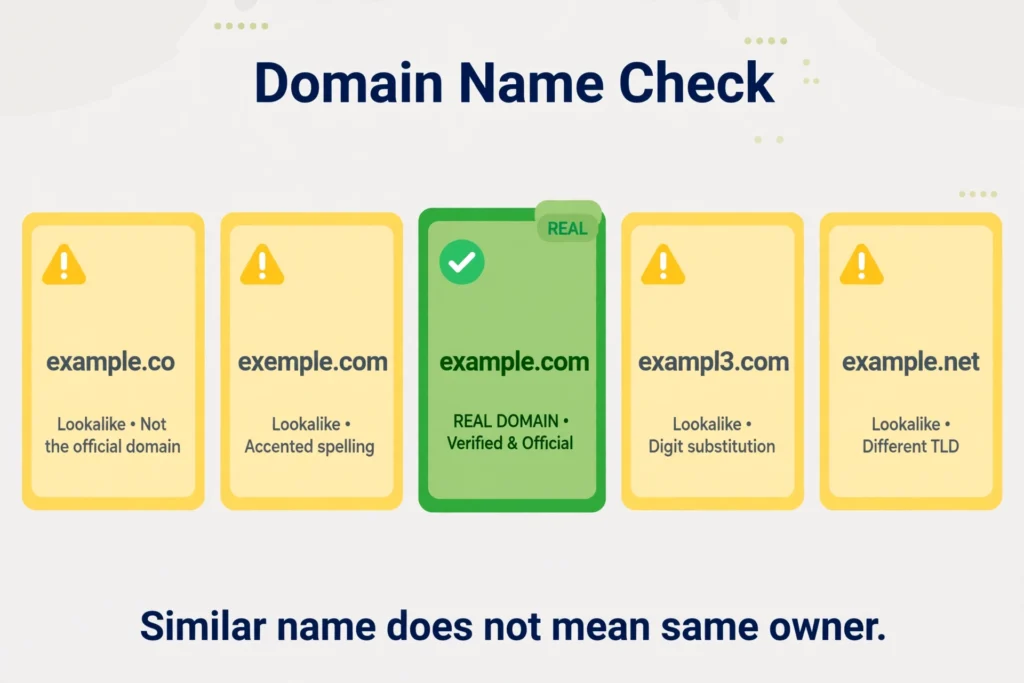
Search results around this keyword include several similarly named domains that are not proven to be the same site as blessingtide.com. Some of them are third-party pages writing about BlessingTide. Others present themselves as a “USA” version of the brand. A similar name, a similar logo style, or a similar topic list does not prove shared ownership, affiliation, or endorsement.
Before you trust a lookalike domain, check for real evidence of a connection:
- Does blessingtide.com itself link to the other domain from its homepage, footer, or About page?
- Does the other domain link back and explain the relationship?
- Do both sites list the same operator, contact details, privacy policy, or editorial team?
- Are redirects and brand notices consistent?
If none of those signals is present, treat the lookalike as a separate site until proven otherwise. And when you type the address yourself, type it letter by letter: blessingtide.com, with one “s” after “bles” and no extra words like “usa,” “us,” or “the” added to the domain. A single changed letter is the oldest trick for copycat sites, and it works because people skim addresses instead of reading them.
The same caution applies to contact details. Only use the contact form and email address shown on the official domain itself, and check the site’s privacy policy before you send anything personal. A contact page is a way to reach a publisher. It is not, on its own, proof of identity, expertise, or legitimacy.
How to Check a BlessingTide Article Before You Trust It
Use this five-step check whenever an article matters — and always when it touches money, health, law, safety, or a purchase.
Step 1: Check the domain first
Confirm you are on blessingtide.com itself, not a lookalike. Check that the connection uses HTTPS, and remember what HTTPS actually proves: it encrypts the connection, it does not prove the publisher is honest or the content is accurate.
Step 2: Identify what kind of article you are reading
Is it a prayer, a blessing, or an inspirational message? Then relevance and wording matter most. Is it a factual guide about a product, a treatment, a law, or an investment? Then evidence matters most, and the article needs to earn your trust with dates, authors, and sources.
Step 3: Check the author, date, and sources
Look for a named author and any relevant background. Look for a publication or update date, and ask whether prices, specifications, or rules could have changed since then. Follow the article’s links: do they lead to official documentation, original reporting, or qualified expert guidance — or to unrelated pages, or nowhere at all?
Step 4: Confirm the important claims somewhere independent
For a product specification, check the manufacturer. For a legal requirement, check an official government source or a licensed lawyer in your jurisdiction. For a health claim, check a clinician or an authoritative medical source. For a financial claim, check the regulator or the provider’s own disclosures.
One useful habit is to check the domain itself independently. You can look up a domain’s registration details through ICANN Lookup to see what is publicly recorded — while remembering that registration details alone do not prove who operates a site day to day, or whether its content is accurate. That kind of independent check is also part of checking whether a website is a scam before you trust it with personal details or money.
Step 5: Decide how much weight the article deserves
If the article is clear, current, properly sourced, and consistent with independent evidence, it may be useful for your purpose. If it lacks sources, conflicts with reliable sources, or asks you to download something, pay something, or share sensitive information without a clear reason, stop and find a stronger source.
And if something on any site — BlessingTide or anywhere else — ever crosses the line into fraud, report it rather than just closing the tab. In the United States, you can report suspected fraud to ReportFraud.ftc.gov.
A quick decision guide
- Finding words for a birthday, a difficult day, or a morning message: BlessingTide’s faith content is a reasonable place to look. Adapt the wording to sound like you, rather than copying it word for word.
- Getting a basic introduction to an unfamiliar topic: A BlessingTide general article can be a useful starting point, as long as you verify the details that matter.
- Making a medical, legal, financial, gambling, tax, or immigration decision: Do not rely on a general article alone, from BlessingTide or any similar site. Use a qualified professional or an official source.
- Pitching or paying for a placement: Ask first, in writing, about editorial review, link type, permanence, disclosure, and fees. No verified guest-post policy was found, so do not assume a placement is available, free, or permanent.
- Sharing or quoting an article: Check the date, the author, and at least one independent source for any factual claim in it. A share is an endorsement in practice, even if you did not mean it as one.
Frequently Asked Questions
What is BlessingTide.com?
BlessingTide.com is an online publishing website whose stated mission is faith and inspiration — prayers, Bible verses, blessings, and Christian encouragement — while its homepage also publishes broader general-interest articles about technology, business, health, law, products, and everyday topics.
Is BlessingTide.com a Christian website?
Its About page describes a faith-oriented mission centred on prayers, Bible verses, blessings, and inspirational Christian quotes. Its homepage, however, includes many subjects beyond religious inspiration. The most accurate description is a website with a faith-based identity and a broader publishing scope — not a purely Christian site, and not a secular news site either.
Is BlessingTide.com legit?
There is no verified evidence in this research that the site is a scam, and its public About, Contact, privacy, and disclaimer pages resemble those of an ordinary content site. But its ownership, headquarters, and editorial credentials have not been independently verified, so “legit” should be judged article by article, not granted to the whole domain at once.
Is BlessingTide.com safe to visit?
No complete safety audit was available, so no article can honestly call it definitively safe or unsafe. Ordinary reading of its public articles carries no verified danger signal in this research. Be more cautious with downloads, software installs, payment details, passwords, and any high-stakes advice, and check the address carefully before you click.
Is BlessingTide.com based in the USA?
Not proven. The site is accessible to US readers, but the pages reviewed did not establish a US headquarters, US registration, or a separate US edition. Treat “blessingtide.com usa” as a search phrase describing reader interest, not as a verified business description.
Is there a BlessingTide.com USA app?
No official BlessingTide app was confirmed in the pages reviewed. Verify any app claiming to represent BlessingTide through a link from the official domain before installing it.
What topics does BlessingTide cover?
Its stated focus is prayers, Bible verses, blessings, and Christian inspiration, including a Blessing Quotes category. Its visible homepage content is wider, covering business, health, law, cryptocurrency, home improvement, technology, product news, finance, and lifestyle topics. Categories change over time, so the homepage is the best place to check what is currently published.
Does BlessingTide publish daily prayers?
Its About page says it offers daily and weekly prayers, along with Bible verses, blessings, and Christian quotes. Whether any given prayer series is currently updated depends on the site’s recent publishing, so check the dates on the specific pages you are reading.
How do I contact BlessingTide.com?
Reviewers describe an official Contact Us page with a contact form and an email contact for questions, feedback, and inquiries. Use only the details shown on the official domain itself, include the article title or URL and a clear subject, and review the privacy policy before sending personal information.
Can I trust BlessingTide’s celebrity net worth or biography articles?
Treat personal wealth figures as estimates unless they are backed by reliable financial evidence — exact personal wealth is usually private. The same applies to ages, relationships, and career details: if an article does not show its evidence, check it against reputable reporting or a primary source before you repeat it.
Should I use BlessingTide for research?
It can be useful for basic background and topic discovery, especially for inspirational content and plain-language introductions. For academic work or any high-stakes decision, support it with primary, scholarly, or official sources. A general article is a starting point, not a final authority.
Bottom Line
BlessingTide.com is easy to misunderstand, because its name promises one thing and its homepage delivers something wider.
If you came for faith and encouragement, you found the site’s home ground: prayers, Bible verses, blessings, and messages meant to be shared. Use them, adapt them to your own voice, and check any quoted verse before you pass it on as scripture.
If you came through a general article — about technology, business, health, law, or money — read it the way you would read any unfamiliar blog post. Check the domain, the author, the date, and the sources. Confirm the claims that matter somewhere independent. And never let a general article alone decide a medical, legal, financial, or safety-sensitive question.
That is the fair verdict on BlessingTide: a real, readable content site with a faith identity and a general-interest homepage, useful for inspiration and introductions, unproven as an authority on anything else. Judge the article in front of you, not the name above it, and you will get the value the site offers without taking on risks it never promised to remove.